Einadia hastata
(R. Br.) A. J. Scott
Saloop, Berry Saltbush
iNaturalist· cc-by
(c) Terra Occ, some rights reserved (CC BY)
iNaturalist· cc-by
(c) Terra Occ, some rights reserved (CC BY)
iNaturalist· cc-by
(c) Terra Occ, some rights reserved (CC BY)
Description
A herb. It grows 2 m tall. It keeps growing from year to year. The stems are ribbed. The leaves are simple and alternate or opposite. They are 0.8-4 cm long by 0.6-2.3 cm wide. New growth has some hairs. The leaf stalks are 0.4-1.2 cm long. The flowers are on branched stalks at the ends of branches or in the axils of leaves. The flowers are 0.5-1 mm across and do not have petals. There are 5 red sepals. The fruit is a red berry. It is 2-3 mm across. There is one black seed.
Edible Uses
The leaves are eaten after boiling to remove excess salt. The fruit are also edible.
Traditional Uses
The leaves are eaten after boiling to remove extra salt.
This uses section is brief — help expand it
Distribution
Geelong Botanical Gardens. It grows in monsoon forest and vine forest. In tropical Australia it grows from sea level to 850 m altitude.
Where It Grows
Australia*,
Cultivation
A spacing of 30 cm by 50 cm is suitable.
Notes
It has also been put in the family Chenopodiaceae.
Synonyms
References (9)
- Cooper, W. and Cooper, W., 2004, Fruits of the Australian Tropical Rainforest. Nokomis Editions, Victoria, Australia. p 120
- Flora of Australia, Volume 4, Phytolaccaceae to Chenopodiaceae, Australian Government Publishing Service, Canberra (1984) p 164
- Hunter, J. T. & Sheringham, P., 2006, Vegetation and Floristics of Melville Range Nature Reserve. A Report to the New South Wales Parks and Wildlife Service. p 172
- Hunter, J., 2012, Vegetation and Floristics of Gilwarny and Wingadee Nature Reserves. A Report to the New South Wales National Parks and Wildlife Service p 115
- Hunter, J., 2015, Vegetation and flora of Naree and Yantabulla. A Draft Report to the Bush Heritage Australia
Show all 9 references Hide references
- Hunter, J.T., 2017, Is there a relationship between contemporary high Aboriginal plant resource locations and mapped vegetation communities? Cunninghamia 17:27-34. The Royal Botanic Garden Sydney. ISSN 2200 - 405X
- Williams, K.A.W., 1999, Native Plants of Queensland Volume 4. Keith A.W. Williams North Ipswich, Australia. p 172
- www.ceres.org.au/bushfoodcatalogue
- www.fsd.monash.edu.au/files/bethgottpamphley_po.pdf
More from Amaranthaceae
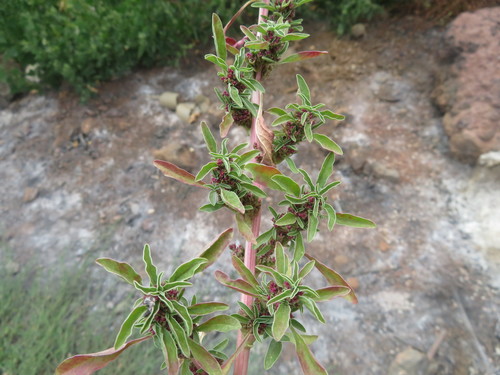
Amaranthus graecizans
Spreading pigweed, Mat Amaranth
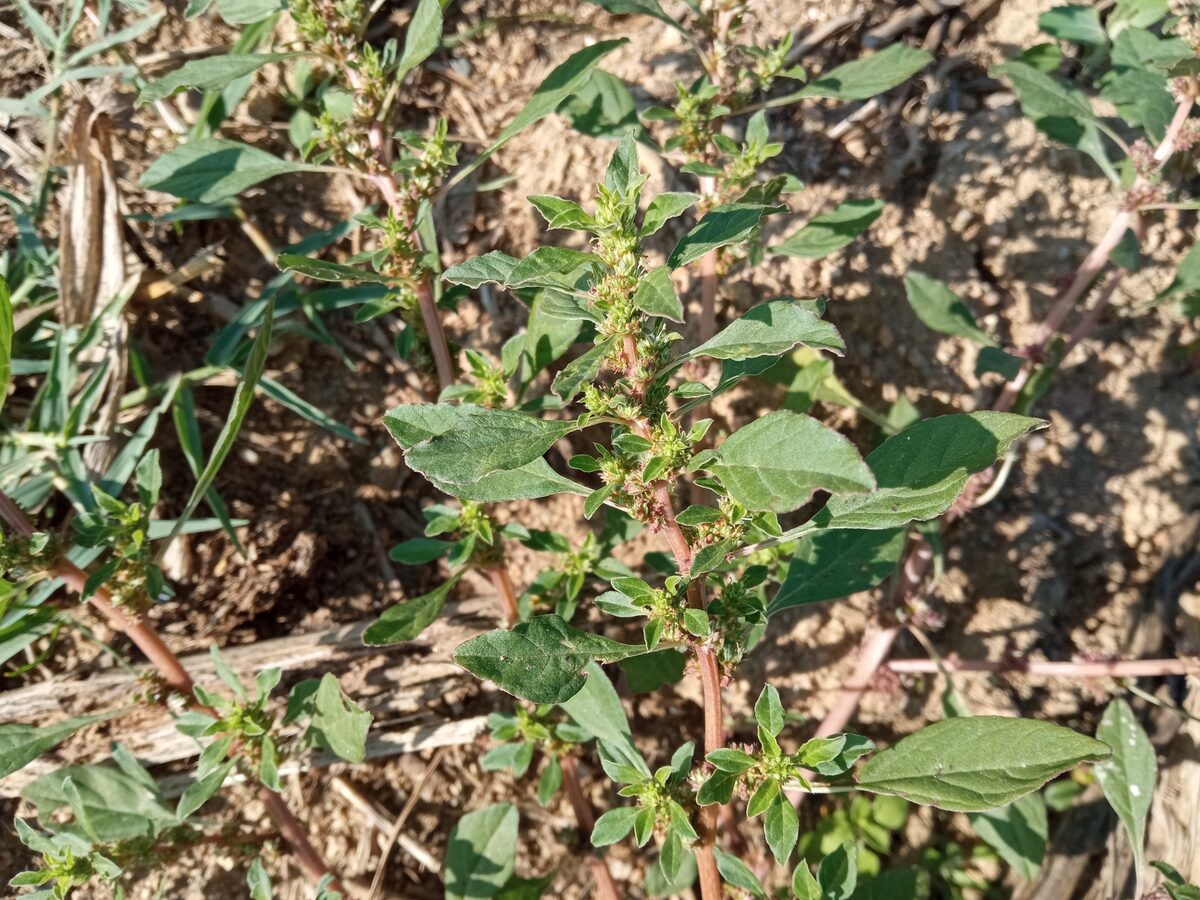
Amaranthus graecizans subsp. silvestris
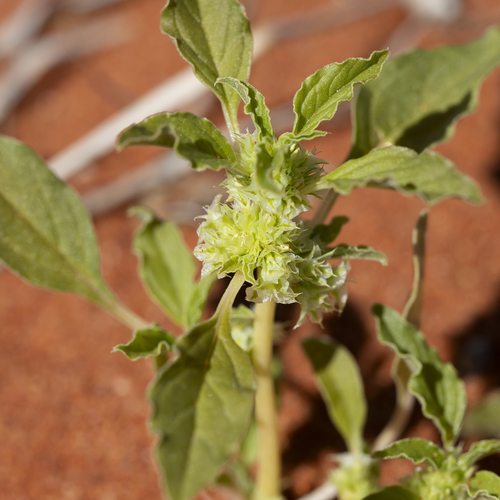
Amaranthus grandiflorus
Spreading pigweed
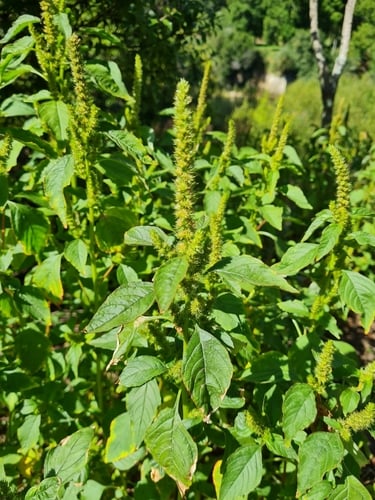
Amaranthus hybridus
Amaranth Greens, Wild Cabbage, Slim Amaranth
Amaranthus hybridus subsp. quitensis
South American Amaranth, Ataco, Sangorache
Amaranthus hypochondriacus
Amaranth, Velvet flower