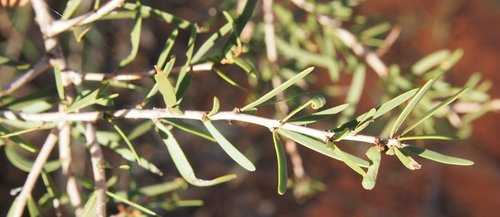
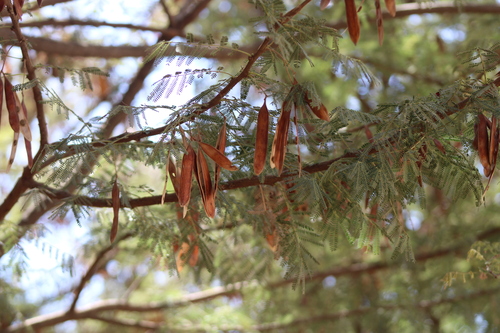
Hedysarum boreale subsp. mackenzii
(Richardson) Löve. & D.Löve
Liquorice root, Mackenzie's Sweetvetch, Mackenzie's hedysarum
gbif· cc-by-nc
University of New Mexico Herbarium (UNM-Vascular Plants)
gbif· cc-by-nc
University of New Mexico Herbarium (UNM-Vascular Plants)
gbif· cc-by-nc
University of New Mexico Herbarium (UNM-Vascular Plants)
Summary
Source: WikipediaHedysarum boreale is a species of flowering plant in the Fabaceae, or legume family, and is known by the common names Utah sweetvetch, boreal sweet-vetch, northern sweetvetch, and plains sweet-broom. It is native to North America, where it is widespread in northern and western regions of Canada and the United States. The ssp. mackenzii can even be found in the Canadian Arctic Archipelago. This species is quite variable in morphology. There are several ecotypes. In general, it is a perennial herb growing from a deep taproot with a woody stem base. It has nitrogen-fixing root nodules. The plant grows 1 to 2 feet (0.3 to 0.6 m) tall. The hairless leaves are compound, divided into a number of leaflets. The inflorescence is a raceme of white, pink, or purple flowers. The fruit is a legume pod containing kidney-shaped seeds. Honeybees pollinate the flowers. This plant grows on well-drained loams as well as soils with clay and sand. It can grow on soils with moderate levels of salinity, and can tolerate a range of soil pH. In the wild it generally grows at elevation, between 4,000 and 8,000 feet (1,200 and 2,400 m). This plant is sometimes added to seed mixes used for rangeland improvement. Its nitrogen-fixing ability improves soil quality. The plant is palatable to livestock and wild animals. It is an important component of Sage Grouse habitat. The cultivar 'Timp' is an improved plant line selected for its adaptability and seed production qualities. The plant can be used in xeriscaping and as a seeded roadside flower. It is good for stabilizing soil. The wild plant was considered poisonous by some Native American groups, but it was utilized as a food source, particularly the roots, which taste like licorice.
Description
A plant in the pea family. It is low and bushy. It grows 20-40 cm high. The leaves are compound with several small leaflets. The flowers are reddish-purple. They are 18 mm long. They are in long spike-like clusters. The fruit is a flat, jointed seed pod.
Edible Uses
The long flexible roots taste like licorice and are eaten when young.
Traditional Uses
The long flexible roots taste like licorice. They are eaten when young.
This uses section is brief — help expand it
Distribution
It is a temperate plant. It grows along riverbanks and on grassy hillsides.
Where It Grows
Alaska, Canada, North America, USA,
Also Known As
Sweet broom
References (7)
- Cormack, R. G. H., 1967, Wild Flowers of Alberta. Commercial Printers Edmonton, Canada. p 174
- Great Basin Naturalist 28:152. 1968
- Hedrick, U.P., 1919, (Ed.), Sturtevant's edible plants of the world. p 337 (As Hedysarum mackenzii)
- Kermath, B. M., et al, 2014, Food Plants in the Americas: A survey of the domesticated, cultivated and wild plants used for Human food in North, Central and South America and the Caribbean. On line draft. p 408
- Lim, T. K., 2015, Edible Medicinal and Non Medicinal Plants. Volume 9, Modified Stems, Roots, Bulbs. Springer p 45
Show all 7 references Hide references
- Moerman, D. F., 2010, Native American Ethnobotany. Timber Press. p 255
- Plants for a Future database, The Field, Penpol, Lostwithiel, Cornwall, PL22 0NG, UK. http://www.scs.leeds.ac.uk/pfaf/