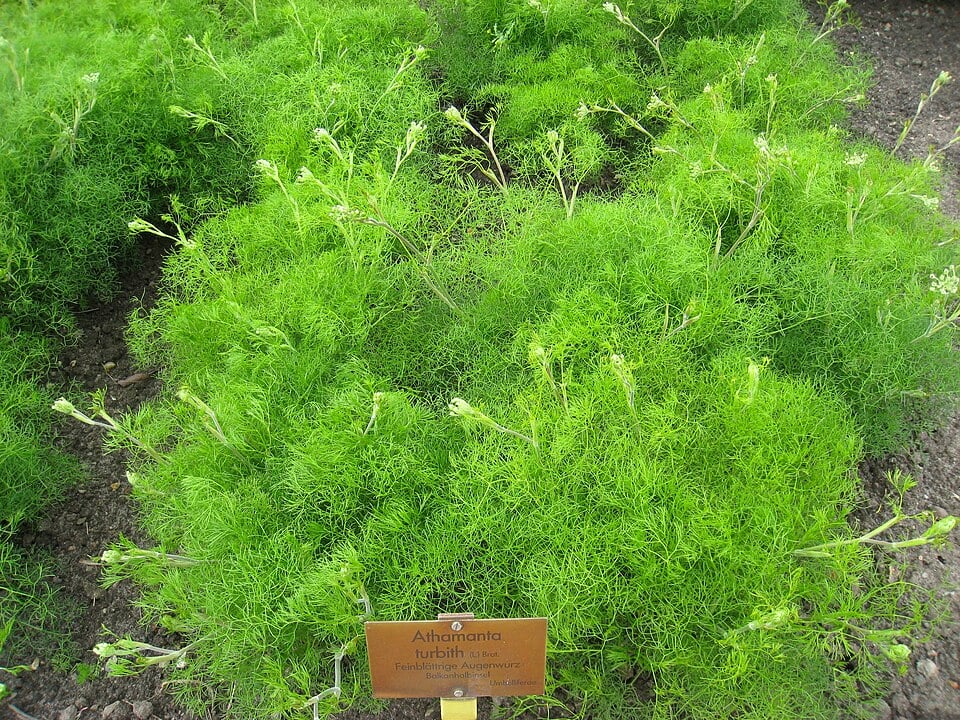
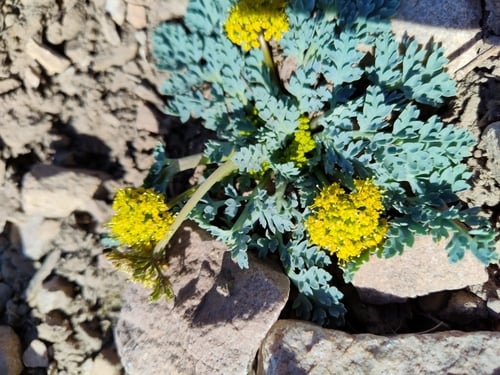
Athamanta sicula
L.
Spignel
wikimedia· cc-by-sa
Wikimedia Commons - Krzysztof Ziarnek, Kenraiz
iNaturalist· cc-by-nc
(c) Norbert Sauberer, some rights reserved (CC BY-NC), uploaded by Norbert Sauberer
iNaturalist· cc-by
(c) Brenda Black, some rights reserved (CC BY), uploaded by Brenda Black
Description
A temperate herb in the Apiaceae family with edible roots.
This description is brief — help expand it
Edible Uses
Edible Parts: Root Edible Uses: Root - raw or cooked. Somewhat celery-like.
Medicinal Uses
None known
Distribution
It is a temperate plant.
Where It Grows
Europe, Italy, Mediterranean,
Propagation
Seed - sow spring in a cold frame. Germination usually takes place within 3 - 6 weeks at 13°c. When they are large enough to handle, prick the seedlings out into individual pots and grow them on in the greenhouse for at least their first winter. Plant them out into their permanent positions in late spring or early summer, after the last expected frosts. The seed can also be sown in situ as soon as the soil is workable in the spring. Division in spring, with care.
Other Uses
None known Special Uses
Notes
There are 15 Athamantha species.
Also Known As
Spaccapietre
References (3)
- Facciola, 1990,
- Lim, T. K., 2015, Edible Medicinal and Non Medicinal Plants. Volume 9, Modified Stems, Roots, Bulbs. Springer p 14
- Plants for a Future database, The Field, Penpol, Lostwithiel, Cornwall, PL22 0NG, UK. http://www.scs.leeds.ac.uk/pfaf/