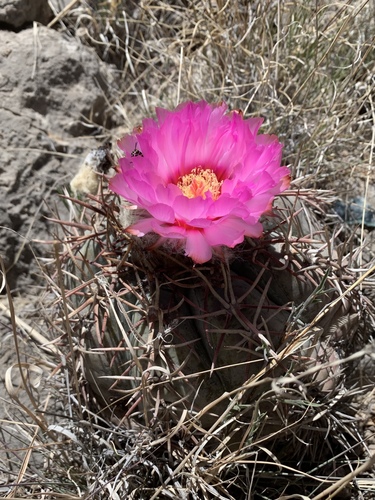
Cleistocactus smaragdiflorus
(Weber) Speg.
Firecracker cactus
iNaturalist· cc-by-nc
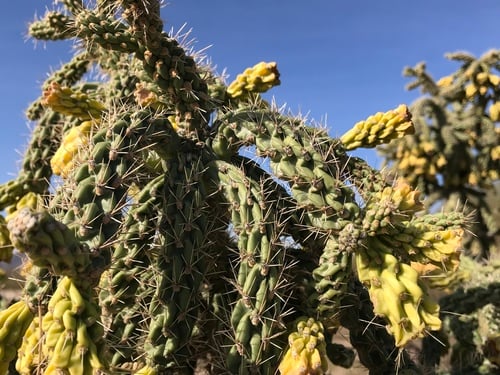
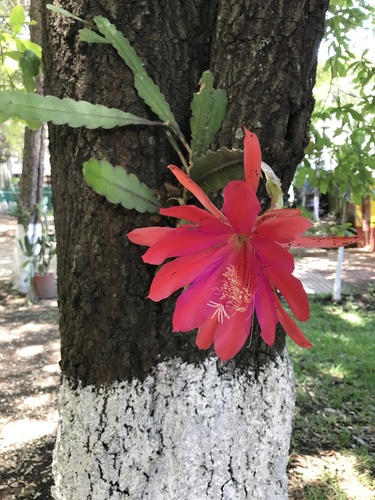
(c) Pablo Demaio, some rights reserved (CC BY-NC), uploaded by Pablo Demaio
iNaturalist· cc-by-nc
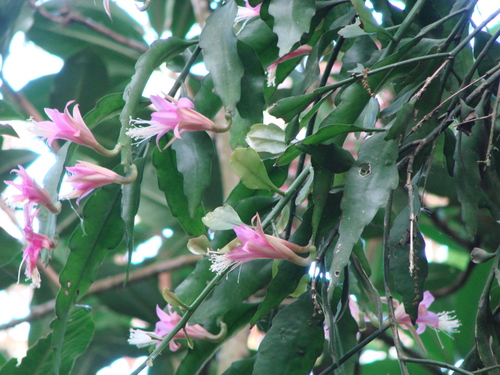
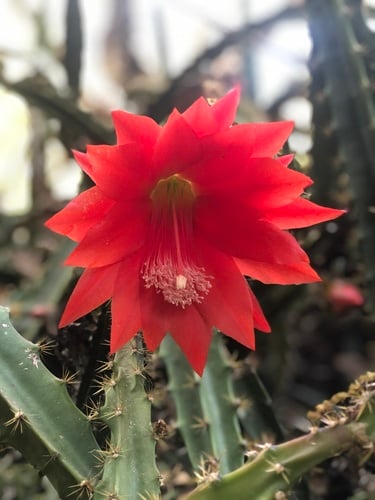
(c) Santiago, some rights reserved (CC BY-NC)
Summary
Source: WikipediaCleistocactus smaragdiflorus is a species of Cleistocactus found in Bolivia and Argentina.
Description
An upright cactus. It has stiff columns. It grows about 2 m high. It later lies over. The stems are 4-6 cm thick. The spines are yellowish brown and closely arranged. The columns have 12-16 ribs. The upper spines are 3 cm long. The flowers are narrow and like tubes. They are red with green tips. They are 5 cm long. The fruit are round.
Edible Uses
The fruit is edible.
Distribution
A subtropical plant. It grows in dry and arid areas. It grows up to 2,700 m above sea level. It needs full sun. It needs a temperature above 13°C.
Where It Grows
Argentina, Bolivia, Paraguay, Slovenia, South America*, Uruguay,
Cultivation
They are probably pollinated by hummingbirds. They can normally be grown from seed or cuttings.
Propagation
Seed - Cuttings
Synonyms
Also Known As
Kaktus mercon, Sitiquira, Smaragdnocvetni zaprtocvetnik
References (6)
- Altschul, S.V.R., 1973, Drugs and Foods from Little-known Plants. Notes in Harvard University Herbaria. Harvard Univ. Press. Massachusetts. no. 2990
- Anderson, E.F., 2001, The Cactus Family, Timber Press p 162
- Anderson, M., 2002, The World Encyclopedia of Cacti and Succulents. Hermes House, New York. p 57 (Genus)
- Innes, C. and Glass, C., 1997, The Illustrated Encyclopedia of Cacti. Sandstone Books. p 45
- Kermath, B. M., et al, 2014, Food Plants in the Americas: A survey of the domesticated, cultivated and wild plants used for Human food in North, Central and South America and the Caribbean. On line draft. p 242
Show all 6 references Hide references
- Sukarya, D. G., (Ed.) 2013, 3,500 Plant Species of the Botanic Gardens of Indonesia. LIPI p 1009