Echinocactus horizonthalonius
Lemaire
Blue barrel cactus
iNaturalist· cc-by
(c) CK2AZ, some rights reserved (CC BY), uploaded by CK2AZ
iNaturalist· cc-by
(c) CK2AZ, some rights reserved (CC BY), uploaded by CK2AZ
iNaturalist· cc-by-nc
(c) Jesús Manuel Martínez-Calderas, some rights reserved (CC BY-NC), uploaded by Jesús Manuel Martínez-Calderas
Summary
Source: WikipediaEchinocactus horizonthalonius is a species of cactus known by several common names, including devilshead, turk's head cactus, blue barrel cactus, eagle's claw, horse maimer, horse crippler, and visnaga meloncillo. It is native to the southwestern United States and northern Mexico, where it occurs in Chihuahuan Desert and Sonoran Desert habitats, particularly on limestone substrates. One of its varieties is a federally listed endangered species of the United States.
Description
A small cactus. It is usually single but can form small clumps. The stem can be 20 cm across. Some kinds can be 40 cm high. The cactus is round. The spines vary a lot. The flowers are purple-red. They are 5 cm across. The fruit is juicy at first but then becomes dry.
Edible Uses
The stems are technically edible and were once processed into cactus candy, while the fruits were occasionally consumed. Overall usefulness as a food plant is low due to scarcity, slow growth, and conservation concerns. Edible Uses & Rating. Rated low as a foraging species. It may provide emergency carbohydrates but should not be relied upon where conservation laws apply. Taste, Processing & Kitchen Notes. Little firsthand tasting information exists, but cactus stems generally require heavy sweetening to become palatable. The reference to candy suggests the flesh is bland rather than inherently flavorful. Fruits reportedly dry quickly, implying limited juiciness and poor culinary versatility. Seasonality (Phenology). Pinkish-red flowers may appear from April through September depending on rainfall and temperature. Fruits develop within weeks but often desiccate rapidly in desert conditions. Safety & Cautions (Food Use). Harvesting stems kills the plant and may violate legal protections. Given its slow growth, removal should be considered only in genuine survival situations. Spines are formidable and require careful handling. Harvest & Processing Workflow. If absolutely necessary, the stem would be carefully de-spined and cooked or candied. Fruits should be gathered promptly after ripening before they dry. Cultivar/Selection Notes. Occasionally cultivated by cactus enthusiasts, particularly spineless or visually symmetrical specimens, but no true food cultivars exist. Look-Alikes & Confusion Risks. May resemble smaller barrel cacti (Ferocactus), but eagleclaw fruits and flowers are woolly rather than hairless. Annulate-ridged spines are another diagnostic feature. Traditional/Indigenous Use Summary. Documentation is limited, though both fruits and stems were reportedly used in desert regions, likely during periods of scarcity.
Traditional Uses
The fruit are sliced, candied and used as confections. The pulp of the stems is used to make sweetmeats.
This uses section is brief — help expand it
Medicinal Uses
Echinocactus horizonthalonius (often called Eagle's Claw or Turk's Head Cactus) has limited, mostly historical or survival-oriented uses, rather than recognized modern medicinal applications. Based on search results, the following uses have been identified: Emergency Water Source: The pulp of the stem can be used to provide moisture in survival situations. Traditional Uses: Like many cacti in the Echinocactus genus, it may have historically been used for various, though often undocumented, traditional remedies. External Application: The pulp of similar barrel-type cacti has historically been used topically to soothe minor skin issues like cuts, insect bites, or burns. Ecological/Garden Use: It is primarily utilized in horticulture for xeriscaping and as an ornamental plant due to its small size and, in some cases, endangered status (specifically E. horizonthalonius var. nicholii). It is important to note that Echinocactus horizonthalonius is not generally associated with the psychoactive or potent medicinal properties of other cacti, such as San Pedro (Echinopsis pachanoi), and one variety is federally listed as endangered.
Known Hazards
Harvesting stems kills the plant and may violate legal protections. Given its slow growth, removal should be considered only in genuine survival situations. Spines are formidable and require careful handling.
Distribution
It is a subtropical plant. It is best in light sandy, well-drained soils. It needs an open, sunny position. It is resistant to frost and drought.
Where It Grows
Australia, Mexico*, North America, South Africa, Southern Africa, USA,
Cultivation
Eagleclaw cactus is better appreciated as a conservation-sensitive ornamental than as a food plant. Its ecological value and slow maturation outweigh its modest edible potential. Growing Conditions. Requires excellent drainage, full sun, and mineral soils. Limestone substrates are particularly favorable. Habitat & Range. Primarily the Chihuahuan Desert, especially dry rocky slopes and uplands. Size & Landscape Performance. Its sculptural form makes it desirable for xeriscapes and rock gardens, though growth is slow. Cultivation (Horticulture). Best suited to arid gardens or containers with gritty cactus mix. Overwatering is the most common cause of failure. Pests & Problems. Root rot in poorly drained soils is the primary threat. Otherwise resilient. Identification & Habit. A solitary globe-to-barrel cactus with 7–11 ribs, woolly areoles, and ridged spines. Fruits are densely hairy and spineless. Pollinators. Primarily pollinated by native bees, with occasional visits from beetles and other desert insects attracted to the large diurnal blooms. Plant Name: Eagleclaw Cactus. Family: Cactaceae. Genus: Echinocactus. Common Names: Eagleclaw cactus, devil’s head, silverbell cactus. USDA Hardiness Zones: Approximately 8–11. Height/Spread: Typically up to about 30 cm tall and 20–40 cm wide, usually solitary. Native to the arid regions of the southwestern United States and northern Mexico. It is specifically found in the Chihuahuan Desert (extending into the Sonoran Desert) within the following locations and habitats: Geographic Range: Primarily found in west Texas, southern New Mexico, and southern Arizona (specifically Pima and Pinal counties), extending south through Mexico into Chihuahua, Coahuila, Nuevo León, and San Luis Potosí. Substrate/Soil: It thrives almost exclusively on limestone substrates, including rocky slopes, hillsides, and limestone talus. It is sometimes found on gypsum soils. Elevation: It generally occurs at elevations of 600-1,700 meters (roughly 2,000-5,500 feet), though it can be found up to 2,500 meters. Climate/Environment: It inhabits extremely arid areas that receive low, sporadic rainfall (approx. 20-30 cm/year) and experience intense heat and sun. Microhabitat: It is often found growing on sunny slopes, rocky outcrops, and flats with rapid drainage. Key Ecological Notes: Endangered Variety: A specific subspecies, Echinocactus horizonthalonius var. nicholii (Nichol's Turk's Head Cactus), is federally listed as endangered and restricted to a few, specific limestone mountain ranges in Arizona and Sonora, Mexico. Adaptation: The cactus is known to lean towards the south to maximize sun exposure, and its globular shape helps minimize water loss in its hot, rocky environment. Symbiosis: It is sometimes found growing alongside the resurrection fern (Selaginella lepidophylla), which may help protect its roots.
Propagation
Primarily pollinated by native bees, with occasional visits from beetles and other desert insects attracted to the large diurnal blooms.
Synonyms
Also Known As
Devil's head cactus, Eagle-claw cactus, Mancacaballo, Mancamula, Melon cactus, Nichol's turk's-head cactus, Turk's-cap cactus, Turk's-head cactus, Viznaga meloncillo
References (10)
- Anderson, E.F., 2001, The Cactus Family, Timber Press p 227
- Bodkin, F., 1991, Encyclopedia Botanica. Cornstalk publishing, p 371
- Cact. gen. sp. nov. 19. 1839
- Facciola, S., 1998, Cornucopia 2: a Source Book of Edible Plants. Kampong Publications, p 63
- Hedrick, U.P., 1919, (Ed.), Sturtevant's edible plants of the world. p 284
Show all 10 references Hide references
- Kermath, B. M., et al, 2014, Food Plants in the Americas: A survey of the domesticated, cultivated and wild plants used for Human food in North, Central and South America and the Caribbean. On line draft. p 328
- Martin, F. W., et al, 1987, Perennial Edible Fruits of the Tropics. USDA Handbook 642 p 86
- Subik, R., & Kunte, L., 2003, The Complete Encyclopedia of Cacti. Rebo publishers. p 33
- Uphof,
- World Checklist of Useful Plant Species 2020. Royal Botanic Gardens, Kew
More from Cactaceae
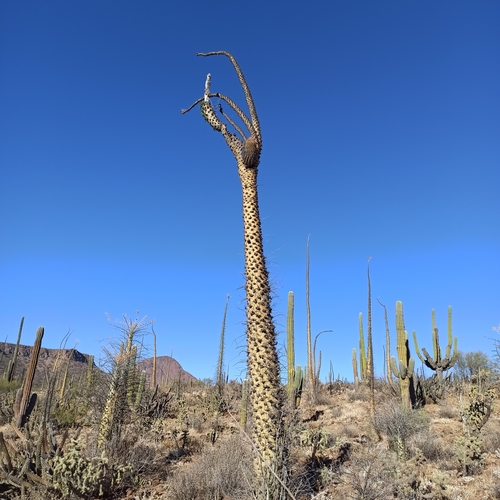
Ferocactus peninsulae
Common narrel cactus
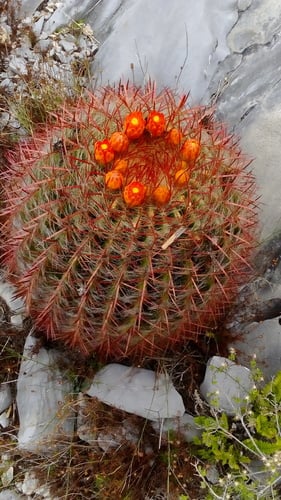
Ferocactus pilosus
Mexican lime cactus
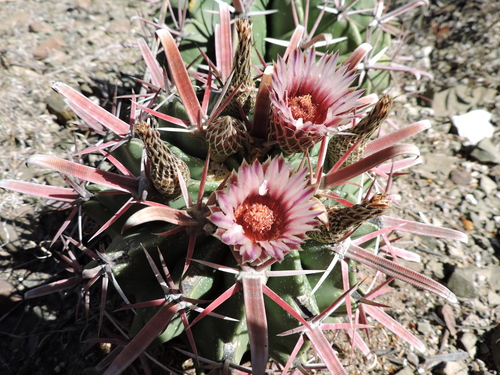
Ferocactus recurvus
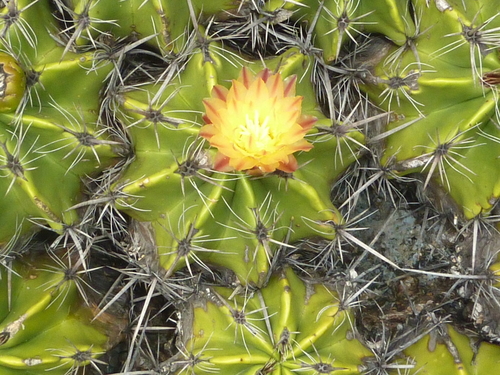
Ferocactus robustus
Clump barrel
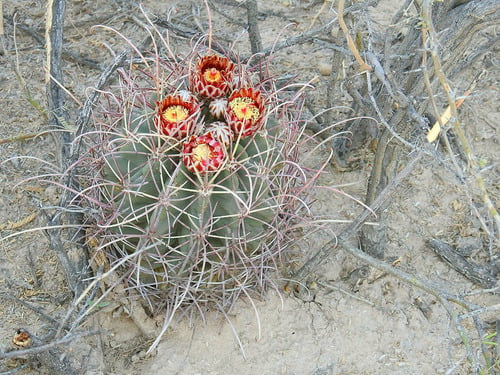
Ferocactus uncinatus
Turk's head cactus, Catclaw cactus
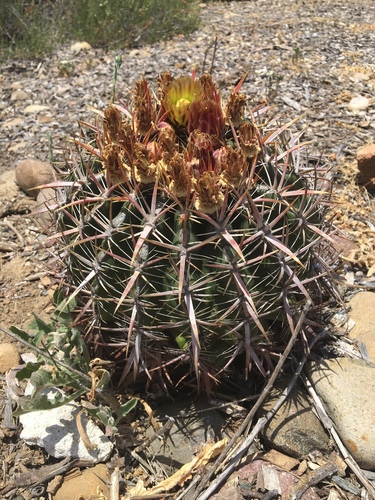
Ferocactus viridescens
Coast barrel cactus, Keg cactus, Green-stemmed viznaga, San Diego barrel cactus, Sisal