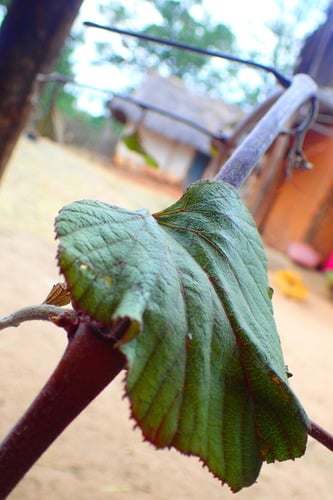
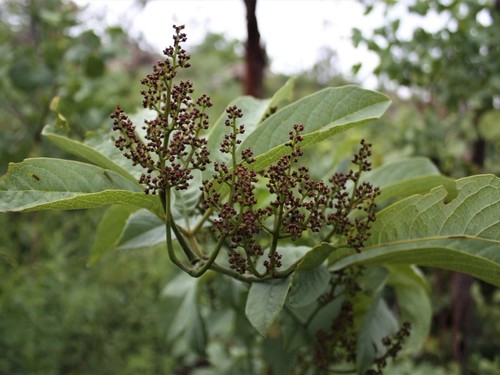
Vitis labruscana
L. H. Bailey
wikimedia· cc0
Wikimedia Commons - USDA Natural Resources Conservation Service (NRCS)
wikimedia· cc0
Wikimedia Commons - Descourtilz, J. Theodore; Descourtilz, M. E.; Pichard, ...
Summary
A deciduous climbing vine reaching 15 meters, hardy to UK zone 5. Flowers from June to July with seeds ripening September to October. Hermaphroditic and insect-pollinated. Tolerates light sandy, medium loamy, and heavy clay soils with good drainage. Grows in mildly acid to basic pH and adapts to semi-shaded woodlands or full sun, thriving in both dry and moist conditions.
Description
A deciduous climbing vine reaching 15 meters, hardy to UK zone 5. Flowers from June to July with seeds ripening September to October. Hermaphroditic and insect-pollinated. Tolerates light sandy, medium loamy, and heavy clay soils with good drainage. Grows in mildly acid to basic pH and adapts to semi-shaded woodlands or full sun, thriving in both dry and moist conditions.
Edible Uses
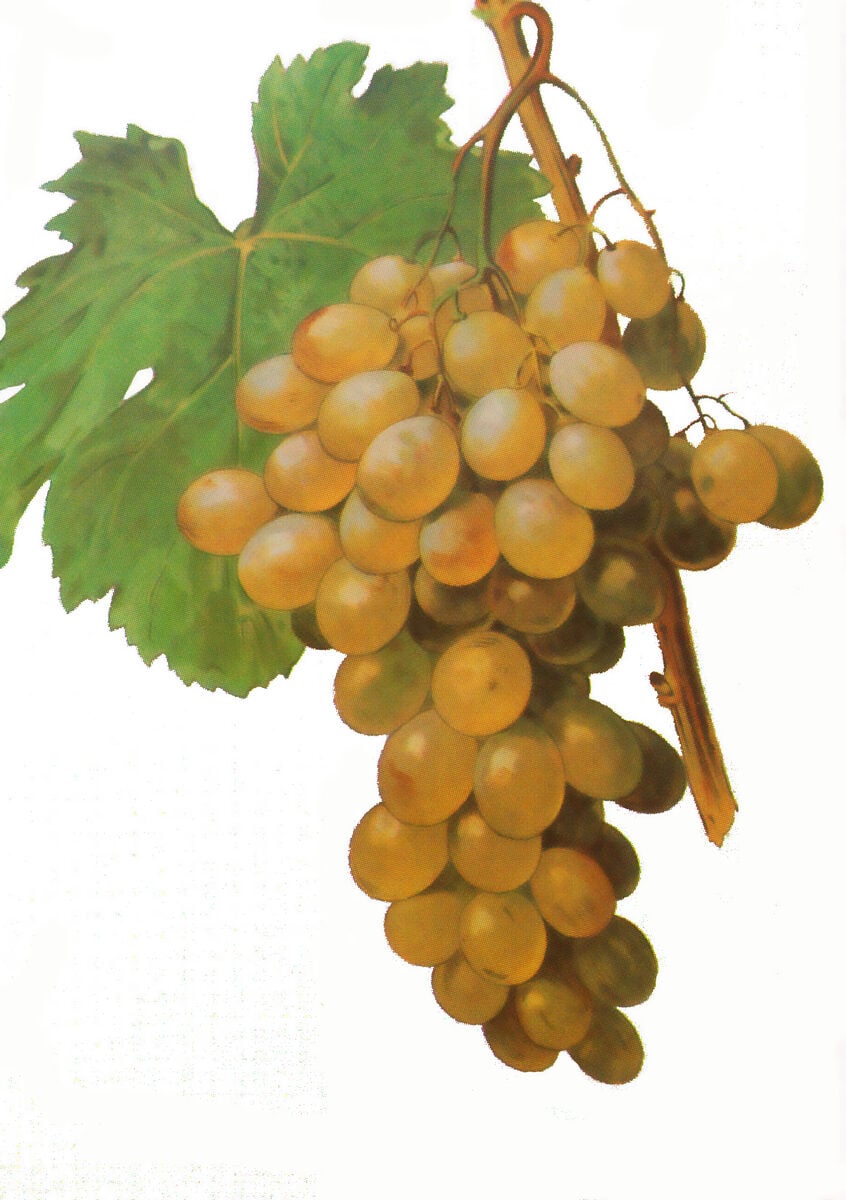
The fruit can be eaten raw or dried for winter use. It has a 'foxy' flavour generally less popular in Europe, though the berries are larger and less pronounced in this regard than those of Vitis labrusca. Fruit is about 25mm in diameter and is carried in fairly large bunches. It is widely used for winemaking in North America. Young leaves are used to wrap other foods before baking, lending them a pleasant flavour. Young tendrils can be eaten raw or cooked.
Medicinal Uses
None known.
Distribution
It is a temperate plant. It suits USDA hardiness zones 4-8.
Where It Grows
North America, USA,
Cultivation
Prefers a deep rich moist well-drained moderately fertile loam. Grows best in a calcareous soil. Succeeds in sun or partial shade though a warm sunny position is required for the fruit to ripen. The young growth in spring can be damaged by late frosts. Cultivated for its edible fruits, used mainly for making wine, in Eastern N. America. There are many named varieties. Plants climb by means of tendrils. Any pruning should be carried out in winter when the plants are dormant otherwise they bleed profusely. Plants in this genus are notably susceptible to honey fungus.
Propagation
Seed is best sown in a cold frame as soon as it ripens. Six weeks of cold stratification improves germination rates, so stored seed should be sown in a cold frame as soon as it is obtained. Germination usually occurs in the first spring but may take another 12 months. Prick seedlings into individual pots when large enough to handle, overwinter in a cold frame, and plant out in early summer. Note that as a hybrid species, seed is unlikely to come true. Hardwood cuttings of the current season's growth can be taken in December or January and rooted in a frame. These may be 15–30cm long, or short single-bud sections about 5cm long. For the shorter sections, remove a thin strip of bark roughly 3cm long from the lower side to encourage callusing and rooting; these smaller cuttings need more protection than longer ones. Layering is also an option.
Other Uses
A yellow dye is obtained from fresh or dried leaves. Greenish-blue and dark blue dyes can be obtained from the fruit skins of the cultivar 'Concord'.
Notes
There are 60 to 70 species of Vitis.
Dangerous Lookalikes
This plant can be confused with the following toxic species. Always verify identification carefully before consuming any wild plant.
Canadian Moonseed
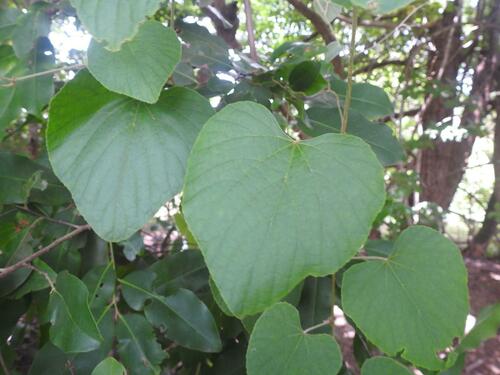
Menispermum canadense
Cbaile19
Vitis labruscana
Vitis labruscana
Wikimedia Commons - USDA Natural Resources Conservation Service (NRCS)
Canadian Moonseed: No tendrils, single crescent/moon-shaped seed, leaf stem attaches to underside of leaf.
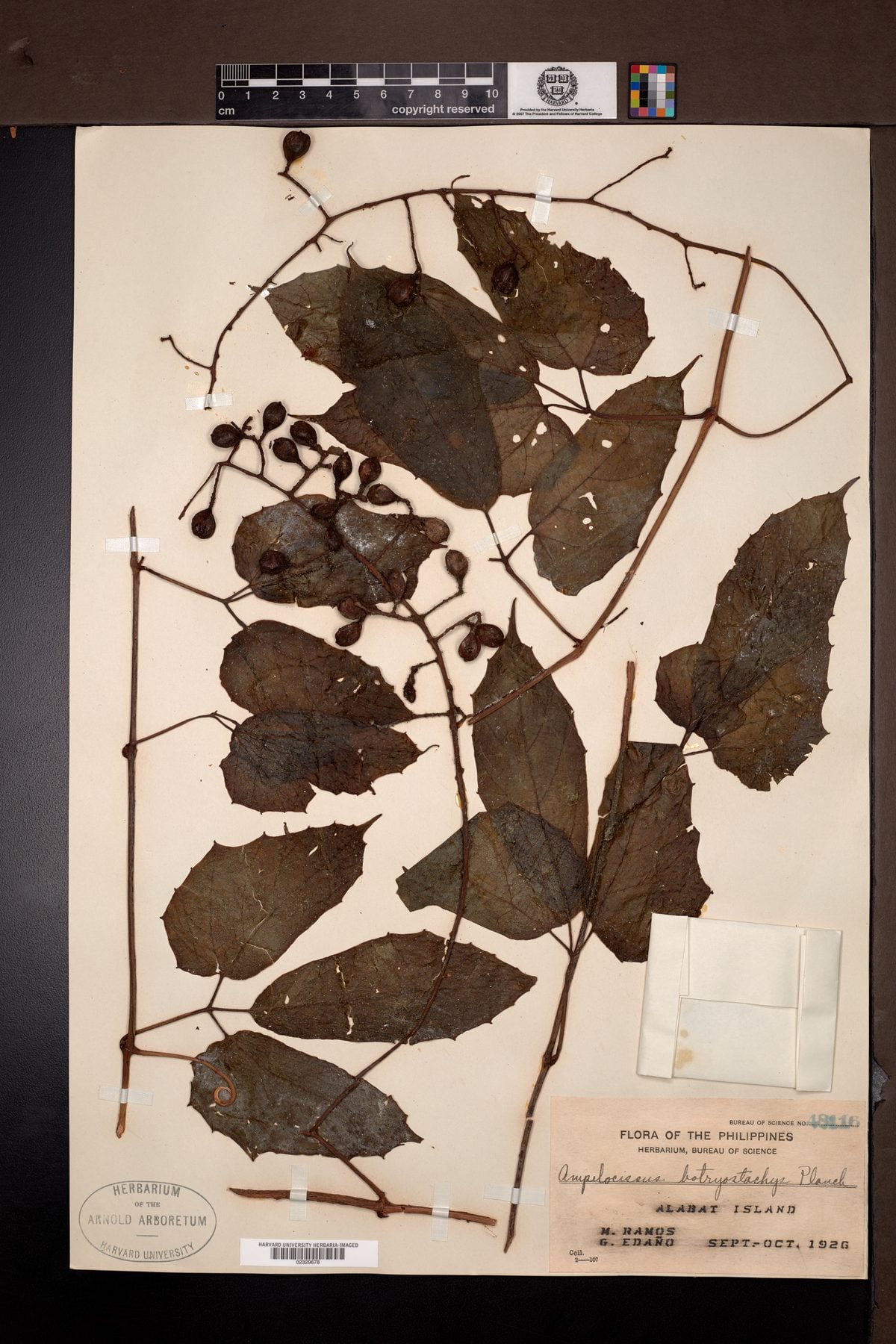
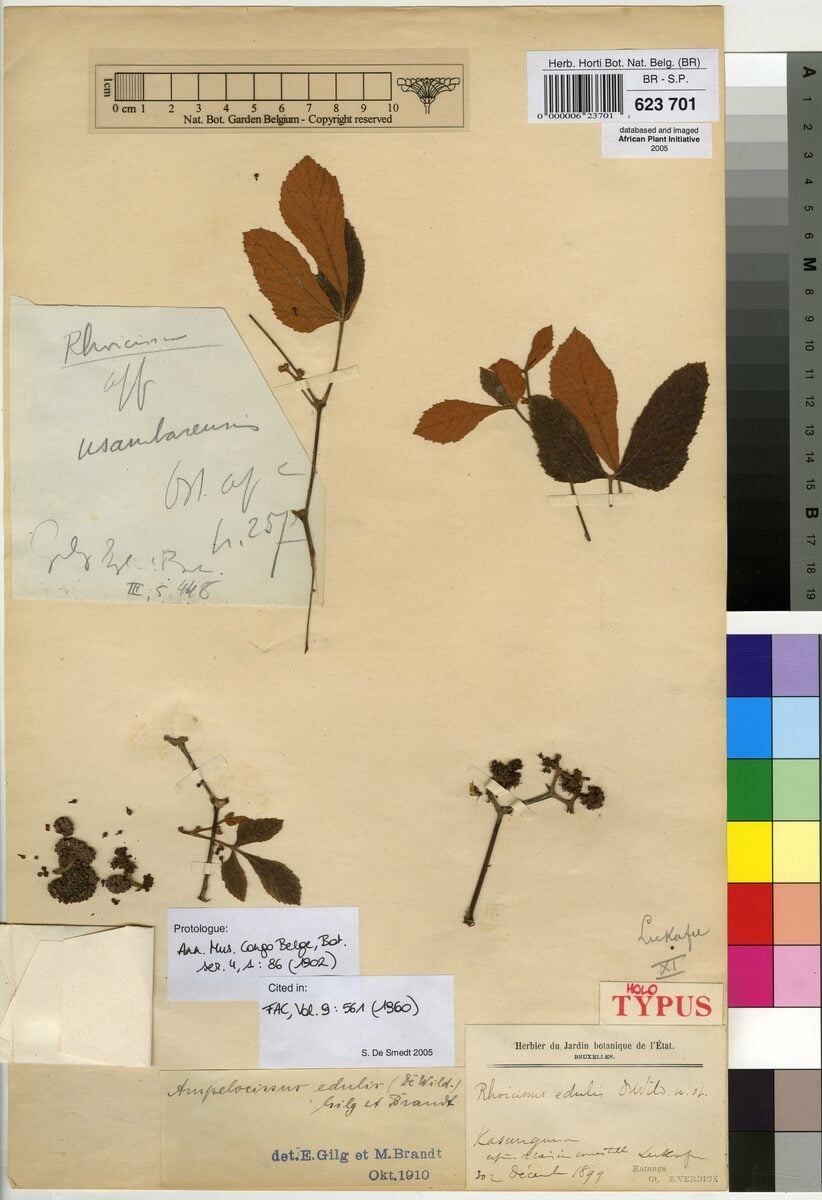
Vitis labruscana: Vine with tendrils, round seeds, leaf stem at edge of leaf, bark that peels.
References (1)
- Plants for a Future database, The Field, Penpol, Lostwithiel, Cornwall, PL22 0NG, UK. http://www.scs.leeds.ac.uk/pfaf/