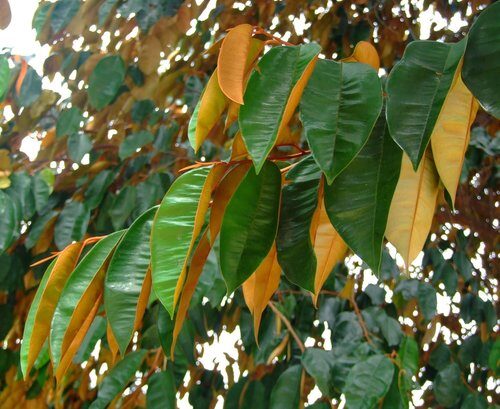
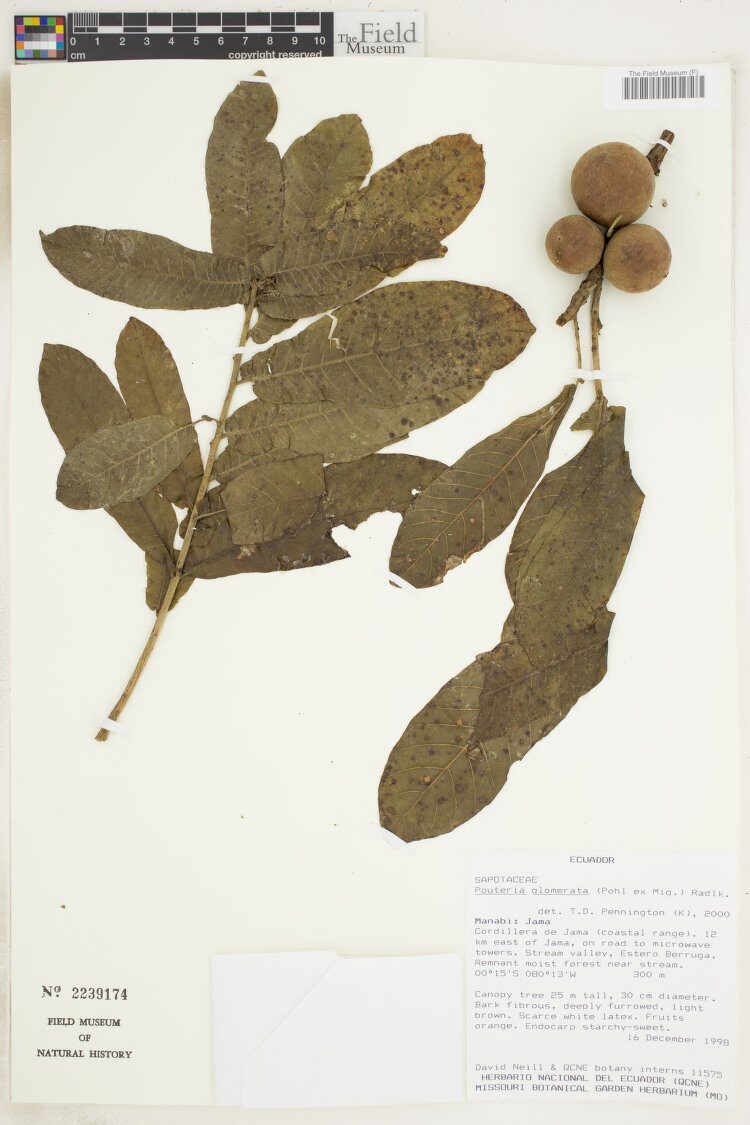
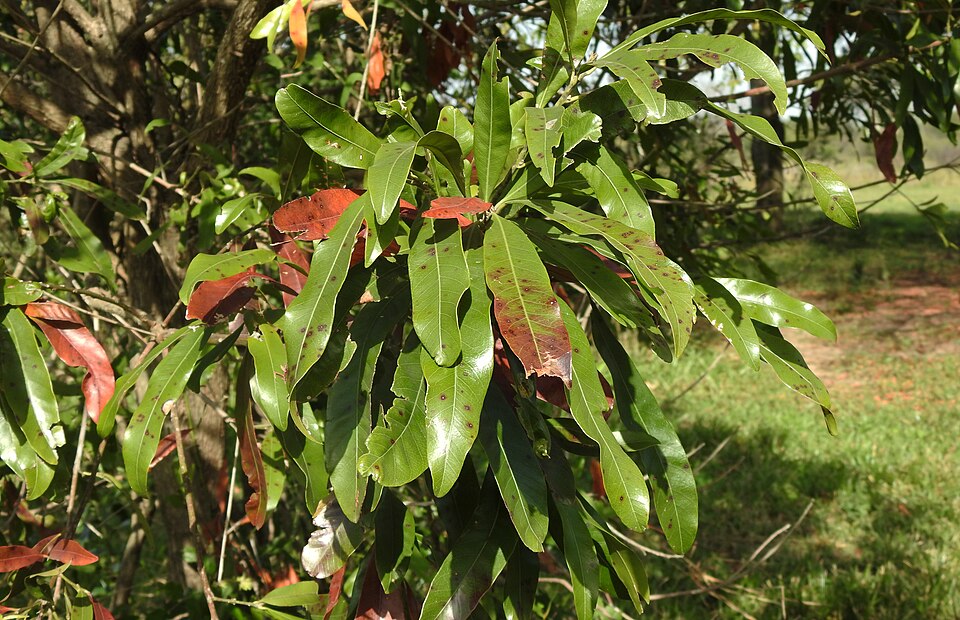
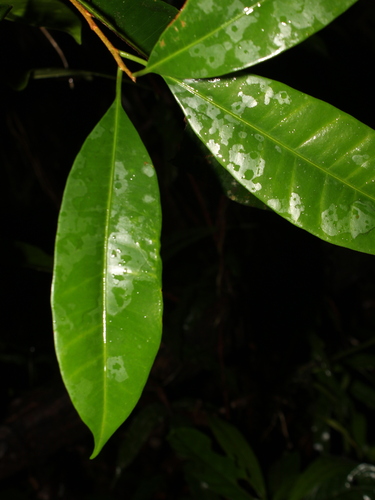
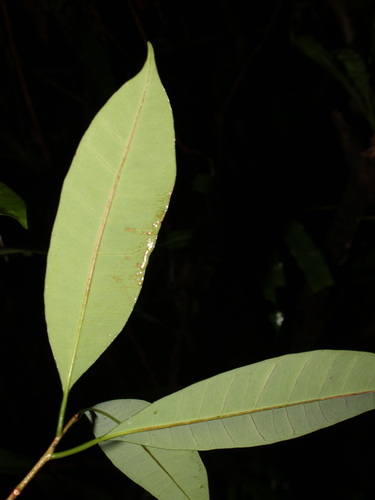
Chrysophyllum lucentifolium
Cronquist
Shining leaf starapple
iNaturalist· cc-by-nc
(c) Nils Servientis - Bivouac Naturaliste, some rights reserved (CC BY-NC), uploaded by Nils Servientis - Bivouac Naturaliste
iNaturalist· cc-by-nc
(c) Nils Servientis - Bivouac Naturaliste, some rights reserved (CC BY-NC), uploaded by Nils Servientis - Bivouac Naturaliste
iNaturalist· cc-by-nc
(c) Nils Servientis - Bivouac Naturaliste, some rights reserved (CC BY-NC), uploaded by Nils Servientis - Bivouac Naturaliste
Summary
Source: WikipediaChrysophyllum lucentifolium is a plant in the family Sapotaceae, native to Central and South America.
Description
A tropical tree native to rainforests, belonging to the sapodilla family.
This description is brief — help expand it
Edible Uses
The fruit is eaten raw.
Traditional Uses
The fruit are eaten raw.
This uses section is brief — help expand it
Distribution
It is a tropical plant. It grows in the rainforest.
Where It Grows
Bolivia, Brazil, Central America, Colombia, Costa Rica, Ecuador, Guiana, Guyana, Panama, Peru, South America, Venezuela,
Other Uses
The heartwood is light yellow; it is not demarcated from the sapwood. The texture is fine; the grain straight or interlocked. The wood is heavy, hard, elastic; it is not very durable, having a small resistance to fungi and being susceptible to dry wood borers and termites. The wood seasons normally with a slight risk of checking and a high risk of distortion; once dry it is moderately to poorly stable in service. It has a fairly high blunting effect upon tools, stellite-tipped and tungsten carbide are recommended; nailing and screwing are good, but pre-boring is recommended; gluing is correct. The wood is used for heavy carpentry, cabinet work, high class furniture, turnery, interior panelling and joinery, tool handles, sliced veneer etc.
Also Known As
Cauje
References (5)
- Grandtner, M. M., 2008, World Dictionary of Trees. Wood and Forest Science Department. Laval University, Quebec, Qc Canada. (Internet database http://www.WDT.QC.ca)
- Grandtner, M. M. & Chevrette, J., 2013, Dictionary of Trees, Volume 2: South America: Nomenclature, Taxonomy and Ecology. Academic Press p 130
- Roa, J. A. G. & Boada, D. S. G., 2018, Fundación para el Fortalecimiento de la Fruticultura y Plantas Alimenticias no Convencionales en Colombia.
- Torre, de la, L., et al, 2008, Enciclopedia de las Plantas Útiles del Ecuador. Herbario QCA. Pontificia Universidad Católica del Ecuador. p 569
- Van den Eynden, V., et al, 2003, Wild Foods from South Ecuador. Economic Botany 57(4): 576-603