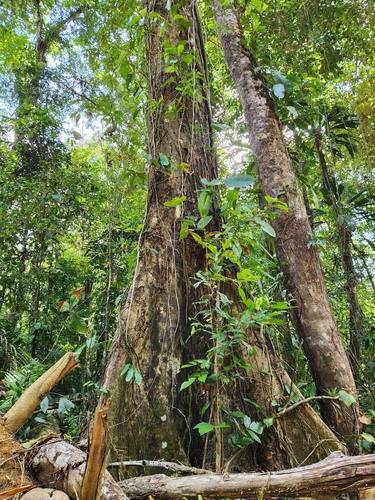
Pouteria cladantha
Sandwith
Abiurana seca
iNaturalist· cc-by-nc
(c) esa_bt, some rights reserved (CC BY-NC)
Description
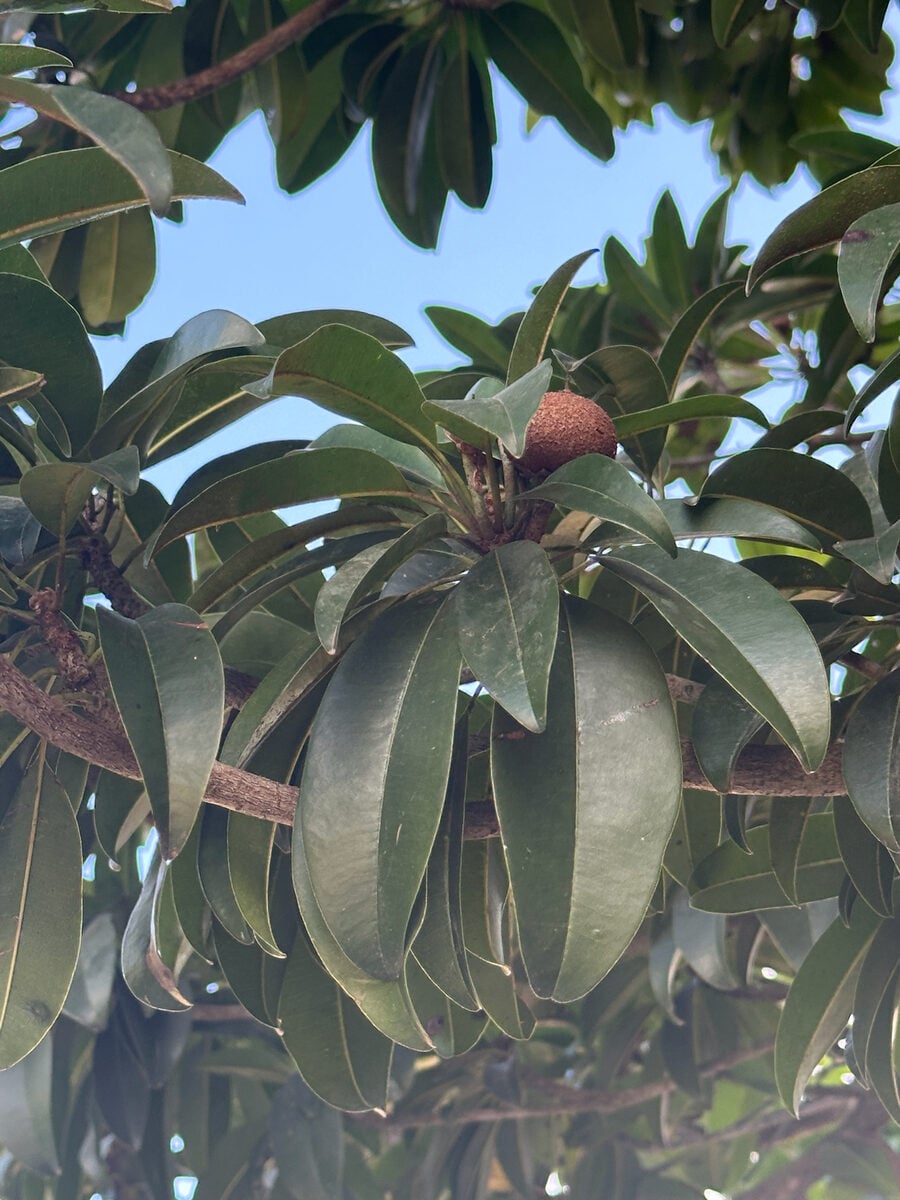
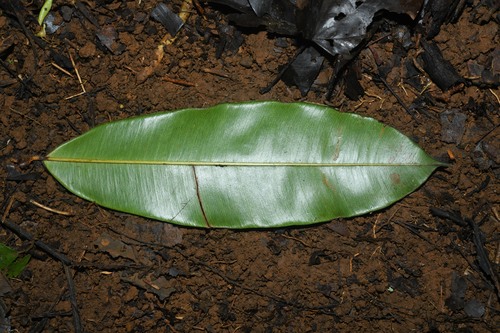
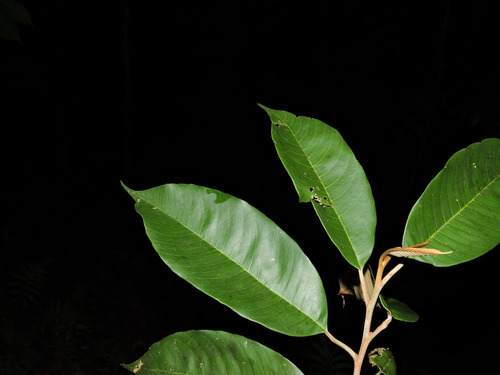
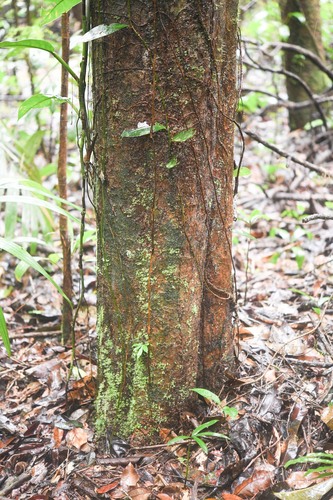
A tree. It grows up to 30 m high. The trunk can be 80 cm across. There can be buttresses 2 m high. The young shoots have very small hairs. The leaves are spaced and arranged in spirals. The leaves are 6.8-15 cm long and 2.5-7.5 cm wide. They are broadly sword shaped. There are 9-15 pairs of secondary veins. The flowers occur in tufts of 3-20 flowers. The flowers can contain both sexes or have one sex on separate trees. The flowers are greenish-yellow. The fruit are 1.8-3 cm long. They are oval or round. The fruit ripen to yellow. The fruit is sweet and edible. The pulp is clear. There is one seed. The seed is 1.4-2.2 cm long.
Edible Uses
The sweet fruit are eaten raw.
Traditional Uses
The fruit are sweet and are eaten raw.
This uses section is brief — help expand it
Distribution
A tropical plant. It grows in lowland mixed rainforest. It grows on non flooded land up to 800 m altitude.
Where It Grows
Amazon, Bolivia, Brazil, Colombia, French Guiana, Guianas, Guyana, Peru, South America, Suriname, Venezuela,
Notes
There are about 150-320 Pouteria species. They grow in the tropics.
Synonyms
Also Known As
Acuchipuru mira, Cacho venado, Caramuri preto, Haimara kushi, Palo de ardilla, Pulguilloa, Quinilla
References (8)
- Bendezu, Y. F., 2018, Arboles nativos de lad Region Ucayali. Instituto Nacional de Innovacion Agraria. p 302
- Grandtner, M. M. & Chevrette, J., 2013, Dictionary of Trees, Volume 2: South America: Nomenclature, Taxonomy and Ecology. Academic Press p 524
- Kermath, B. M., et al, 2014, Food Plants in the Americas: A survey of the domesticated, cultivated and wild plants used for Human food in North, Central and South America and the Caribbean. On line draft. p 687
- Lopez-Diago, D. & Garcia, N., 2021, Wild edible fruits of Colombia. Biota ColomBiana 22 (2) p 51
- Pennington, T.D., 1990, Sapotaceae in Flora Neotropica Monograph 52. New York Botanical Gardens. p 317
Show all 8 references Hide references
- Philips, O., 1992, The potential for harvesting fruits in tropical rainforests: new data from Amazonian Peru. Biodiversity and Conservation 2, 18-38
- Roa, J. A. G. & Boada, D. S. G., 2018, Fundación para el Fortalecimiento de la Fruticultura y Plantas Alimenticias no Convencionales en Colombia.
- Van Roosmalen, M.G.M., & Garcia, O. M., 2000, Fruits of the Amazonian Forest. Part 2: Sapotaceae. Acta Amazonica 30(2): 187-290