Alpinia zerumbet
(Pers.) Burtt. & Smith
Shell ginger
iNaturalist· cc-by-nc
(c) maplerice, some rights reserved (CC BY-NC), uploaded by maplerice
iNaturalist· cc-by-nc-sa
(c) 毛毛, some rights reserved (CC BY-NC-SA), uploaded by 毛毛
iNaturalist· cc-by-nc
(c) 2015 Zoya Akulova, some rights reserved (CC BY-NC)
Summary
Source: WikipediaAlpinia zerumbet, commonly known as shell ginger among other names, is a perennial species of ginger native to East Asia. The plants can grow up to 2.5 to 3 meters (8 to 10 ft) tall and bear colorful funnel-shaped flowers. They are grown as ornamentals and their leaves are used in cuisine and traditional medicine.
Description
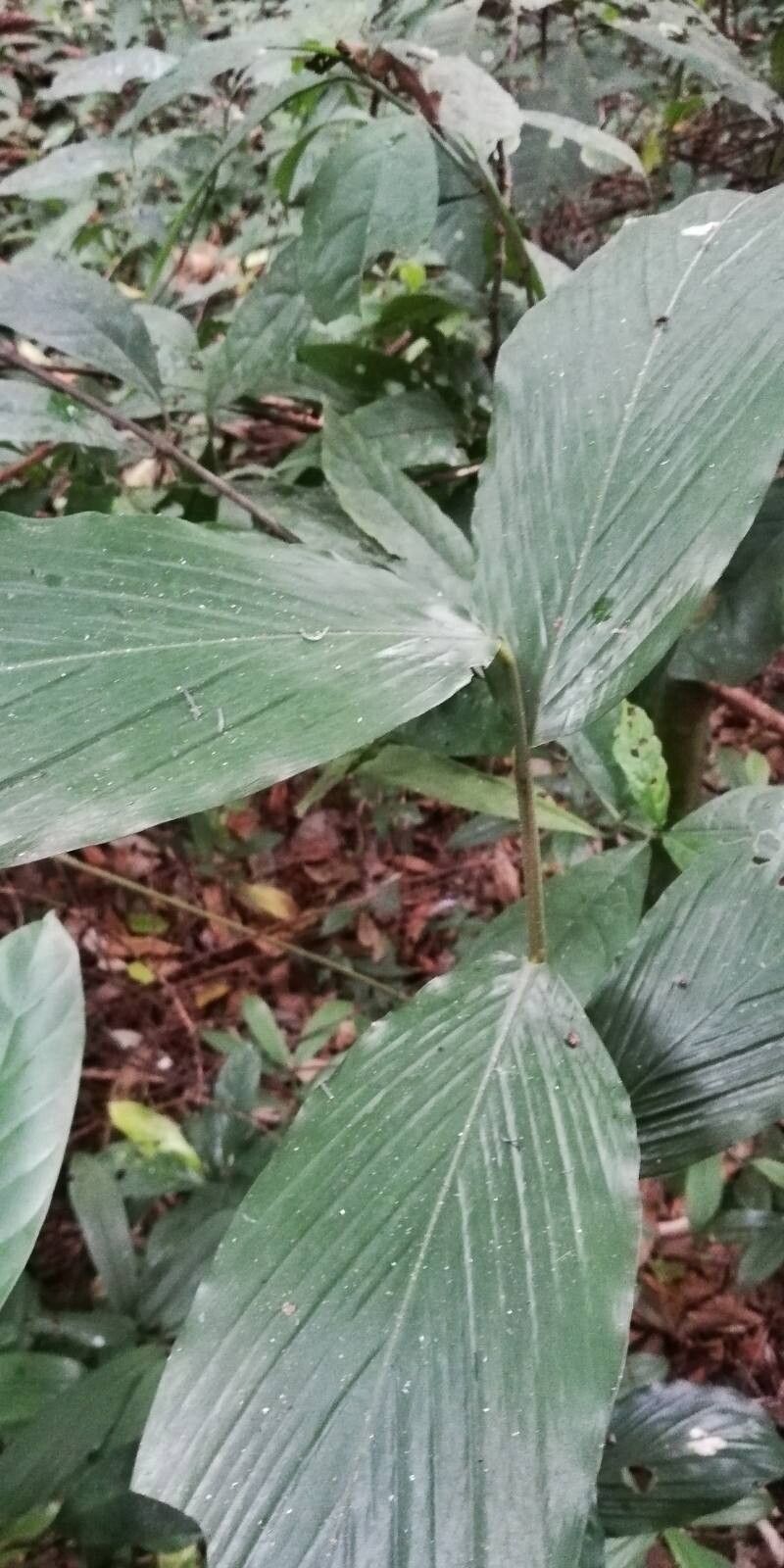
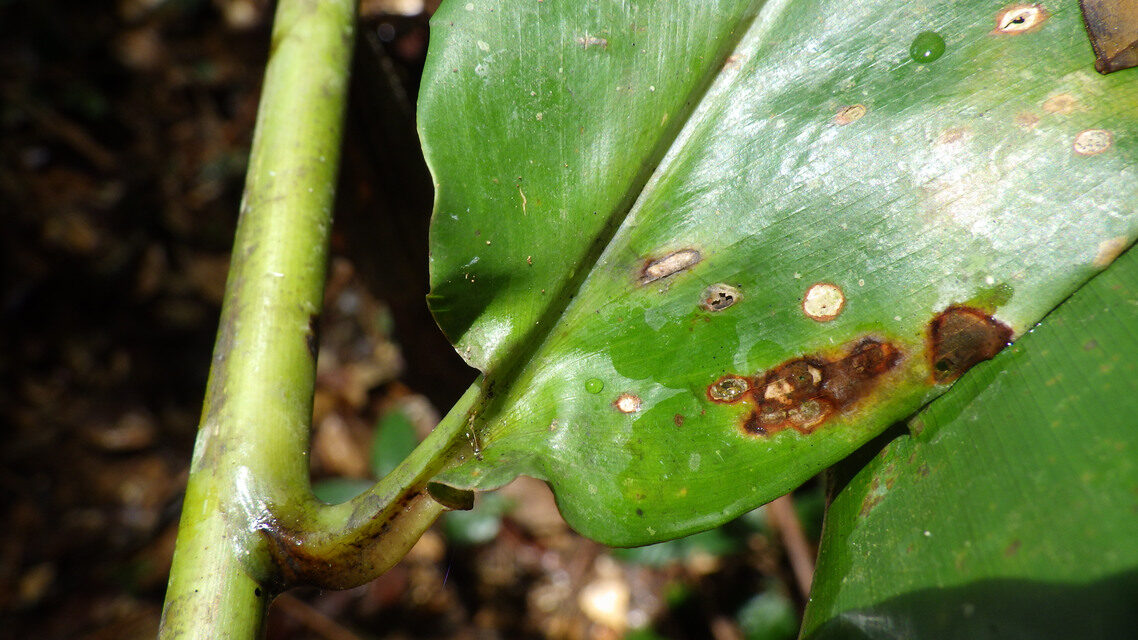
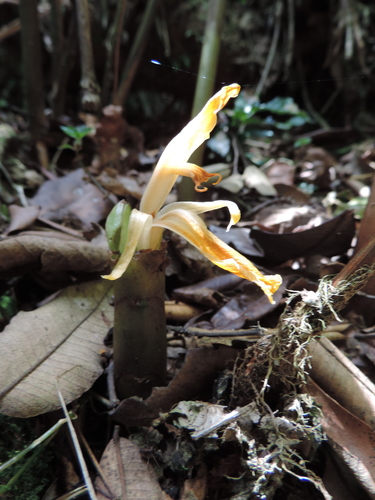
A herb. The false stems are 2-3 m high. The leaf stalk is 1-1.5 cm long. The leaf blade is sword shaped and 30-60 cm long by 5-10 cm wide. They are hairy at the edge. They taper to the tip with a spiral point. The flowers droop. They are 30 cm long. They are enclosed by 2 long sheaths when young. There are 1 or 2 flowers. The capsules are bright red. It is about 2 cm across. It is ribbed. The seeds are angled.
Edible Uses
The pith of young stems is eaten fresh. Stems, leaves, and flowers are boiled as a cooked vegetable. The rhizome is used as a spice. Ripe fruits are eaten.
Traditional Uses
The pith of the young stem is eaten. The stems, leaves and flowers are boiled and eaten. The rhizome is used as a spice. The ripe fruit are eaten.
Medicinal Uses
The long leaf blades of A. zerumbet are used for wrapping zongzi, a traditional Chinese dish made of rice stuffed with different fillings. In Okinawa, Japan, its leaves are sold for making an herbal tea and are also used to flavor noodles and wrap muchi rice cakes. The plant's dried fruits are treated as one of the numerous medicinal spice ingredients in a Sichuan hot pot soup base under the name shārén (沙仁) in Sichuan Mandarin Chinese. Statistically, Okinawan natives who consume a traditional diet that includes A. zerumbet have a very long life expectancy. Recent research has investigated its effects on human longevity and the phytochemicals that may be responsible. A. zerumbet contains many kavalactones structurally related to the compounds in kava (Piper methysticum) and may help prevent high glucose induced cell damage in human umbilical vein endothelial cells.
Distribution
A tropical and subtropical plant. It needs regular moisture and humidity. It needs a fertile humus-rich, well drained soil. It grows as an understory plant with bright light. It grows in S China. In the Cairns Botanical Gardens. Melbourne Botanical gardens. It grows in hardiness zones 8-12.
Where It Grows
Africa, Asia, Australia, Bangladesh, Cambodia, Canary Islands, Central America, China, Cuba, Dominican Republic, East Africa, Fiji, Ghana, Haiti, Hawaii, Honduras,India, Indochina, Indonesia, Japan, Laos, Malaysia*, Mozambique, Myanmar, Nauru, Pacific, Papua New Guinea*, PNG, Philippines, Puerto Rico, Rotuma, SE Asia, Sri Lanka, St Helena, St Lucia, Taiwan, Thailand, Tonga, USA, Vietnam, West Africa, West Indies,
Cultivation
Plants are grown by division of the clump. They can be grown from seeds.
Propagation
Seed - Division of the rhizome.
Other Uses
The leaf sheaths are sometimes used as fibre for making rope[310. The plant is pulped and the fibre used for making paper.
Notes
It is grown as an ornamental. There are about 200-230 Alpinia species. They are mostly tropical and subtropical.
Synonyms
Also Known As
'awapuhe, Ge-toLight galangal, Honje belang, Light ginger, Luheluhe, Padegaw-gyi, Punnagchampa, Sannin, Shell flower, Yan shan jiang
References (30)
- Ambasta S.P. (Ed.), 2000, The Useful Plants of India. CSIR India. p 31
- Anderson, E. F., 1993, Plants and people of the Golden Triangle. Dioscorides Press. p 202
- Bircher, A. G. & Bircher, W. H., 2000, Encyclopedia of Fruit Trees and Edible Flowering Plants in Egypt and the Subtropics. AUC Press. p 21 (As Alpinia speciosa)
- Bremness, L., 1994, Herbs. Collins Eyewitness Handbooks. Harper Collins. p 227
- Burkill, H. M., 1985, The useful plants of west tropical Africa, Vol. 3. Kew.
Show all 30 references Hide references
- Burkill, I. H., 1966, A Dictionary of the Economic Products of the Malay Peninsula. Ministry of Agriculture and Cooperatives, Kuala Lumpur, Malaysia. Vol 2 (I-Z) p 1325, 1334 (As Alpinia speciosa)
- Chen, I., et al, 2008, Antioxidant and Antimicrobial Activities of Zingiberaceae Plants in Taiwan. Plant Foods for Human Nutritition, 63:15-20
- Cundall, P., (ed.), 2004, Gardening Australia: flora: the gardener's bible. ABC Books. p 139
- Facciola, S., 1998, Cornucopia 2: a Source Book of Edible Plants. Kampong Publications, p 247 (As Alpinia speciosa)
- Franklin, J., Keppel, G., & Whistler, W., 2008, The vegetation and flora of Lakeba, Nayau and Aiwa Islands, Central Lau Group, Fiji. Micronesica 40(1/2): 169–225, 2008
- Kuo, W. H. J., (Ed.) Taiwan's Ethnobotanical Database (1900-2000), http://tk.agron.ntu.edu.tw/ethnobot/DB1.htm (As Alpinia speciosa)
- Lamberton, K (Ed.), 2004, The Australian gardening encyclodepia. Murdoch Books, NSW Australia. p 161
- Larsen, K., Ibrahim, H., Khaw, S.H., & Saw, L.G., 1999, Gingers of Peninsula Malaysia and Singapore. Natural History Publications (Borneo). p 62
- Lim, T. K., 2015, Edible Medicinal and Non Medicinal Plants. Volume 9, Modified Stems, Roots, Bulbs. Springer p 7
- Llamas, K.A., 2003, Tropical Flowering Plants. Timber Press. p 363
- Niwano, Y. et al., 2009, Extensive Screening for Plant Foodstuffs in Okinawa, Japan with Anti-Obese Activity on Adipocytes, in vitro. Plant Foods in Human Nutrition 64:6-10 (As Alpinia speciosa)
- Notes Roy. Bot. Gard. Edinburgh 31(2):204. 1972
- Plants of Haiti Smithsonian Institute http://botany.si.edu/antilles/West Indies
- PROSEA handbook Volume 13 Spices. p 274
- Recher, P, 2001, Fruit Spirit Botanical Gardens Plant Index. www.nrg.com.au/~recher/ seedlist.html p 3 (As Alpinia speciosa)
- Seidemann J., 2005, World Spice Plants. Economic Usage, Botany, Taxonomy. Springer. p 31
- Siemonsma, J. S. & Kasem Piluek, eds. 1993. Vegetables. In: Plant Resources of South-East Asia (PROSEA) 8:312
- Singh, H.B., Arora R.K.,1978, Wild edible Plants of India. Indian Council of Agricultural Research, New Delhi. p 10 (As Alpinia speciosa)
- Smith, A.C., 1979, Flora Vitiensis Nova, Lawaii, Kuai, Hawaii, Volume 1 p 214
- Staples, G.W. and Herbst, D.R., 2005, A tropical Garden Flora. Bishop Museum Press, Honolulu, Hawaii. p 761 (Drawing)
- Sukarya, D. G., (Ed.) 2013, 3,500 Plant Species of the Botanic Gardens of Indonesia. LIPI p 1059
- Suksri, S., et al, 2005, Ethnobotany in Bung Khong Long Non-Hunting Area, Northeast Thailand. Kasetsart J., (Nat. Sci) 39: 519-533
- Tanaka,
- Tewari, D.N., 1994, Important Plants of India. International Book Distributors, India. p 104
- World Checklist of Useful Plant Species 2020. Royal Botanic Gardens, Kew