Clerodendrum petasites
S. Moore
Thao yaai mom, Kasalong
gbif· cc0
President and Fellows of Harvard College
Description
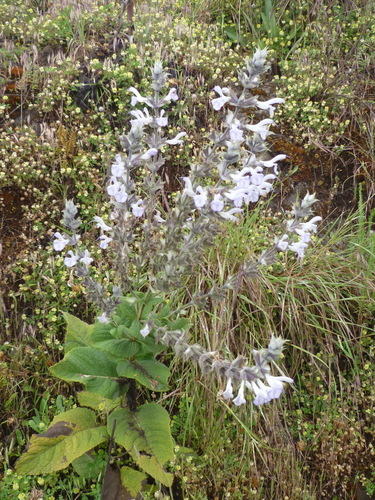
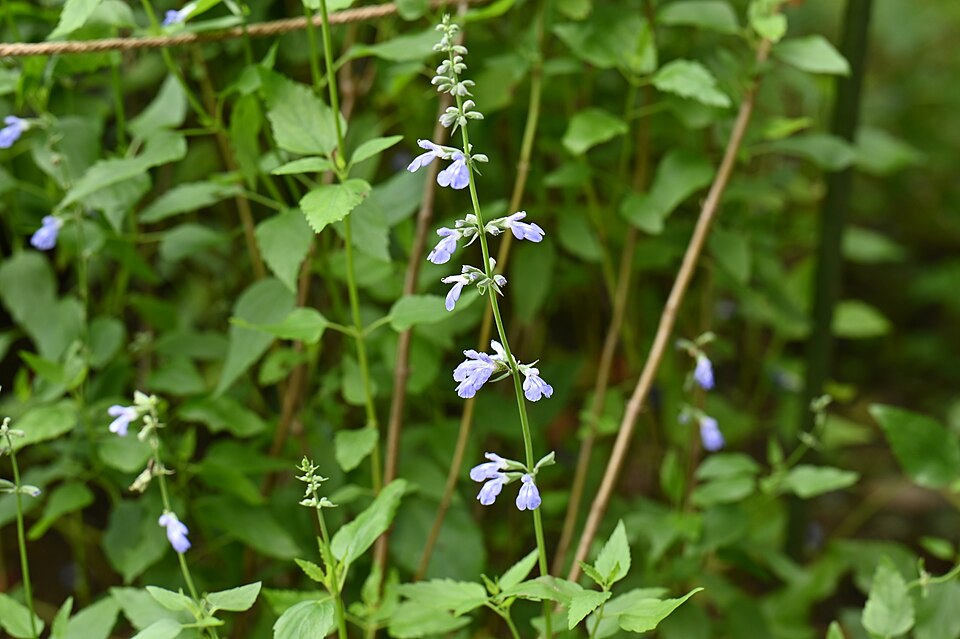
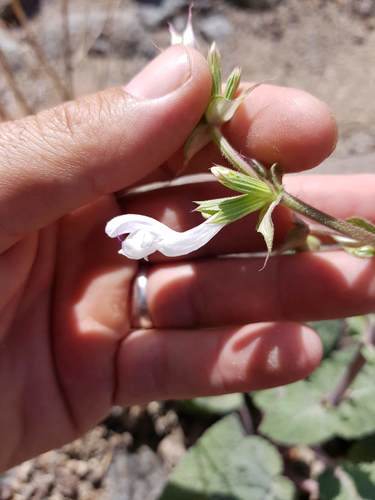
A small shrub. It grows 3 m high. The leaves are oval and toothed. The flowers are long white tubes. The flowers drop off leaving a long pistil attached to the ovary.
Edible Uses
The reports on edibility listed below are likely to belong to Clerodendrum indicum (see notes above on taxonomy) Leaves - cooked and eaten as a vegetable.
Medicinal Uses
The reports on medicinal uses listed below are likely to belong to Clerodendrum indicum (see notes above on taxonomy) The roots are used as an antiasthmatic and expectorant. The leaves are used to expel worms and are eaten as a bitter-tasting tonic, The roots are generally formulated as part of multi-herbal recipes, including the traditional Thai formula 'Ha-Rak' which also includes the roots of Ficus racemona Linn, Capparis micracantha DC, Harrisonia perforate Merr, and Tiliacora triandra Diels. This formula has been registered by the Thai Food and Drug Administration (FDA) for antipyretic activity. Thai traditional practitioners prescribe the plant as part of an ethnomedical regime to treat asthma, inflammation, fever, cough, and vomiting. The plant can also be prepared in a poultice for the traditional treatment of skin disorders, such as rash, abscess, urticarial, snakebites and insect bites Besides Thailand, this plant is also documented in traditional medical systems of other Asian countries including Malaysia, India, Southern China, Sri Lanka and Vietnam. Its roots and leaf extracts have been reported to treat rheumatism, asthma and other inflammation diseases, whereas the fruits are usedtfor reduction of fertility in males (not clear if this means to improve or lower fertility) and the whole plant is prescribed to relieve malaria
Distribution
A tropical plant.
Where It Grows
Asia, Indochina, Myanmar, SE Asia, Thailand,
Cultivation
Species in this genus generally grow best in full sun or partial shade in a moist but well-drained soil.
Propagation
Seed - Softwood cuttings Cuttings of half-ripe wood Root cuttings Division of suckers
Notes
There are about 400 Clerodendrum species.
Also Known As
Bu-gyi-hpyu, Hkringmau, Kha-aung-gyi, Mai-lu-hpawng, Petka, Sabe-se, U-gyi
References (3)
- Jacquat, C., 1990, Plants from the Markets of Thailand. D.K. Book House p 98
- Kachenchart, B., et al, 2008, Phenology of Edible Plants at Sakaerat Forest. In Proceedings of the FORTROP II: Tropical Forestry Change in a Changing World. Bangkok, Thailand.
- McMakin, P.D., 2000, Flowering Plants of Thailand. A Field Guide. White Lotus. p 38