Laccaria laccata
(Scop. ex Fr.) Cooke
Deceiver, Waxy Laccaria
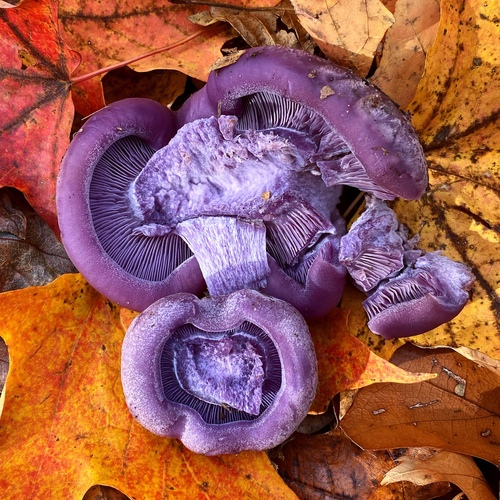
iNaturalist· cc-by-nc
(c) Christian Schwarz, some rights reserved (CC BY-NC), uploaded by Christian Schwarz
iNaturalist· cc-by-nc
(c) lightning_whelk, some rights reserved (CC BY-NC), uploaded by lightning_whelk
iNaturalist· cc-by-nc
(c) Stephanie Calloway, some rights reserved (CC BY-NC), uploaded by Stephanie Calloway
Summary
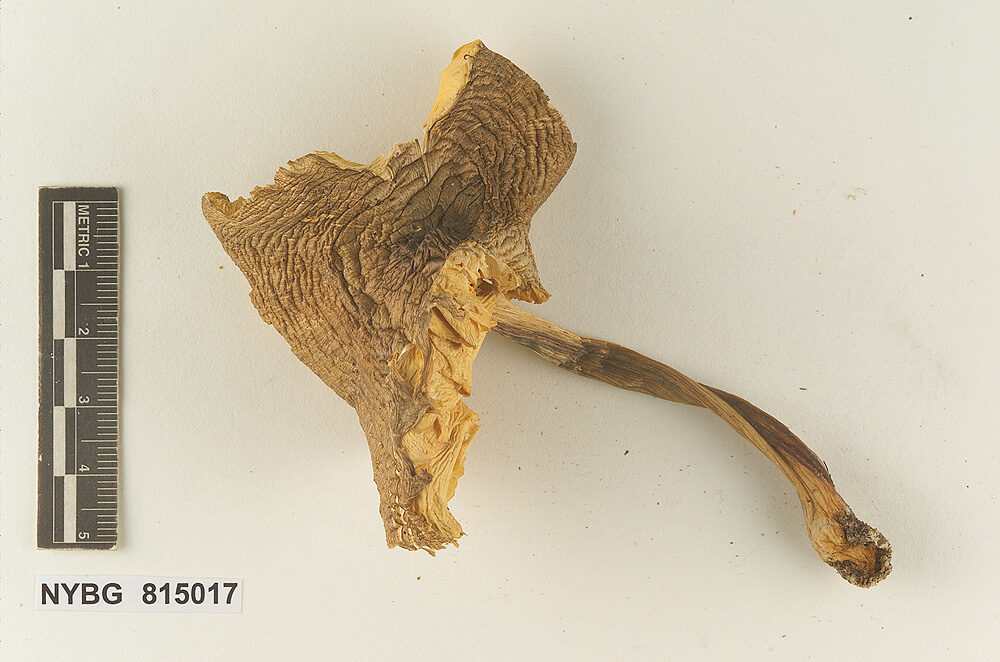
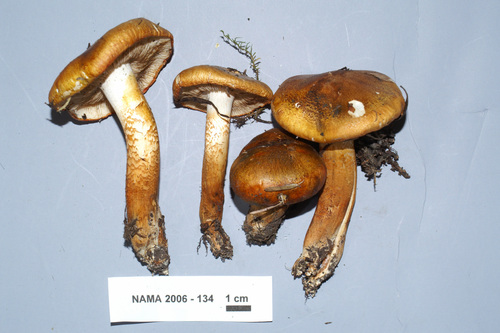
Source: WikipediaLaccaria laccata, commonly known as the deceiver, lackluster laccaria, or waxy laccaria, is a species of fungus. It is a small but highly variable mushroom (hence 'deceiver'), and can look quite washed out, colorless and drab, but when younger it often assumes red, pinkish brown, and orange tones. It has white spores. Found throughout North America and Europe, the species is often considered by mushroom collectors to be a 'mushroom weed' because of its abundance and plain stature. The cap is edible.
Description
A mushroom. It grows in large groups. The cap curves but can be flattened. It is pale red. The stem is 5-10 cm long. The stem is often twisted. The gills are spread wide. The spore print is white.
Edible Uses
Only the cap is eaten; the stalk is discarded. It is typically stewed or fried.
Traditional Uses
Only the cap is eaten and the stalk is discarded. It is stewed or fried.
This uses section is brief — help expand it
Distribution
It is a temperate plant. It grows in conifer and deciduous forests. In Yunnan.
Where It Grows
Africa, Alaska, Asia, Australia, Balkans, Bulgaria, Canada, Central America, China, Costa Rica, Europe, Guatemala, Himalayas, Hong Kong, Hungary, Indochina, Laos, Mexico, Nepal, North America, Russia, SE Asia, South Africa, Southern Africa, Tasmania, Turkey, Türkiye, USA,
Production
It can be stored by drying.
Other Information
It is sold in local markets in Nepal and Mexico.
Synonyms
Also Known As
Chocuyul, Qi lamo, Socoyol, Soldadito, Tashimu, Xocoyol, Xocoyole
References (25)
- Adhikari, M. K., 2014, Addition and correction to the knowledge on edibility of wild mushrooms in Nepal: a discussion. Bul. Dept. Pl. Res. N. 36, Nepal p 5
- Boa, E. R., 2004, Wild edible fungi and their importance to people. FAO Non Wood Forest Products Booklet 17
- Christensen, M., et al, 2008, Collection and Use of Wild Edible Fungi in Nepal. Economic Botany, 62(1), 2008, pp. 12–23
- Cortes, L.E.U., et al, 2018, Ethnomycology and mushroom selling in a market from Northwest Puebla, México. Scientia Fungorum vol. 47: 47-55
- Cronin, L., 1989, The Concise Australian Flora. Reed. p 303
Show all 25 references Hide references
- Dashorst, G.R.M., and Jessop, J.P., 1998, Plants of the Adelaide Plains & Hills. Botanic Gardens of Adelaide and State Herbarium. p 34
- Demirbas, A., 2000, Accumulation of heavy metals in some edible mushrooms from Turkey. Food Chemistry 68: 415-419
- Dongol, et al, 1995, Edible Mushrooms in Nepal
- Estrada-Martinez, E., et al, 2009, Contribucion al conocimiento etnomicologico de los Hongos Comestibles Silvestres de Mercados Regionales y Comunidades de la Sierra Nevada (Mexico). Intercienca Jan 2009 Vol. 34 No. 1
- Farfan B., et al, 2007, Mazahua Ethnobotany and Subsistence in the Monarch Butterfly Biosphere Reserve, Mexico. Economic Botany 61(2) pp 173-191
- Geng, Y., et al, 2016, Traditional knowledge and its transmission of wild edibles used by the Naxi in Baidi Village, northwest Yunnan province. Journal of Ethnobiology and Ethnomedicine. 12:10
- Guild, B., 1979, The Alaskan Mushroom Hunter's Guide. Alaska Northwest Publishing Company. p 60
- Gryzenhout, M., 2010, Mushrooms of South Africa. Pocket Guide. Struik. p 41
- Hall, I. R., et al, 2003, Edible and Poisonous Mushrooms of the World. Timber Press. p 148
- Jordan, P., 2000, The Mushroom Guide and Identifier, Hermes House, p 63
- Joshi, K. and Joshi, A. R., 2008, Ethnobotanical Studies on Some Lower Plants of the Central Development Region, Nepal. Ethnobotanical Leaflets 12:832-40
- Kaufmann, B. et al, 1999, The Great Encyclopedia of Mushrooms. Konemann. p 83
- Pace, G., 1998, Mushrooms of the world. Firefly books. p 119
- Perez-Moreno, J. et al, 2008, Wild Mushroom Markets in Central Mexico and a Case Study at Ozumba. Economic Botany, 62(3), 2008, pp. 425–436
- Perez-Moreno, J., et al, 2009, Social and Biotechnological Studies of Wild Edible Mushrooms in Mexico. Acta Botanica Yunnanica Suppl. XV1: 55-61
- Quinonez-Martinez, M., et al, 2014, Knowledge and use of edible mushrooms in two municipalities of the Sierra Tarahumara, Chihuahua, Mexico. Journal of Ethniobiology and Ethnomedicine 10:6
- Rila Monastery Nature Park Management Plan 2004 - 2013 (Bulgaria) p 380
- Vetner, J., 2004, Arsenic content of some edible mushroom species. Eur. Food Res. Technol. 219: 71-74
- www.plantnames.unimelb.edu.au
- Zamora-Martinez, M. et al, 1995, Natural production of wild edible mushrooms in the southwestern rural territory of Mexico City, Mexico. Forest Ecology and Management 72:13-20