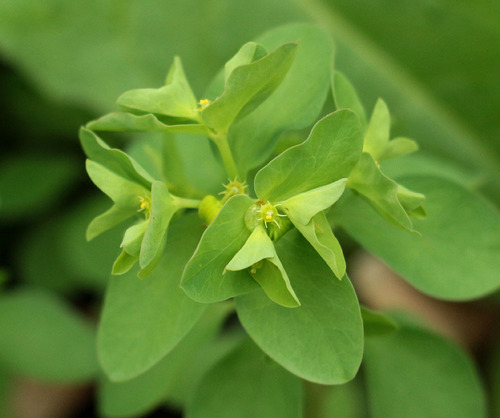
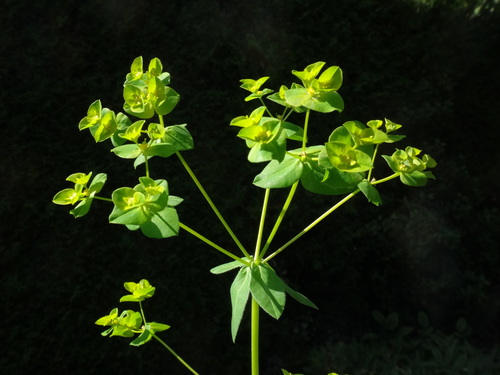
Mercurialis perennis
L.
Lazna resulja
iNaturalist· cc-by-nc-nd
(c) --Tico--, some rights reserved (CC BY-NC-ND)
iNaturalist· cc-by-nc
(c) Silst64, some rights reserved (CC BY-NC)
iNaturalist· cc-by-nc
(c) Leonard Schmalhaus, some rights reserved (CC BY-NC)
Summary
Source: WikipediaMercurialis perennis, commonly known as dog's mercury, is a poisonous woodland plant found in much of Europe as well as in Algeria, Iran, Turkey, and the Caucasus, but almost absent from Ireland, Orkney and Shetland. A member of the spurge family (Euphorbiaceae), it is a herbaceous, downy perennial with erect stems bearing simple, serrate leaves. The dioecious inflorescences are green, bearing inconspicuous flowers from February to April. It characteristically forms dense, extensive carpets on the floor of woodlands and beneath hedgerows.
Description
A perennial ground cover growing 0.3 m tall by 1 m wide at a fast rate, hardy to UK zone 4. It flowers February to April with seeds ripening May to June. Dioecious plants (both male and female required for seed production) are pollinated by wind and flies. Tolerates full or semi-shade and prefers moist soil in light, medium, or heavy soils with variable pH levels.
Edible Uses
The seed is a potential source of a very good drying oil, though no edible use of the plant is known.
Traditional Uses
The young shoots are cooked and eaten.
This uses section is brief — help expand it
Medicinal Uses
Dog's mercury is poisonous in the fresh state, though thorough drying or heating is said to destroy the toxic principle. The fresh juice of the whole plant is emetic, ophthalmic, and purgative. It is applied externally to treat women's complaints, ear and eye problems, warts, and sores. A lotion made from the plant is used for antiseptic external dressings. A homeopathic remedy prepared from the plant is used in the treatment of rheumatism, dropsy, diarrhoea, and disorders of the gall bladder and liver.
Known Hazards
The plant is poisonous in its fresh state. Thorough drying or heating is said to destroy the toxic principle.
Distribution
It is a temperate plant.
Where It Grows
Balkans, Bosnia, Europe, Luxembourg, Slovenia,
Cultivation
Prefers a humus rich soil. Dog's mercury is a very invasive and common hedgerow plant, it should not be necessary to cultivate it. Male and female plants usually grow in separate clumps, the females being less common. The leaves contain trimethylamine and, in the early stages of putrefaction or when bruised, they give off the smell of rotting fish. Dioecious. Male and female plants must be grown if seed is required.
Propagation
Seed can be spread around when ripe in late spring or early summer, as the plant spreads readily on its own. Division of the roots can be carried out at any time of year.
Other Uses
A fine blue dye obtained from the leaves resembles indigo; it turns red in acids and is destroyed by alkalis, but is otherwise permanent. A yellow dye is also obtained from the leaves. The seed is a potential source of a very good drying oil.
Also Known As
Trpežni golšec
References (3)
- http://www.botanic-gardens-ljubljana.com/en/plants
- Redzic, S. J., 2006, Wild Edible Plants and their Traditional Use in the Human Nutrition in Bosnia-Herzegovina. Ecology of Food and Nutrition, 45:189-232
- Sp. Pl. 2:1035. 1753