Ceratopteris cornuta
(Beauv.) Lepr.;
Water fern
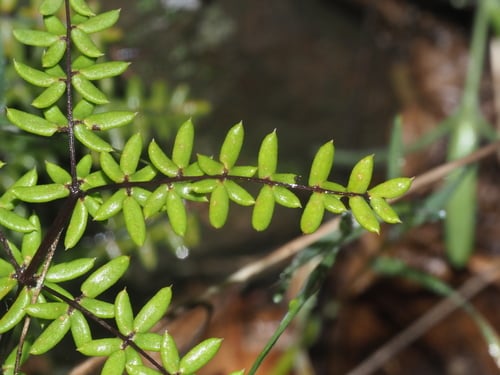
iNaturalist· cc-by-nc
(c) Aurélien Bour, some rights reserved (CC BY-NC), uploaded by Aurélien Bour
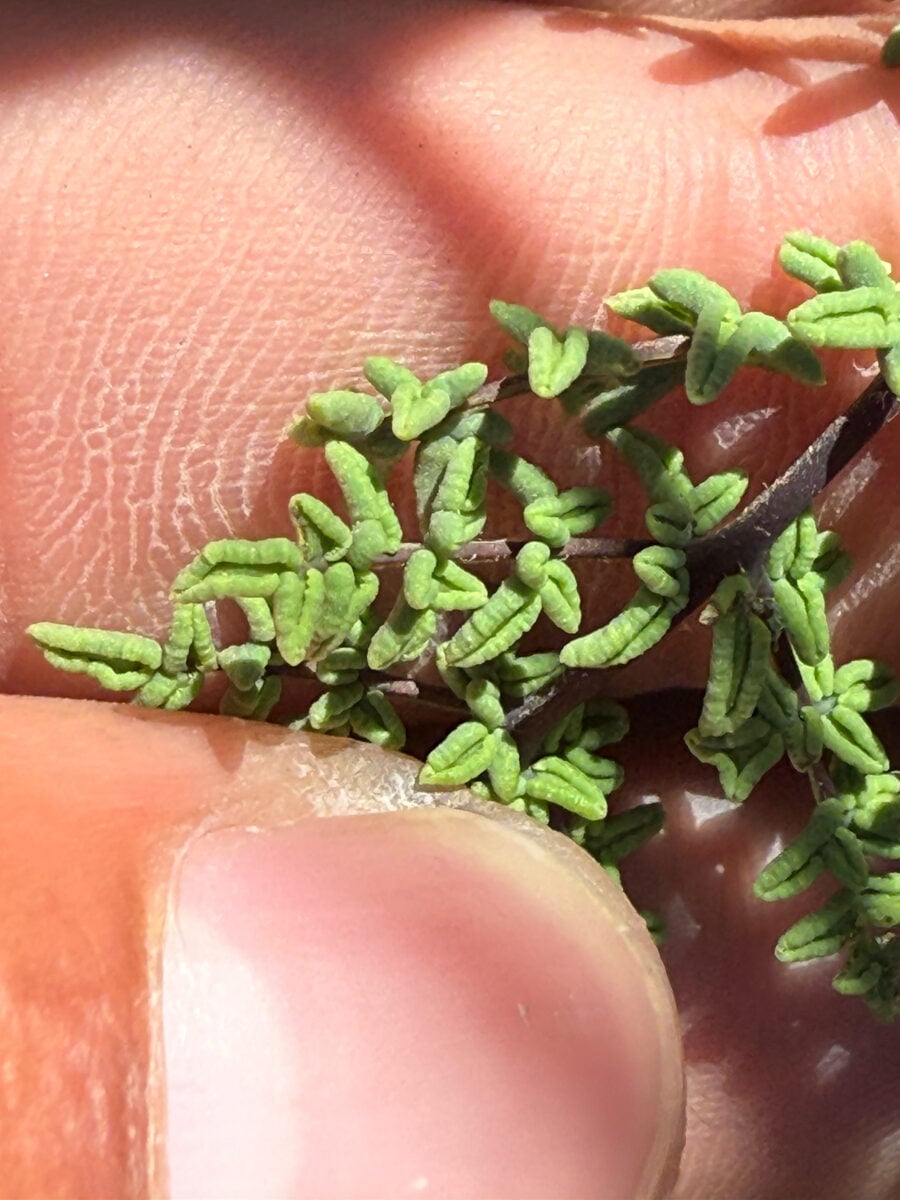
iNaturalist· cc-by-nc
(c) Biswas Sajib, some rights reserved (CC BY-NC)
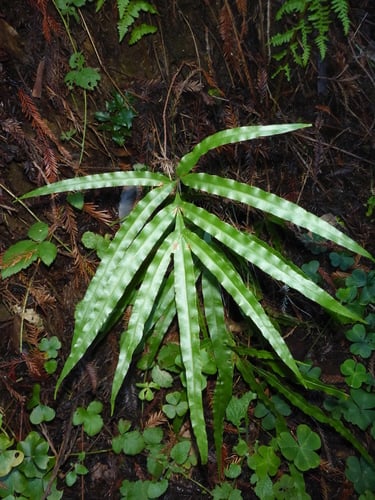
iNaturalist· cc-by-nc
(c) Biswas Sajib, some rights reserved (CC BY-NC)
Description
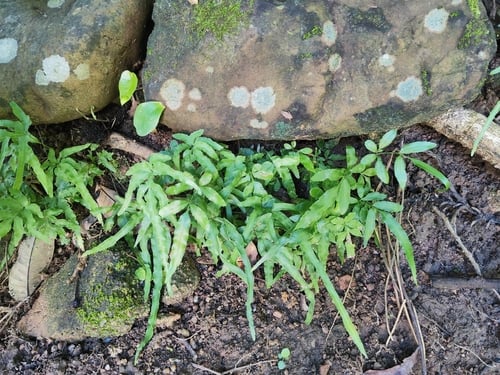
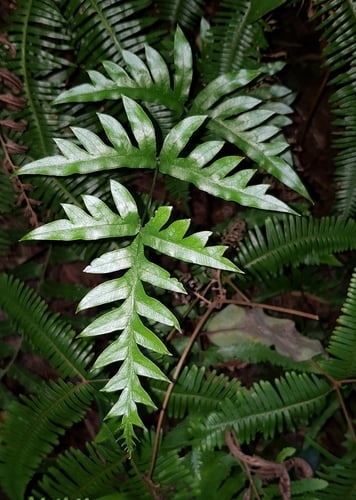
A small fern which grows in water. It roots in the mud. The rhizome is erect. The stems are spongy. The fronds form tufts. The fronds are divided twice. They have many small plants attached. The segments are broad, blunt and rounded. The sterile fronds are erect or spreading. The stalk of the frond can be 4-18 cm long. The blade of the frond is triangle shaped and leaflets are divided 1 or 2 times. These can be 7-25 cm long and 4-20 cm wide.
Edible Uses
Ceratopteris is a fairly popular aquarium plant, often sold under the name "water sprite." It may be grown as an emersed but natant (floating) plant, or as an immersed plant rooted in the substrate. Under the right conditions the plants will grow fully emerse erect leaves. Under a bright light the plants can grow fast, and be used to help cycle an aquarium. This plant is often used as a vegetable, particularly in Asia.
Known Hazards
The plants may have carcinogenic properties.
Distribution
It is a tropical plant. They grow in water or mud. It can be floating. It is cold sensitive.
Where It Grows
Africa, Australia, Burkina Faso, Indonesia, Liberia, Malaysia, SE Asia, Sierra Leone, West Africa,
Cultivation
Plants can be grown from the buds which grow on fronds. These can be broken off and planted. The spores germinate on wet mud.
Other Information
It is a cultivated food plant.
Notes
There are 3-4 Ceratopteris species. Also put in the family Adiantaceae.
Synonyms
References (4)
- Andrews, S.B., 1990, Ferns of Queensland. A handbook to the ferns and fern allies. Queensland DPI p 266
- Maroyi, A., 2014, Not just minor wild edible forest products: consumption of pteridophytes in sub-Saharan Africa. Journal of Ethnobiology and Ethnomedicine. 10:78
- Okigbo, B.N., Vegetables in Tropical Africa, in Opena, R.T. & Kyomo, M.L., 1990, Vegetable Research and development in SADCC countries. Asian Vegetable Research and development Centre. Taiwan. p 38
- World Checklist of Useful Plant Species 2020. Royal Botanic Gardens, Kew