Astelia solandri
Cunn.
Perching lily, Kowharawhara
iNaturalist· cc-by
(c) Michael Berardozzi, some rights reserved (CC BY), uploaded by Michael Berardozzi
iNaturalist· cc-by-nc
(c) abbieoi, some rights reserved (CC BY-NC)
iNaturalist· cc-by
(c) Michael Berardozzi, some rights reserved (CC BY), uploaded by Michael Berardozzi
Summary
Source: WikipediaAn evergreen perennial reaching 2 m in height with year-round foliage. Dioecious with separate male and female plants required for seed production; not self-fertile. Accommodates light sandy, medium loamy, and heavy clay soils with preference for well-drained soil. Thrives in mildly acid, neutral, or basic conditions. Grows in semi-shade or full light and prefers moist soil.
Description
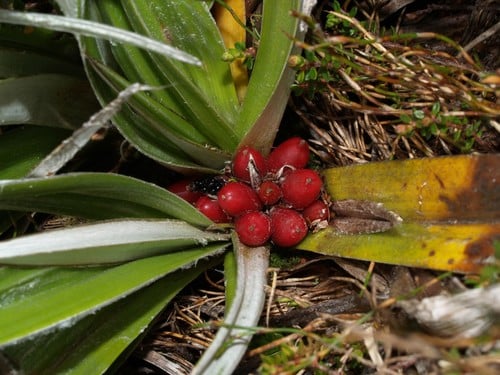
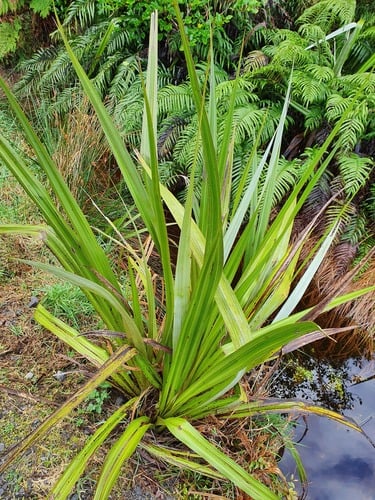
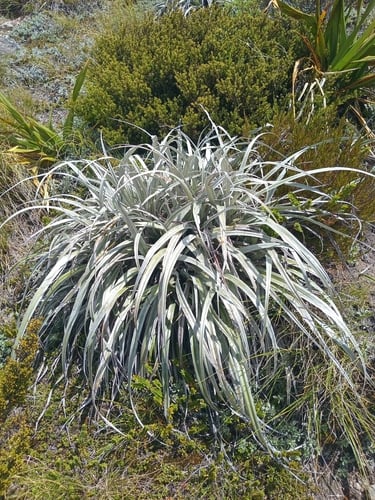
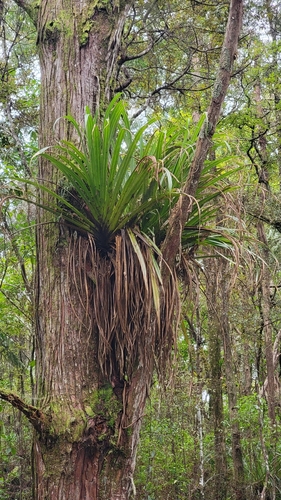
A plant that keeps growing from year to year. It grows attached to trees. It is grass-like. Male and female flowers are on separate plants. The male flowering shoots are about 30 cm long. The female ones are shorter. The flowers have a sweet scent. The fruit are berries. They are edible.
Edible Uses
Edible Parts: Fruit Oil Stem Edible Uses: Oil Fruit - raw. Sweet, fleshy and juicy, it is pleasant to eat. The base of the flowering stem can be eaten. An oil in the seed contains 25% gamma-linoleic acid, this compares with only 9% in evening primrose oil.
Traditional Uses
The fruit are eaten.
This uses section is brief — help expand it
Medicinal Uses
None known
Distribution
It grows in New Zealand up to 1000 m altitude. It is best with humus-rich moist soils. It suits a shaded position.
Where It Grows
Australia, New Zealand*,
Cultivation
Requires a damp humus-rich fertile soil in sun or semi-shade, sheltered from cold drying winds. An epiphyte, growing in the branches of tall trees. This species is not hardy in the colder areas of the country, it tolerates temperatures down to between -5 and -10°c, perhaps even lower if given shelter from cold drying winds. Dioecious. Male and female plants must be grown if seed is required.
Propagation
Seed - sow late winter in a greenhouse. Germination can be very slow, sometimes taking more than 12 months. When they are large enough to handle, prick the seedlings out into individual pots and grow them on in light shade for at least the first winter in a greenhouse. Plant out in late spring or early summer once they are 15cm or more tall. Division in spring.
Other Uses
Oil None known Special Uses
Production
The fruit take about 12 months to mature.
Notes
There are about 25 Astelia species.
References (5)
- Companion Bot. Mag. 2:374. 1837
- Crowe, A., 1997, A Field Guide to the Native Edible Plants of New Zealand. Penguin. p 68
- Morley, B. & Everard, B., 1970, Wild Flowers of the World. Ebury press. Plate 141
- Plants for a Future database, The Field, Penpol, Lostwithiel, Cornwall, PL22 0NG, UK. http://www.scs.leeds.ac.uk/pfaf/
- Skinner, G. & Brown, C., 1981, Simply Living. A gatherer's guide to New Zealand's fields, forests and shores. Reed. p 35