Astelia alpina
R. Br.
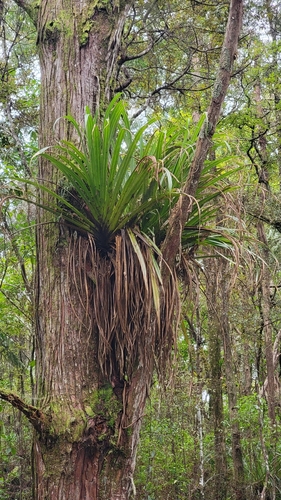
Perching lily, Silver astelia, Pineapple grass
iNaturalist· cc-by-nc
(c) Tindo2, some rights reserved (CC BY-NC)
iNaturalist· cc-by-nc
(c) Tindo2, some rights reserved (CC BY-NC)
iNaturalist· cc-by
(c) Michael Berardozzi, some rights reserved (CC BY), uploaded by Michael Berardozzi
Summary
Source: WikipediaAstelia alpina called pineapple grass, silver astelia, or perching lily is a commonly found species in alpine and subalpine areas of Tasmania and the Australian Alps. It is a perennial herb that typically dominates its environment by growing in dense clusters, called mats, in alpine bogs. There are two subspecies: Astelia alpina var. novae hollandiae from New South Wales and Victoria and Astelia alpina var. alpina endemic to Tasmania. Both subspecies appear very similar to each other. The species was originally described by Robert Brown.
Description
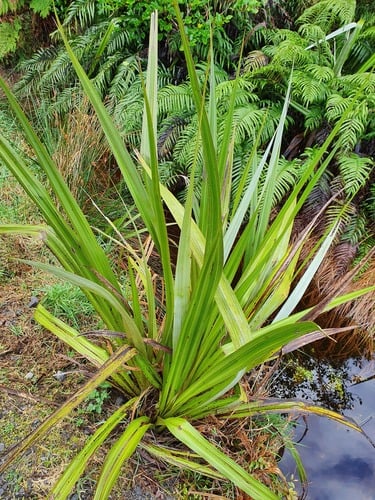
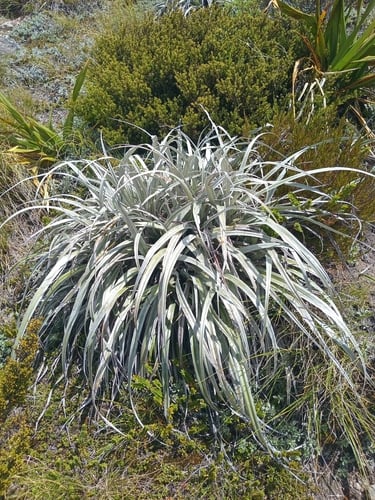
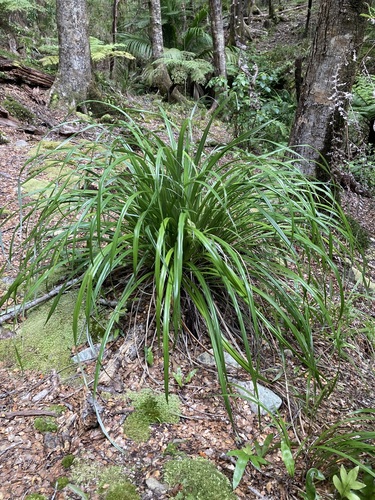
A tufted herb. It has stiff leaves which form a rosette giving it an appearance like pineapple. The leaves are long and narrow and have channels along them. They are about 20 cm long by 1-2 cm wide. The leaves are green above and silver underneath. It spreads by rhizomes. The flower are greenish and in spikes at the end of the stalk in the centre of the leaves. The fruit is a bright red round berry. They are about 12 mm long in the heart of the tuft. They contain 5 black shiny seeds. These are edible.
Edible Uses
Edible Parts: Fruit Leaves Edible Uses: Fruit - raw. Sweet, fleshy and juicy, it is pleasant to eat. Leaf base. No more details.
Traditional Uses
The base of the leaves is eaten.
This uses section is brief — help expand it
Medicinal Uses
None known
Distribution
It is a cool temperate alpine plant. It grows in bogs and on the edge of mountain pools. It suits hardiness zones 8-10. Tasmanian Herbarium.
Where It Grows
Australia*, Tasmania*,
Cultivation
We have very little information on this species and do not know if it will be hardy in Britain, though judging by its native range it could succeed outdoors at least in the milder parts of this country. It survives temperatures down to at least -7°c in Australian gardens but this cannot be directly translated to British gardens because of our cooler summers and longer colder and wetter winters. The following notes are based on the general needs of the genus. Requires a damp humus-rich fertile soil in sun or semi-shade, sheltered from cold drying winds. Dioecious. Male and female plants must be grown if seed is required.
Propagation
Seed - sow late winter in a greenhouse. Germination can be very slow, sometimes taking more than 12 months. When they are large enough to handle, prick the seedlings out into individual pots and grow them on in light shade for at least the first winter in a greenhouse. Plant out in late spring or early summer once they are 15cm or more tall. Division in spring.
Other Uses
None known Special Uses
Production
Plants flower in May.
Notes
There are about 25 Astelia species.
Synonyms
References (18)
- Altschul, S.V.R., 1973, Drugs and Foods from Little-known Plants. Notes in Harvard University Herbaria. Harvard Univ. Press. Massachusetts. no. 313
- Bodkin, F., 1991, Encyclopedia Botanica. Cornstalk publishing, p 111
- Cameron, M., (Ed.) 1981, A Guide to Flowers & Plants of Tasmania. Reed p 32
- Collier, P., 1995, Alpine Wildflowers of Tasmania. Plant Identikit. Society for growing Australian Plants. Tasmania. p 58
- Cribb, A.B. & J.W., 1976, Wild Food in Australia, Fontana. p 69
Show all 18 references Hide references
- Cundall, P., (ed.), 2004, Gardening Australia: flora: the gardener's bible. ABC Books. p 199
- Curtis, W.M., & Morris, D.I., 1994, The Student's Flora of Tasmania. Part 4B St David's Park Publishing, Tasmania, p 370
- Elliot, W.R., & Jones, D.L., 1982, Encyclopedia of Australian Plants suitable for cultivation. Vol 2. Lothian. p 244
- Heywood, V.H., Brummitt, R.K., Culham, A., and Seberg, O., 2007, Flowering Plant Families of the World. Royal Botanical Gardens, Kew. p 352 (Family)
- Hibbert, M., 2002, The Aussie Plant Finder 2002, Florilegium. p 34
- Kirkpatrick, J., 1997, Alpine Tasmania, An Illustrated guide to the flora and vegetation. Oxford, p 154
- Maiden, J. H., 1889, The Useful Native Plants of Australia (including Tasmania). The Technology Museum of NSW, Sydney. p 8
- Morley, B.D., & Toelken, H.R., (Eds), 1983, Flowering Plants in Australia. Rigby. p 328
- Plants for a Future database, The Field, Penpol, Lostwithiel, Cornwall, PL22 0NG, UK. http://www.scs.leeds.ac.uk/pfaf/
- Prodr. 291. 1810
- Steenbeeke, Greg as part of the Plants Directory project. List of plant species from northern NSW that may be used as food plants p 10
- Tasmanian Herbarium Vascular Plants list p 68
- Whiting, J. et al, 2004, Tasmania's Natural Flora. Tasmania's Natural Flora Editorial Committee PO Box 194, Ulverstone, Tasmania, Australia 7315 p 347