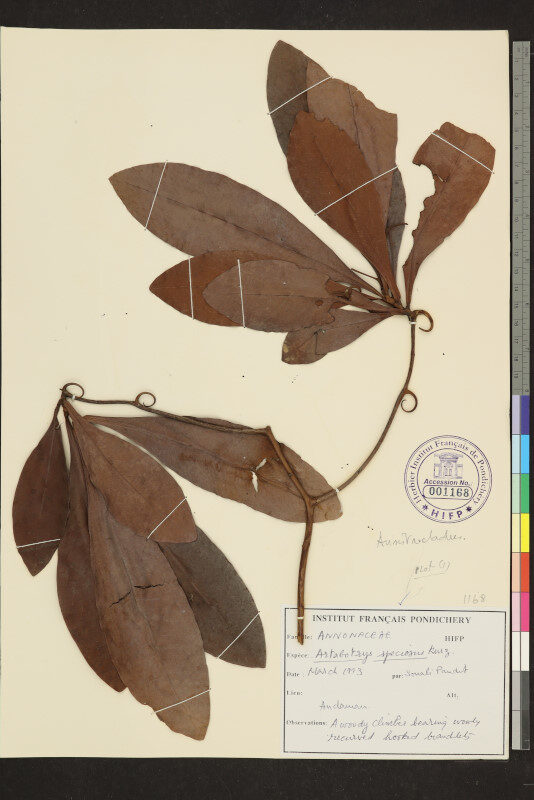
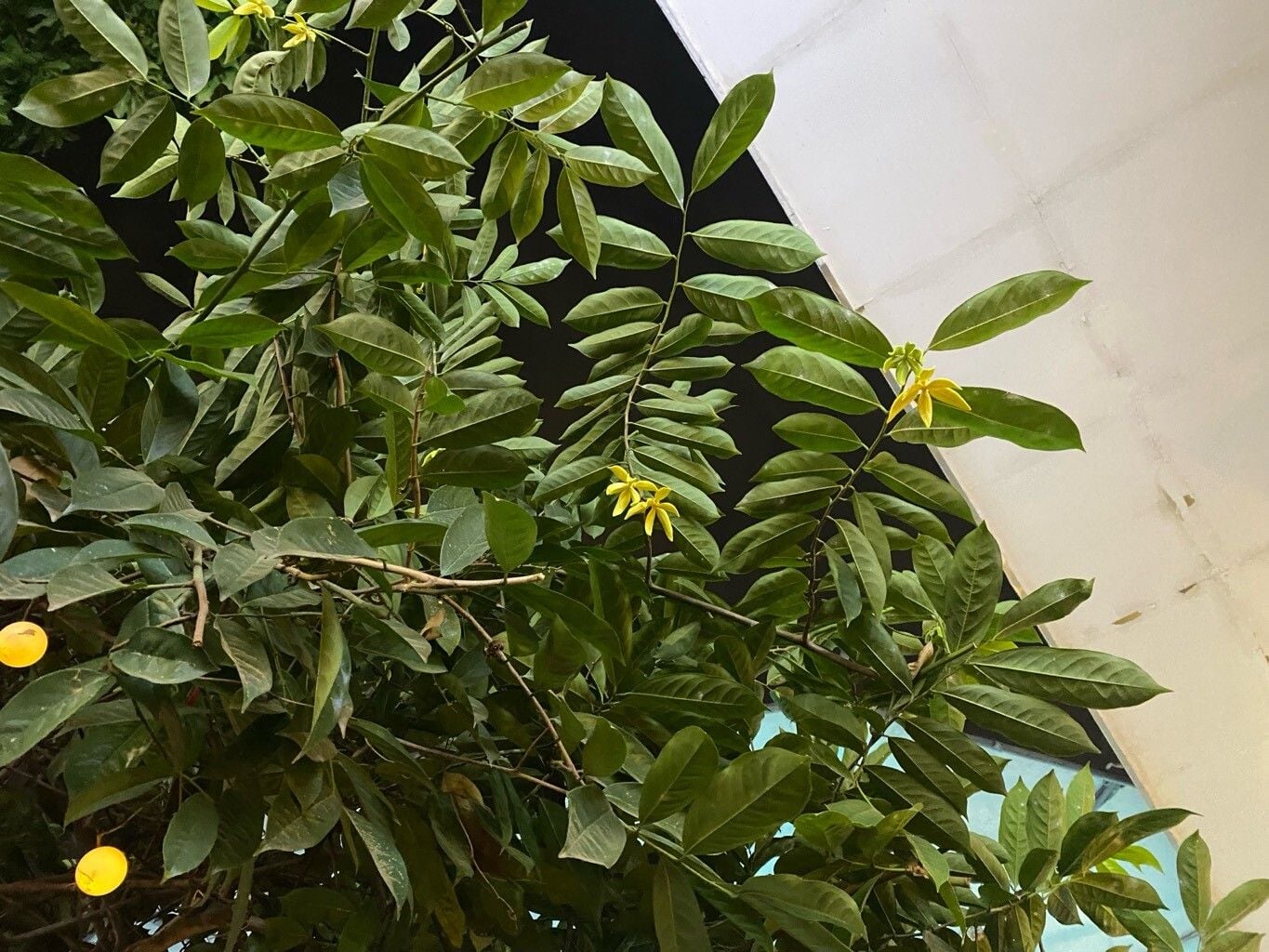
Cymbopetalum penduliflorum
(Dunal) Baill.
Mexican earflower
iNaturalist· cc-by-nc-nd
(c) Azul B.M, some rights reserved (CC BY-NC-ND), uploaded by Azul B.M
iNaturalist· cc-by-nc
(c) Esteban Delgado García, some rights reserved (CC BY-NC)
iNaturalist· cc-by-nc
(c) sarievanbelle, some rights reserved (CC BY-NC)
Summary
Source: WikipediaCymbopetalum penduliflorum is a species of plant in family Annonaceae. The specific epithet penduliflorum derives from the Latin words pendulus (pendent or hanging) and florum (flowered).
Description
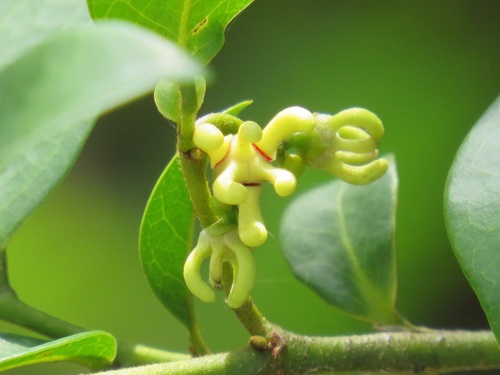
A shrub or small tree. It grows 10-23 m tall. The trunk can be 25 cm across. The leaves are broadly sword shaped and almost without a stalk. The flowers occur singly on long stalks that hang down. The inner petals are thick and fleshy. The edges curve inwards. They are greenish yellow and orange inside.
Edible Uses
The dried flowers of C. penduliflorum and related species C. costaricense were traditionally used to give a spicy flavor to chocolate before the arrival of cinnamon and the other Old World spices. The dried petals are still used in atoles, pinoles, and coffee.
Traditional Uses
It is used for flavouring drinking chocolate and other drinks. The dry flower petals are used as a spice. They are used in drinks and coffee.
This uses section is brief — help expand it
Medicinal Uses
The aromatic petals are used locally in folk medicine. An infusion is drunk to aid digestion and to treat asthma. The petals are highly esteemed as an additive to the chocolate beverage 'cacáoatl'. The petals not only provide a delicious flavour and pleasant aroma but they are also curative in that the drink reduces flatulence, thins phlegm, and warms and strengthens cold, weak stomachs and hearts..
Distribution
It is a tropical plant. It grows in the mountains. It is in wet forests below 800 m above sea level.
Where It Grows
Belize, Central America, El Salvador, Guatemala, Mexico, North America,
Other Uses
The bark of this tree is sometimes employed for making rope. The wood is white throughout, turning a cream colour after exposure. It is susceptible to stain, and is not used so far as known. The wood is a very pale brown, of medium weight, coarse textured with an interlocked grain. It is not very durable. Sawing is easy and good, planing is easy and fair, sanding is easy and good, moulding is easy, nailing is easy and good
Other Information
It is cultivated as a spice. They are sold in local markets.
Synonyms
Also Known As
Flor de oreja, Muq, Orejuela, Tzichiquin itz, Xochinacaztii
References (7)
- Hellmuth, N. M., 2011, Maya Ethnobotany. Complete Inventory of plants. Associacion FLAAR Mesoamerica. Tenth edition.
- Hermandez Bermejo, J.E., and Leon, J. (Eds.), 1994, Neglected Crops. 1492 from a different perspective. FAO Plant Production and Protection Series No 26. FAO, Rome. p 43
- Segura, S. et al, 2018, The edible fruit species in Mexico. Genet Resour Crop Evol (2018) 65:1767–1793
- Seidemann J., 2005, World Spice Plants. Economic Usage, Botany, Taxonomy. Springer. p 129
- Useful Tropical Plants.
Show all 7 references Hide references
- Wilson, M. R., Ethnobotanical List. PhD thesis: A Highland Maya People and Their Habitat. quantamike.ca
- World Checklist of Useful Plant Species 2020. Royal Botanic Gardens, Kew