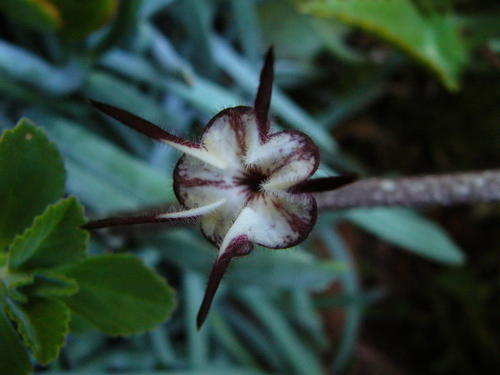
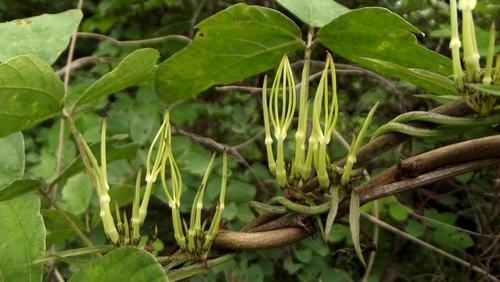
Gonolobus salvinii
Hemsl.
Cuchamper
gbif· cc-by-nc
Field Museum of Natural History - Botany Department | NSF/Mellon - GPI
Description
A tropical vine with stems containing milky white sap. The fruit is sold in local markets.
This description is brief — help expand it
Edible Uses
The fruit pulp is eaten raw or cooked.
Traditional Uses
The pulp of the fruit is eaten raw or cooked.
This uses section is brief — help expand it
Distribution
A tropical plant.
Where It Grows
Belize, Central America, Costa Rica, El Salvador, Guatemala, Honduras,
Other Information
Fruit are sold in local markets.
Notes
Also put in the family Asclepiadaceae
Synonyms
Gonolobus longipetiolatus WoodsonVincetoxicum salvinii (Hemsl.) Standl. & S. CalderonProbably also Vincetoxycum
Also Known As
Siguamper
References (3)
- Hermandez Bermejo, J.E., and Leon, J. (Eds.), 1994, Neglected Crops. 1492 from a different perspective. FAO Plant Production and Protection Series No 26. FAO, Rome. p17 (As Vincetoxicum salvinii)
- Kermath, B. M., et al, 2014, Food Plants in the Americas: A survey of the domesticated, cultivated and wild plants used for Human food in North, Central and South America and the Caribbean. On line draft. p 395
- Martin, F. W., et al, 1987, Perennial Edible Fruits of the Tropics. USDA Handbook 642 p 83 (As Vincetoxicum salvinii)