Cassia leiandra
Benth.
Marimari
iNaturalist· cc-by-nc
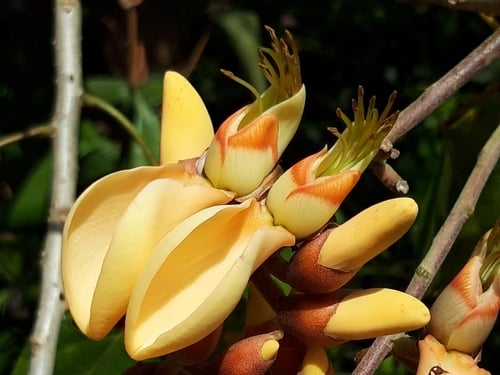
(c) Nelson Wisnik, some rights reserved (CC BY-NC), uploaded by Nelson Wisnik
iNaturalist· cc-by-nc
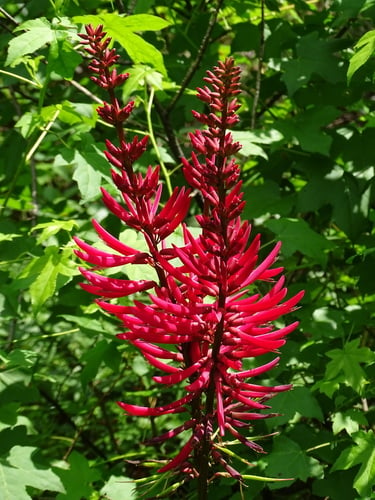
(c) Nelson Wisnik, some rights reserved (CC BY-NC), uploaded by Nelson Wisnik
iNaturalist· cc-by-nc
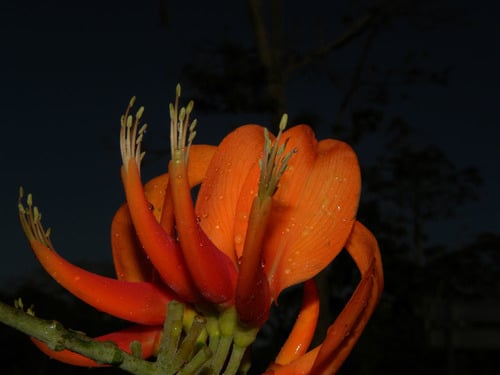
(c) Nelson Wisnik, some rights reserved (CC BY-NC), uploaded by Nelson Wisnik
Summary
Source: WikipediaCassia leiandra, the mari-mari, is a species of flowering plant in the family Fabaceae, native to Colombia and Brazil, and introduced to Uganda. Its succulent, bittersweet fruit are frequently sold in markets in the Amazon.
Description
A tree. It grows 4-8 m tall. The crown is sparse. The trunk is twisted. It is 20-30 cm across. The leaves are compound and twice divided. Leaves are alternate and 20-30 cm long. There are 18-24 leaflets. They are 5-6 cm long by 1.7-2.2 cm wide. The flowers are at the ends of branches. Flower stalks are 25-45 cm long. They are very showy and yellow. The flower stalks are 3-5 cm long. The stamen have different forms with long ones forming an S shape. The fruit is a woody pod. It is 40-70 cm long by 2-3 cm wide. The seeds are in a juicy, bittersweet pulp.
Edible Uses
The acidic-sweet, juicy pulp surrounding the seeds inside the pods is eaten raw. The fruit is harvested while the seeds are still green. The pods are 40–70 cm long and about 3 cm wide.
Traditional Uses
The pulp of the pod is eaten.
This uses section is brief — help expand it
Medicinal Uses
None known.
Distribution
A tropical plant. It grows in the Amazon in Brazil. It grows naturally on flood plains. It is often near lagoons and canals.
Where It Grows
Amazon, Brazil*, Colombia, South America,
Cultivation
Plants are grown from seed. The seeds are harvested and scratched to break the hard seed coat, then planted fresh. They germinate in 2-4 weeks.
Propagation
Best sown as soon as the seed is ripe. The seed has a hard seedcoat and may benefit from scarification: pour a small amount of nearly boiling water over the seeds (taking care not to cook them), then soak in warm water for 12–24 hours. If seeds have not swollen, carefully nick the seedcoat without damaging the embryo and soak for a further 12 hours before sowing. Sow in a sunny nursery seedbed; germination should occur within 2–4 weeks. Young seedlings grow quickly.
Other Uses
The wood is thick-textured, moderately heavy, soft, of low durability and easy to work. It is used locally for internal work in rustic house construction, tool handles, cheap toys and boxes. The species is a natural pioneer in its native range and could be used in local reforestation projects.
Production
Plants grow quickly.
Other Information
It is sometimes cultivated as a fruit tree. The fruit are enjoyed.
Notes
There are 100 Cassia species. This group has been revised to a smaller more consistent group. Also as Caesalpinaceae.
Synonyms
Also Known As
Fava-marimari, Inga-mari, Marimari-da-varzea, Seruia
References (11)
- FAO. 1987. Especies forestales productoras de frutas y otros alimentos. ejemplos de América Latina. FAO. Roma, Italia.
- Hermandez Bermejo, J.E., and Leon, J. (Eds.), 1994, Neglected Crops. 1492 from a different perspective. FAO Plant Production and Protection Series No 26. FAO, Rome. p15
- Kermath, B. M., et al, 2014, Food Plants in the Americas: A survey of the domesticated, cultivated and wild plants used for Human food in North, Central and South America and the Caribbean. On line draft. p 197
- Lopez-Diago, D. & Garcia, N., 2021, Wild edible fruits of Colombia. Biota ColomBiana 22 (2) p 37
- Lorenzi, H., 2002, Brazilian Trees. A Guide to the Identification and Cultivation of Brazilian Native Trees. Vol. 02 Nova Odessa, SP, Instituto Plantarum p 158
Show all 11 references Hide references
- Lorenzi, H., Bacher, L., Lacerda, M. & Sartori, S., 2006, Brazilian Fruits & Cultivated Exotics. Sao Paulo, Instituto Plantarum de Estuados da Flora Ltda. p 138
- Martin, F. W., et al, 1987, Perennial Edible Fruits of the Tropics. USDA Handbook 642 p 98
- C. F. P. Martius, Fl. bras. 15(2):94, t. 30. 1870
- Paz, F. S., et al, 2021, Edible Fruit Plant Species in the Amazon Forest Rely Mostly on Bees and Beetles as Pollinators. Journal of Economic Entomology, XX(XX), 2021, 1–13
- Roa, J. A. G. & Boada, D. S. G., 2018, Fundación para el Fortalecimiento de la Fruticultura y Plantas Alimenticias no Convencionales en Colombia.
- Smith, N., Mori, S.A., et al, 2004, Flowering Plants of the Neotropics. Princeton. Plate 20 (Photo)