Mucuna monosperma
DC. ex Wight
Negro bean
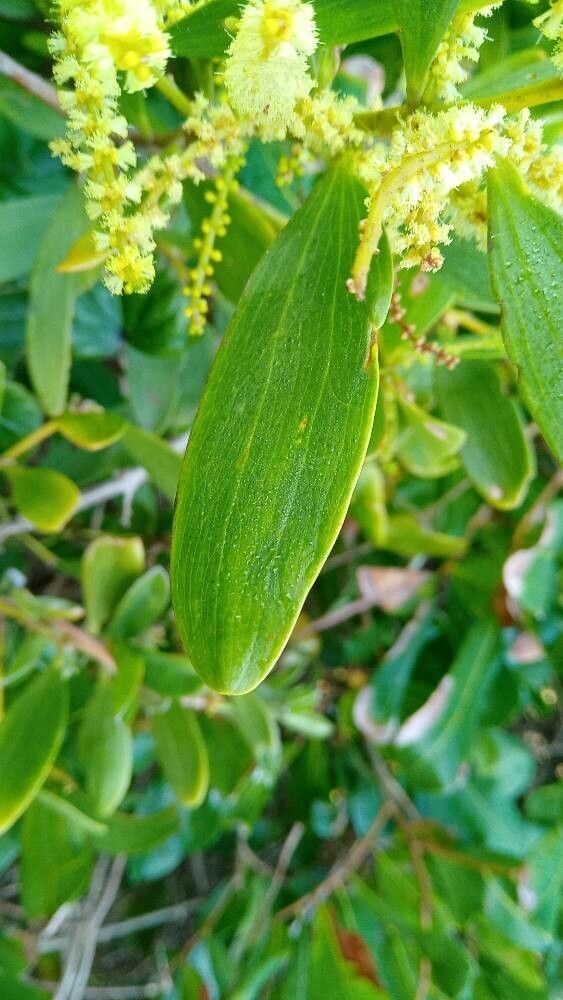
iNaturalist· cc-by
(c) Siddarth Machado, some rights reserved (CC BY), uploaded by Siddarth Machado
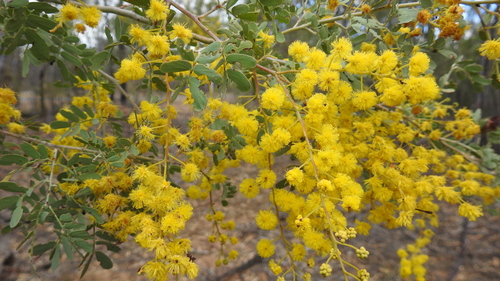
iNaturalist· cc-by-nc
(c) guanhong, some rights reserved (CC BY-NC)
Summary
Source: WikipediaMucuna monosperma, commonly known as negro beans in India, or deer-eye beans, donkey-eye beans, or ox-eye beans, is a large woody climber from the family Fabaceae. The plant has three layers; a brown pod covered in small hairs, curved petals usually colored purple and black round-shaped beans. Small hairs on the pod can irritate the skin.The petals of the Muncuna monnosperma flower opens at night and closes in the morning. It is found in India, including the eastern Himalayas, the northeastern states, and the Andaman and Nicobar Islands, Sri Lanka, Bangladesh, Myanmar, and Thailand. Its natural habitat is evergreen forests, and it commonly grows near swamps or along streams. It is discovered that M. monosperma contains L-DOPA, which is a chemical compound commonly used against Parkinson's disease. The beans of the plant contains 5.48% L-DOPA, and the content increases 6.58% when beans are soaked in water. Another research showed that M. monosperma can accelerate melanin production that can be beneficial in cosmetics, agriculture and medicine. Other than its possible medical uses, M. monosperma has already been consumed as food in areas where it is endemic to. According to Dr. Sturtevants, it is a well-loved fruit among Brahmins.
Description
A large woody climber. The leaves have 3 leaflets. The flowers are violet. They are in groups in the axils of leaves. The pods have wings and are covered with dark brown hairs. These hairs irritate the skin.
Edible Uses
This is a favourite vegetable with Brahmins. No more information is given. Seed. The boiled seeds are eaten in times of great scarcity. No more information is given, but it is likely that the seed would need to be thoroughly cooked to render it wholesome.
Traditional Uses
The seeds are roasted then eaten. The young pods are cooked as a vegetable.
This uses section is brief — help expand it
Medicinal Uses
The plant (part not specified) is used as an expectorant in cough and asthma, and is applied externally as a sedative.
Known Hazards
Mucuna species often possess irritant hairs on the seedpods and sometimes on the flowers and other parts. These hairs consist of 1-2 small basal cells and a large needle-like top cell. The top cell breaks off easily, piercing the skin and injecting chemical compounds that are present in the hairs. The proteolytic enzyme 'Mucunain' is said to be the active agent. The hairs can contaminate clothes or other objects, and remain active when dried, though they can be destroyed by heat. Intense itching, with reddening of the skin and small papules or urticaria occur a few minutes after contact with the hairy parts of the plant. There is no serious danger, unless the hairs get into the eye, in which case, in extreme situations, they have caused blindness. To remove the hairs from the skin, adhesive tape and washing with water and soap are considered useful. Dermatitis can be treated with corticosteroid ointment. See a doctor immediately if hairs go into the eyes.
Distribution
A tropical plant.
Where It Grows
Asia, India, Myanmar, Northeastern India, SE Asia, Sikkim,
Cultivation
Mucuna species generally grow best in a shady position in a humus-rich, moist but well-drained soil. This species has a symbiotic relationship with certain soil bacteria; these bacteria form nodules on the roots and fix atmospheric nitrogen. Some of this nitrogen is utilized by the growing plant but some can also be used by other plants growing nearby.
Other Information
It is a famine food.
Notes
There are about 100 Mucuna species. They grow in tropical places.
Also Known As
Adadaveliya, Anipeballi, Bai donka, Bal dhengra, Enugadulagondi, Kagadolia, Kattupayar, Khatavangi, Malanthelli, Mapinewne, Mei-siarvyntim, Mothi Khaj kohili, Mothi-kuhili, Myauk-do, Myauk-go-nyin, Peddadulagondi, Periyattalargai, Sarni, Sonagaravi, Thelu-kodi
References (8)
- Ambasta, S.P. (Ed.), 2000, The Useful Plants of India. CSIR India. p 383
- Dobriyal, M. J. R. & Dobriyal, R., 2014, Non Wood Forest Produce an Option for Ethnic Food and Nutritional Security in India. Int. J. of Usuf. Mngt. 15(1):17-37
- Gunjatkar, N., & Vartak, V.D., 1982, Enumeration of wild edible legumes from Pune District, Maharashtra State. J. Econ. Tax. Bot. Vol 3 pp 1-9
- Hedrick, U.P., 1919, (Ed.), Sturtevant's edible plants of the world. p 422
- Medhi, P., Sarma, A and Borthakur, S. K., 2014, Wild edible plants from the Dima Hasao district of Assam, India. Pleione 8(1): 133-148
Show all 8 references Hide references
- Narayanan Ratheesh, M. K. et al, 2011, Wild edible plants used by the Kattunaikka, Paniya and Kuruma tribes of Wayanad District, Kerala, India. Journal of Medicinal Plants Research Vol. 5(15), pp. 3520-3529
- Prodr. 2:406. 1825
- Singh, H.B., Arora R.K.,1978, Wild edible Plants of India. Indian Council of Agricultural Research, New Delhi. p 82