Saurauia napaulensis var. montana
DC.; C.F. Liang & Y.S. Wang.
Gogane, Gogina
iNaturalist· cc-by-nc
(c) Shanta Budha-Magar, some rights reserved (CC BY-NC), uploaded by Shanta Budha-Magar
iNaturalist· cc-by-nc
(c) Basu Dev Neupane, some rights reserved (CC BY-NC), uploaded by Basu Dev Neupane
iNaturalist· cc-by-nc
(c) Wim Rubers, some rights reserved (CC BY-NC), uploaded by Wim Rubers
Summary
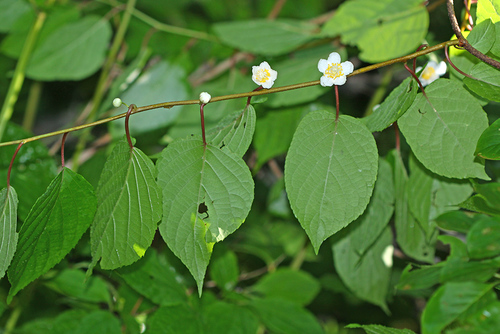
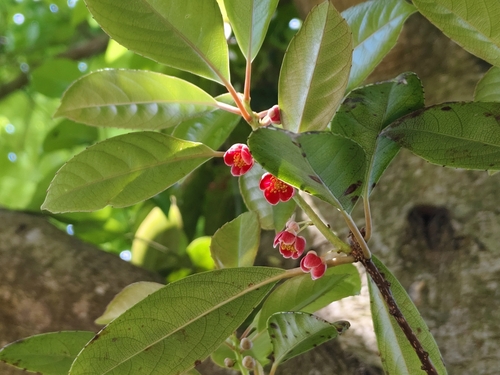
Source: WikipediaSaurauia napaulensis is a small to medium tree. Leaves 20–35 cm by 6.5–12 cm, apex acuminate, base rounded, margins with fine teeth; 30-35 pairs of straight prominent veins. Flowers about 1.5 cm in diameter, pink, in branched axillary inflorescences. Fruit a globose berry, about 8 mm in diameter.
Description
A small tree or shrub. It grows to 7 m high. The branches have hairs like scales. The leaves have stalks. They are sword shaped but fattened near the base. They taper to the tip. There are teeth along the edge. They have rusty hairs underneath. The flowers are on long stalks. They are pink. The fruit are berries. They are yellow when ripe.
Edible Uses
The ripe fruit are eaten, typically served with sugar.
Traditional Uses
The ripe fruit are eaten. They are eaten with sugar.
This uses section is brief — help expand it
Distribution
A tropical plant. In Nepal it grows between 800-2100 m altitude. It grows in open places.
Where It Grows
Asia, Cambodia, China, Himalayas, India, Indochina, Nepal, SE Asia, Vietnam,
Cultivation
Plants are grown from seed or cuttings.
Synonyms
References (5)
- Facciola, S., 1998, Cornucopia 2: a Source Book of Edible Plants. Kampong Publications. p 2
- HOOGLAND
- Manandhar, N.P., 2002, Plants and People of Nepal. Timber Press. Portland, Oregon. p 413 (As Saurauia napaulensis)
- Pham-Hoang Ho, 1999, An Illustrated Flora of Vietnam. Nha Xuat Ban Tre. p 410 ?
- Singh, H.B., Arora R.K.,1978, Wild edible Plants of India. Indian Council of Agricultural Research, New Delhi. p 71. (As Saurauja napulensis and family Ternstroemiaceae)