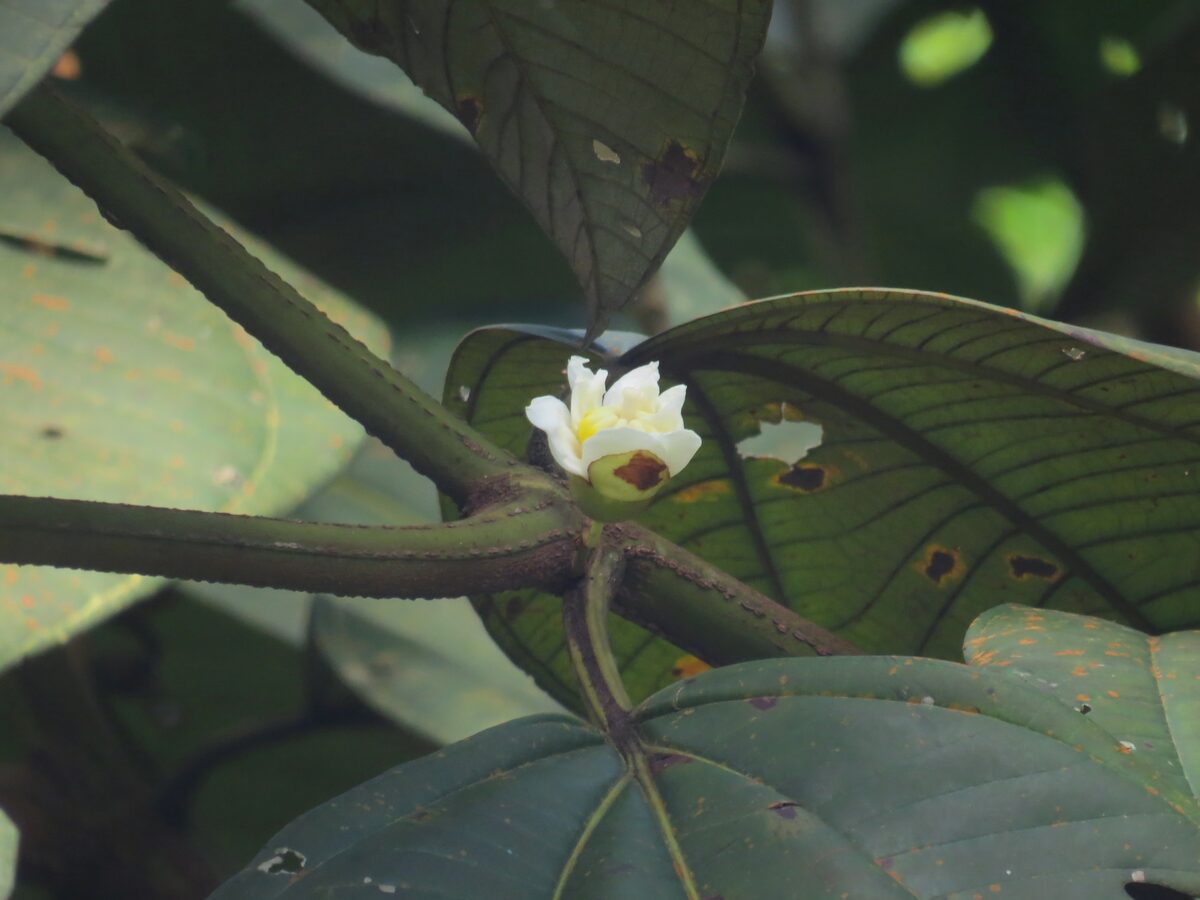
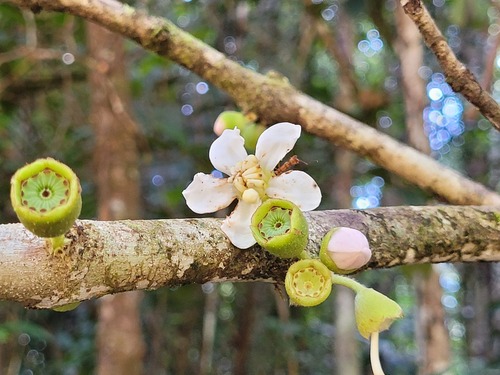
Memecylon umbellatum
Burm.
Iron wood tree
iNaturalist· cc-by-nc
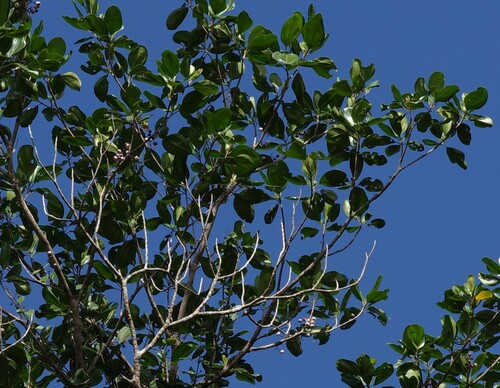
(c) Jayant M Deshpande, some rights reserved (CC BY-NC), uploaded by Jayant M Deshpande
iNaturalist· cc-by-nc
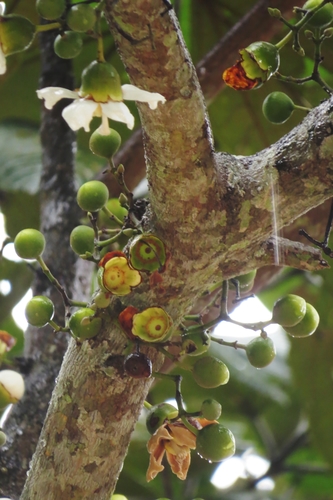
(c) Radha Veach, some rights reserved (CC BY-NC)
iNaturalist· cc-by-nc
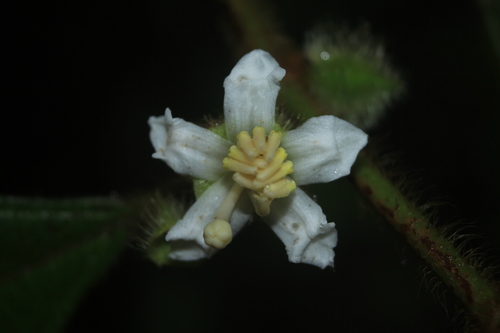
(c) Radha Veach, some rights reserved (CC BY-NC)
Summary
Source: WikipediaMemecylon umbellatum, commonly known as ironwood, anjani (Marathi) or alli (Telugu), is a small tree found in India, the Andaman islands and the coastal region of the Deccan. It is also found in Sri Lanka, where it is called blue mist, kora-kaha (Sinhala language) and kurrikaya (Tamil language). The leaves contain a yellow dye, a glucoside, which is used for dyeing the robes of Buddhist monks and for colouring reed mats (Dumbara mats). Medicinally, the leaves are said to have anti-diarrhoeal properties. Historically, this plant was burnt as fuel in the production of Wootz steel.
Description
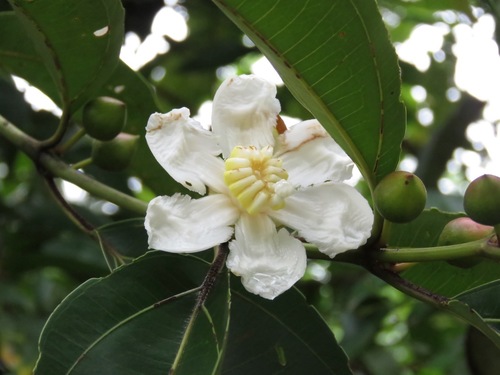
A medium sized tree. The leaves are small and sword shaped. They are bright green. The flowers are in flattened heads. They are in clusters along the stem. The flowers are small and bright blue. The pulp of the fruit is bluish-black. The fruit is a small round berry.
Edible Uses
The ripe fruits and seeds are eaten, particularly by children.
Traditional Uses
The ripe fruit are eaten. The seeds are ripe fruit are eaten.
This uses section is brief — help expand it
Medicinal Uses
The bark is used to treat bruises. The leaves are astringent. They are used internally in the treatment of gonorrhoea and leucorrhoea. Used externally, the leaves make a cooling astringent wash and a lotion for treating conjuctivitis. When mixed with several other ingredients, the leaves make good fomentations for external use. An infusion of the flowers is used to treat inflammation of the conjuctiva. The roots are astringent. A decoction is used in the treatment of excessive or irregular menstrual discharge and menstrual pains.
Distribution
A tropical plant. It grows in tropical places in Asia. It grows at lower elevations in southern Assam.
Where It Grows
Asia, Cambodia, India, Indochina, Indonesia, Malaysia, Myanmar, Northeastern India, SE Asia, Singapore, Sri Lanka, Thailand,
Cultivation
Succeeds in full sun or in partial shade. Grows best in a moist, well-drained, humus-rich soil.
Propagation
Seed - Air layering
Other Uses
A yellow and a crimson dye can be extracted from the leaves and flowers. It can be used for dyeing cottons and woven goods such as mats. The wood is hard, strong, very flexible. It is used for piles, axles etc, building houses and boats. The wood is a good fuel. We have no more specific information for this species, but in general the wood of Memecylon species is usually white to brown, very dense and heavy, sinking in water. It is also often very durable. Where the wood gets large enough it is often used traditionally for purposes such as poles, house posts, lumber and furniture. The wood of many species in the genus has a high calorific value and is often favoured as a fuel and for making charcoal.
Other Information
The seeds of the ripe fruit are eaten especially by children.
Notes
Also put in the family Memecylaceae.
Synonyms
Also Known As
Alli, Anjani, Archetti, Bon phukti, Byin-gale, Delek ayer, Delek bangas, Delek puteh, Harchari lakhonde, Kanalei, Kannavu, Kashavu, Kaya, Kikkalli, Korakaha, Kuku baning, Kurpa, Lali dimabo, Lali-dimabophang, Lee-kokee, Limba, Medang nasi-nasi, Mueat ae, Nirassa bonohorono, Phlong chu, Plawng dam, Thabye-on, Theihadum, Uddalalli
References (10)
- Allg. Med. - Pharm. Flora 4: 1517. 1835 - (As Kostel.)
- Ambasta, S.P. (Ed.), 2000, The Useful Plants of India. CSIR India. p 364
- Ashton, M. S., et al 1997, A Field Guide to the Common Trees and Shrubs of Sri Lanka. WHT Publications Ltd. pdf p 264
- Burkill, I.H., 1966, A Dictionary of the Economic Products of the Malay Peninsula. Ministry of Agriculture and Cooperatives, Kuala Lumpur, Malaysia. Vol 2 (I-Z) p 1476 (As Memecylon edule)
- Hedrick, U.P., 1919, (Ed.), Sturtevant's edible plants of the world. p 410 (As Memecylon edule)
Show all 10 references Hide references
- Majumdar, K and Datta, N., 2009, Traditional wild edible fruits for the forest dwellers of Tripura, India. Pleione 3(2) 167-178
- Patiri, B. & Borah, A., 2007, Wild Edible Plants of Assam. Geethaki Publishers. p 59
- Phon, P., 2000, Plants used in Cambodia. © Pauline Dy Phon, Phnom Penh, Cambodia. p 435 (As Memecylon edule)
- Singh, H.B., Arora R.K.,1978, Wild edible Plants of India. Indian Council of Agricultural Research, New Delhi. p 66
- Tamil herbs, 2007, Edible Plants of the Tropical Dry Evergreen Forest.