Grewia elastica
Royle
wikimedia· cc0
Wikimedia Commons - Vishnupersaud (=Vishnu Prasad)
Description
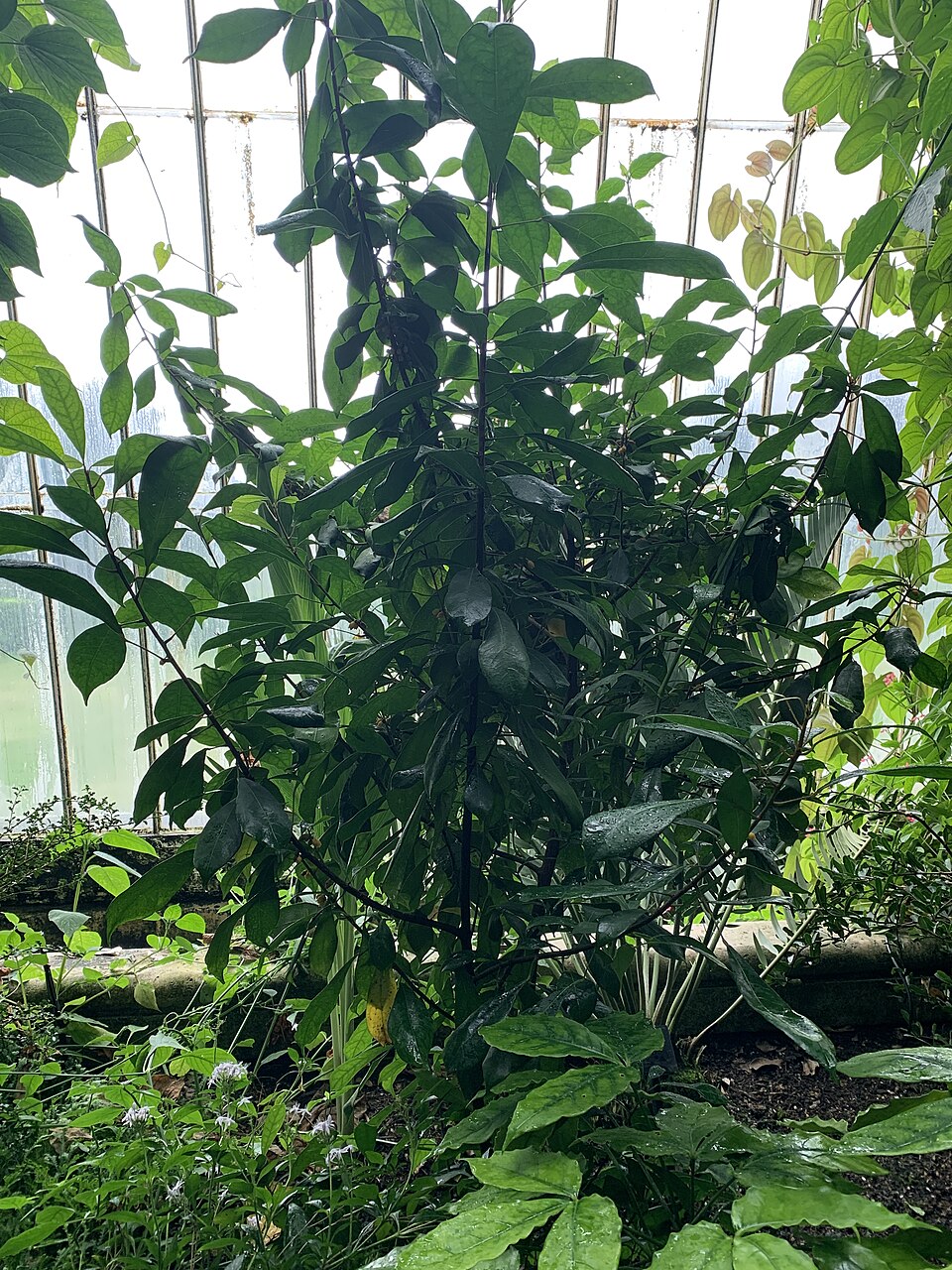
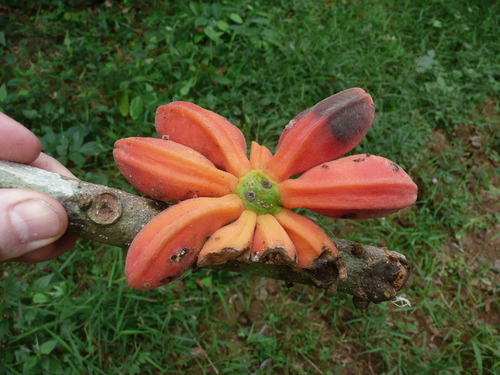
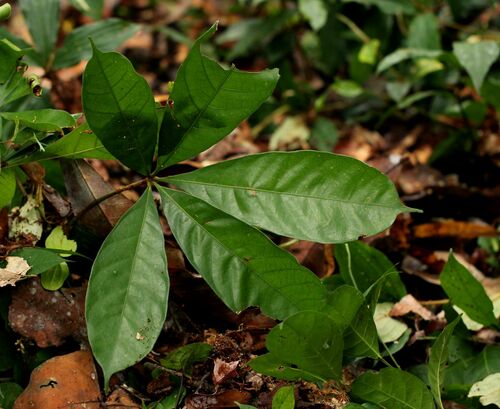
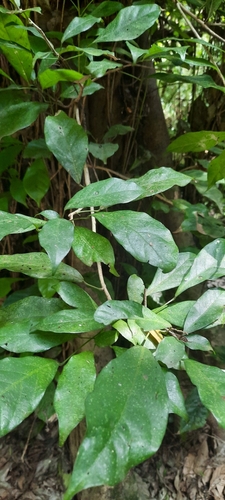
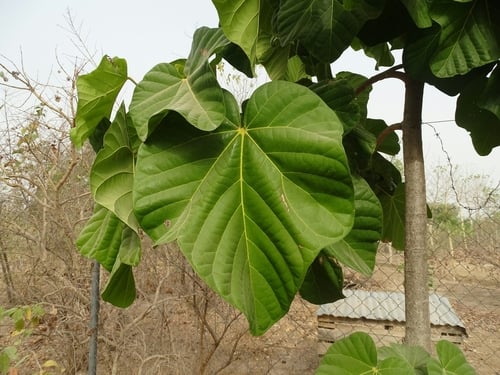
A tree. It grows 8 m tall. It loses its leaves during the year. The young twigs are hairy. The leaf stalks are club shaped and hairy and 5-10 mm long. The leaf blade is 5-15 cm long and 4-8 cm wide. They have 5-7 ribs. They can have 3 small lobes. The flower are in groups of 2-4. They are yellow and 1.5 cm across. The fruit is fleshy and round and hairy. They turn black when ripe.
Edible Uses
The ripe fruit is eaten.
Traditional Uses
The ripe fruit is eaten.
This uses section is brief — help expand it
Distribution
It is a subtropical plant. In Pakistan it grows between 1,000-3,000 m altitude.
Where It Grows
Asia, Himalayas, India, Myanmar, Northeastern India, Pakistan, SE Asia, Sikkim,
Production
In NE India plants flower and fruit February to December. In Sikkim February to May.
Notes
There are about 200 Grewia species. They are mostly tropical. The fruit of most may be edible. These were in the Sparrmanniaceae and the Tiliaceae.
Synonyms
Also Known As
Bimla, Bong der so, Dhaman, Dhamni, Dieng-thap-ballieh, Kunsung, Man-bijal, Mirgi chara, Pharsia, Phuhura, Tada, Thusura
References (10)
- Ambasta, S.P. (Ed.), 2000, The Useful Plants of India. CSIR India. p 248
- Dobriyal, M. J. R. & Dobriyal, R., 2014, Non Wood Forest Produce an Option for Ethnic Food and Nutritional Security in India. Int. J. of Usuf. Mngt. 15(1):17-37
- Ill. bot. Himal. Mts. 1(3):104. 1834; 2(1): t. 22. 1833
- Jeeva, S., 2009, Horticultural potential of wild edible fruits used by the Khasi tribes of Meghalaya. Journal or Horticulture and Forestry Vol. 1(9) pp. 182-192
- Patiri, B. & Borah, A., 2007, Wild Edible Plants of Assam. Geethaki Publishers. p 17
Show all 10 references Hide references
- Reddy, K. N. et al, 2007, Traditional knowledge on wild food plants in Andhra Pradesh. Indian Journal of Traditional Knowledge. Vol. 6(1): 223-229
- Sawian, J. T., et al, 2007, Wild edible plants of Meghalaya, North-east India. Natural Product Radiance Vol. 6(5): p 418
- Singh, H.B., Arora R.K.,1978, Wild edible Plants of India. Indian Council of Agricultural Research, New Delhi. p 62
- Sundriyal, M., et al, 1998, Wild edibles and other useful plants from the Sikkim Himalaya, India. Oecologia Montana 7:43-54
- Sundriyal, M., et al, 2004, Dietary Use of Wild Plant Resources in the Sikkim Himalaya, India. Economic Botany 58(4) pp 626-638