Flacourtia montana
J. Graham
iNaturalist· cc-by
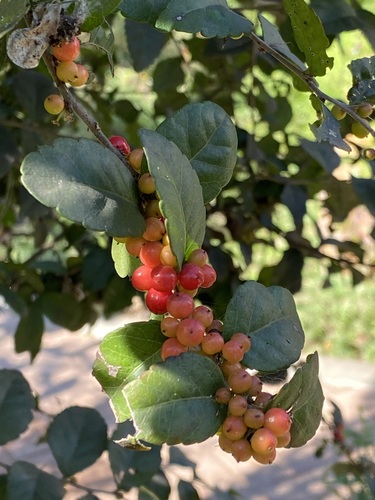
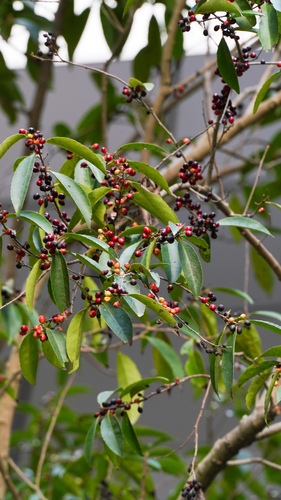
(c) Siddarth Machado, some rights reserved (CC BY), uploaded by Siddarth Machado
iNaturalist· cc-by-nc
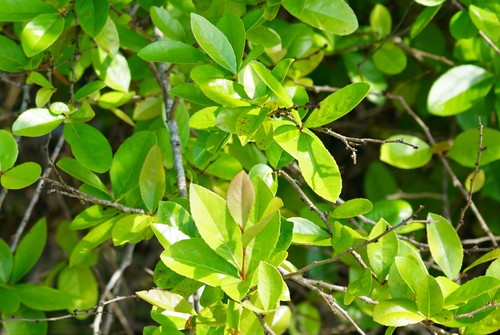
(c) Shiwalee Samant, some rights reserved (CC BY-NC)
Summary
Source: WikipediaFlacourtia montana is a species of plant in the family Salicaceae. It is native to southern Asia. The species presents as a tree up to 20 m in height.
Description
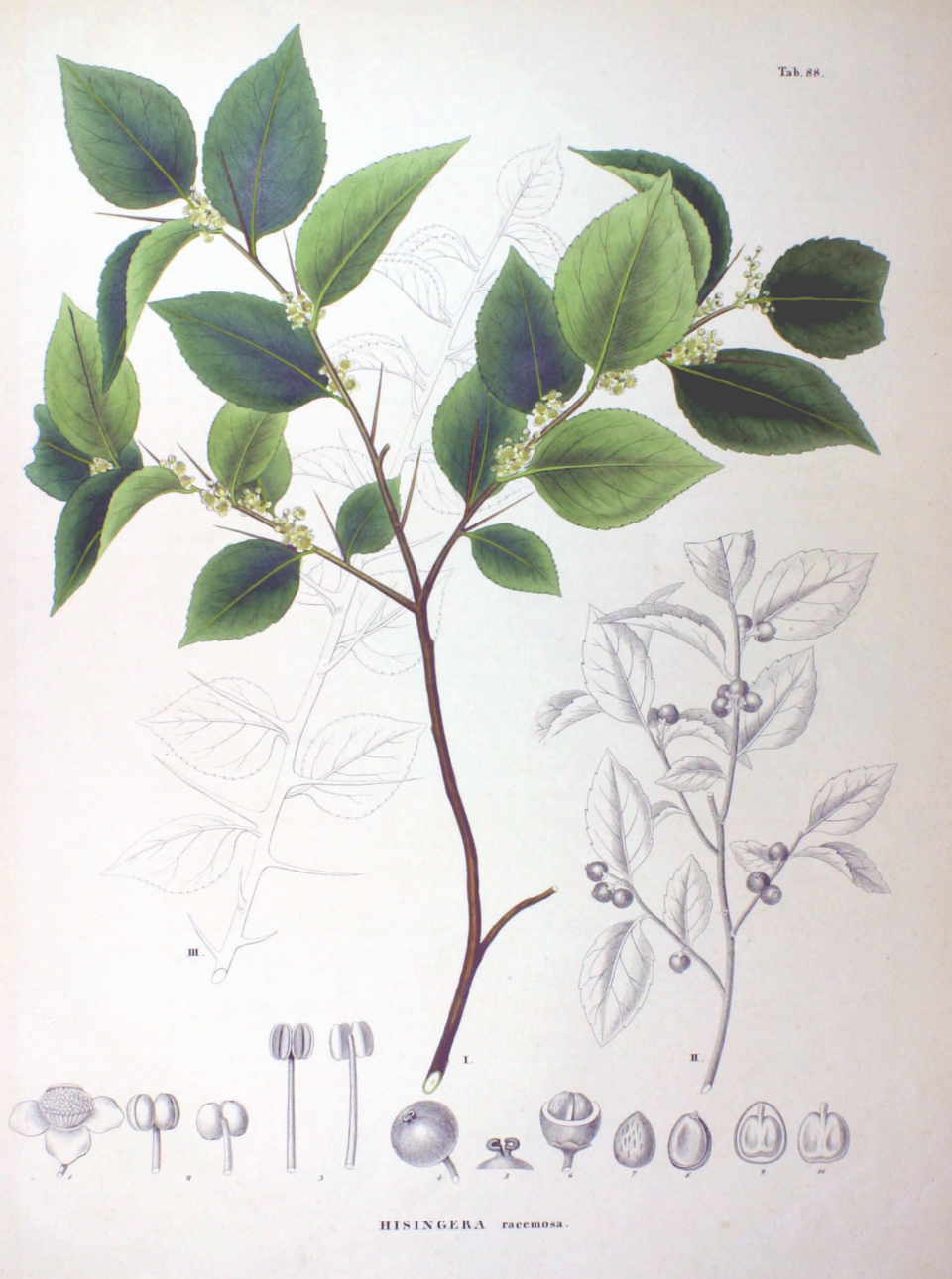
A small tree. It is thorny and loses its leaves. It can be 10 m high. The leaves are alternate. They are oval with 3-5 veins. The leaves are 12-18 cm long by 3-8 cm wide. They are shiny and there are teeth along the edge. The flowers are creamy white. They occur in velvety clusters. The fruit are reddish and cherry like. They are sour and edible.
Edible Uses
The ripe fruit are eaten fresh or used for jellies. The seeds are also edible.
Traditional Uses
The ripe fruit are eaten. They are also used for jellies. The seeds can be eaten.
This uses section is brief — help expand it
Medicinal Uses
Flacourtia montana can be used as food. Ripe fruits are eaten raw An important herb in Ayurveda, where infusions of the bark, leaves and root are used medicinally to treat conditions such as fever, diarrhoea and inflammations. The leaf is carminative, astringent and used as a tonic, an expectorant and for asthma, pain relief, gynaecological complaints and as an anthelmintic, and treatment for hydrocele, pneumonia and intestinal worms. In India, an infusion of the bark is used as a gargle for hoarseness. In Madagascar, the bark, triturated in oil, is used as an anti-rheumatic liniment. The bark is used as a tanning material. Wood used for agricultural implements such as ploughs etc
Distribution
A tropical plant. They are common in deciduous forests in the lower hill regions.
Where It Grows
Asia, India, Indochina, Northeastern India, SE Asia, Vietnam,
Production
The fruit are available during summer or February to March in southern India.
Notes
There are about 17 Flacourtia species. Also put in the Flacourtiaceae family.
Also Known As
Attak, Attuck ka jhar, Champar, Champari, Chaprin, Charalpazham, Gudda, Han sampige, Hongquan nui, Kondai, Sampige hannu, Tar-bor
References (15)
- Altschul, S.V.R., 1973, Drugs and Foods from Little-known Plants. Notes in Harvard University Herbaria. Harvard Univ. Press. Massachusetts. no. 2926
- Ambasta, S.P. (Ed.), 2000, The Useful Plants of India. CSIR India. p 225
- Binu, S., 2010, Wild edible plants by the tribals in Pathanamthitta district, Kerala. Indian Journal of Traditional Knowledge. 9(2): 309-312
- Bole, P.V., & Yaghani, Y., 1985, Field Guide to the Common Trees of India. OUP p 45
- Cat. pl. Bombay 10. 1839
Show all 15 references Hide references
- Chandrashekara, U. M., 2009, Tree species yielding edible fruit in the coffee-based homegardens of Kerala, India: their diversity, uses and management. Food Sec. 1:361-370
- Flora and Livestock in Coastal Karnataka. 2007, Report. EMPRI p 173
- Hedrick, U.P., 1919, (Ed.), Sturtevant's edible plants of the world. p 310
- Jadhav, R., et al, 2015, Forest Foods of Northern Western Ghats: Mode of Consumption, Nutrition and Availability. Asian Agri-History Vol. 19, No. 4: 293-317
- Jose, D. T. & Sasidharan, N., 2016, Checklist of wild edible plants of Aralam Wildlife sanctuary, Kerala, India. South Indian Journal Of Biological Sciences 2016; 2(1); 141‐144
- Khaple, A. K. et al, Population Studies of Wild Edible Fruit Tree Species in Kodagu. International Journal of Life Sciences Vol. 1 No 3. pp 48-55
- Narayanan, M. K., R., et al, 2011, Ethnobotanically important trees and their uses by Kattunaikka tribe in Wayanad Wildlife Sanctuary, Kerala, India. Journal of Medicinal Plants research. 5(4): 704-612
- Ravikrishna, S., 2011, Ethno-medico-botanical survey on Wild Edible fruits of Udupi Taluq, Udupi p 74
- Singh, H.B., Arora R.K.,1978, Wild edible Plants of India. Indian Council of Agricultural Research, New Delhi. p 60
- Singh, V. B., et al, (Ed.) Horticulture for Sustainable Income and Environmental Protection. Vol. 1 p 217