Antidesma khasianum
Hook.f.
Dieng-soh-syllih
gbif· cc-by
Royal Botanic Gardens, Kew
gbif· cc-by
Royal Botanic Gardens, Kew
Description
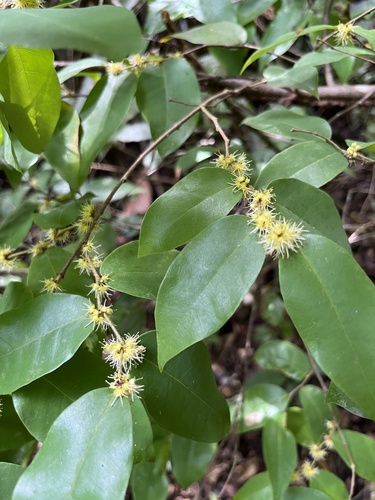
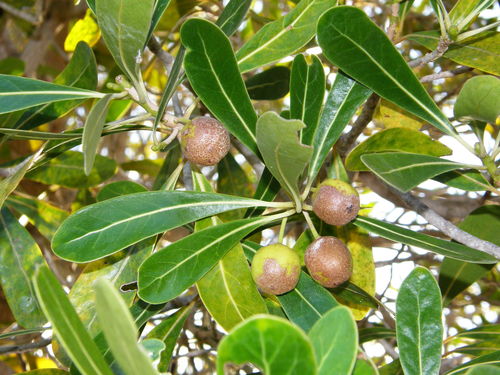
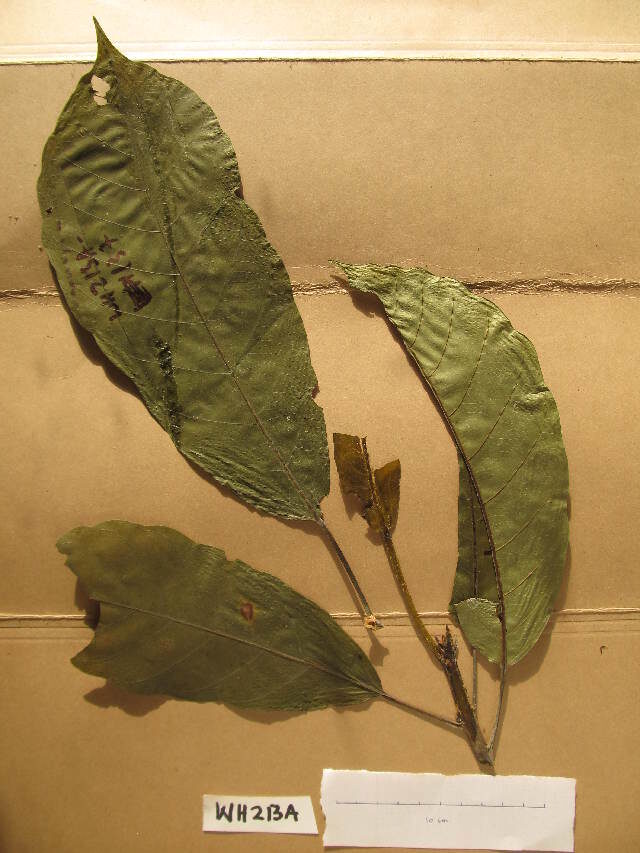
A shrub or small tree. It grows 2 m tall. Young branches have a few hairs. The leaves are oblong to sword shaped and 5-16 cm long by 2-5 cm wide. Male flowers are in the axils of leaves and at the ends of branches and can occur as 1-3 together. The flowering shoots are 2-6 cm long. The female flowering shoots can be simple or branched and 6 cm long. The fruit are oval and 7-8 mm long by 6 mm wide.
Edible Uses
The fruit are eaten.
Traditional Uses
The fruit are eaten.
This uses section is brief — help expand it
Distribution
A tropical plant. It grows in forests between 1,000-1,500 m above sea level.
Where It Grows
Asia, Bangladesh, Himalayas, India, Northeastern India,
Production
In India plants flower and fruit July to November.
Notes
There are about 100-170 Antidesma species.
Synonyms
Also Known As
Diengsaw, Dieng-soh-silli, Khasia jam, Kotia heloch
References (7)
- Ambasta S.P. (Ed.), 2000, The Useful Plants of India. CSIR India. p 46
- Jeeva, S., 2009, Horticultural potential of wild edible fruits used by the Khasi tribes of Meghalaya. Journal or Horticulture and Forestry Vol. 1(9) pp. 182-192
- Pasha, M. K. & Uddin, S. B., 2019, Minor Edible Fruits of Bangladesh. Bangladesh J. Plant Taxon. 26(2): 299–313
- Sarma, H., et al, 2010, Updated Estimates of Wild Edible and Threatened Plants of Assam: A Meta-analysis. International Journal of Botany 6(4): 414-423
- Sawian, J. T., et al, 2007, Wild edible plants of Meghalaya, North-east India. Natural Product Radiance Vol. 6(5): p 413
Show all 7 references Hide references
- Singh, H.B., Arora R.K.,1978, Wild edible Plants of India. Indian Council of Agricultural Research, New Delhi. p17, 49
- Wild edible plants of Himachal Pradesh