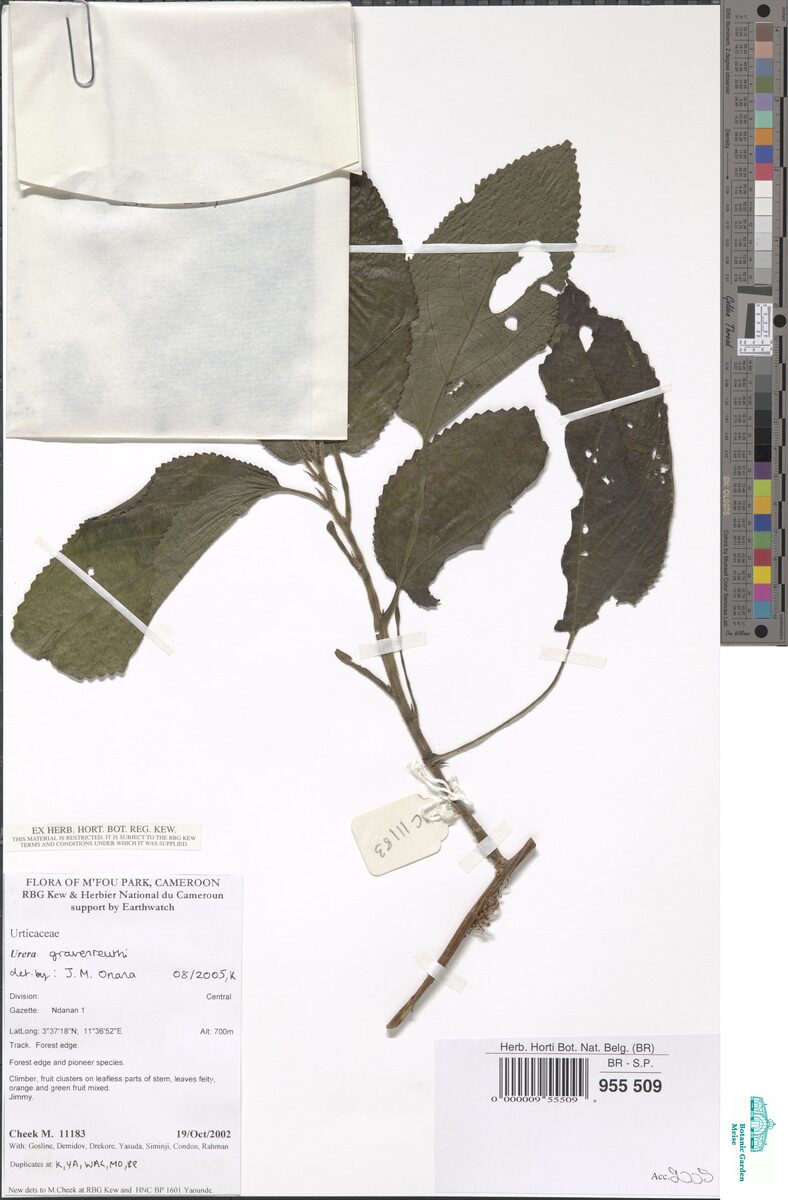
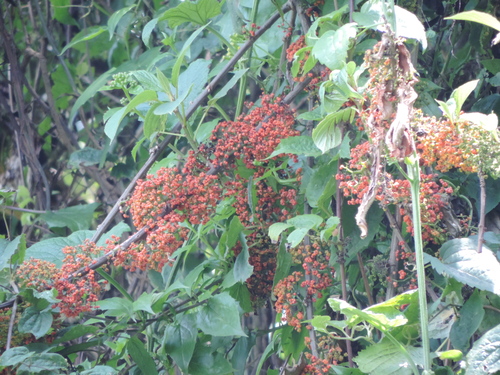
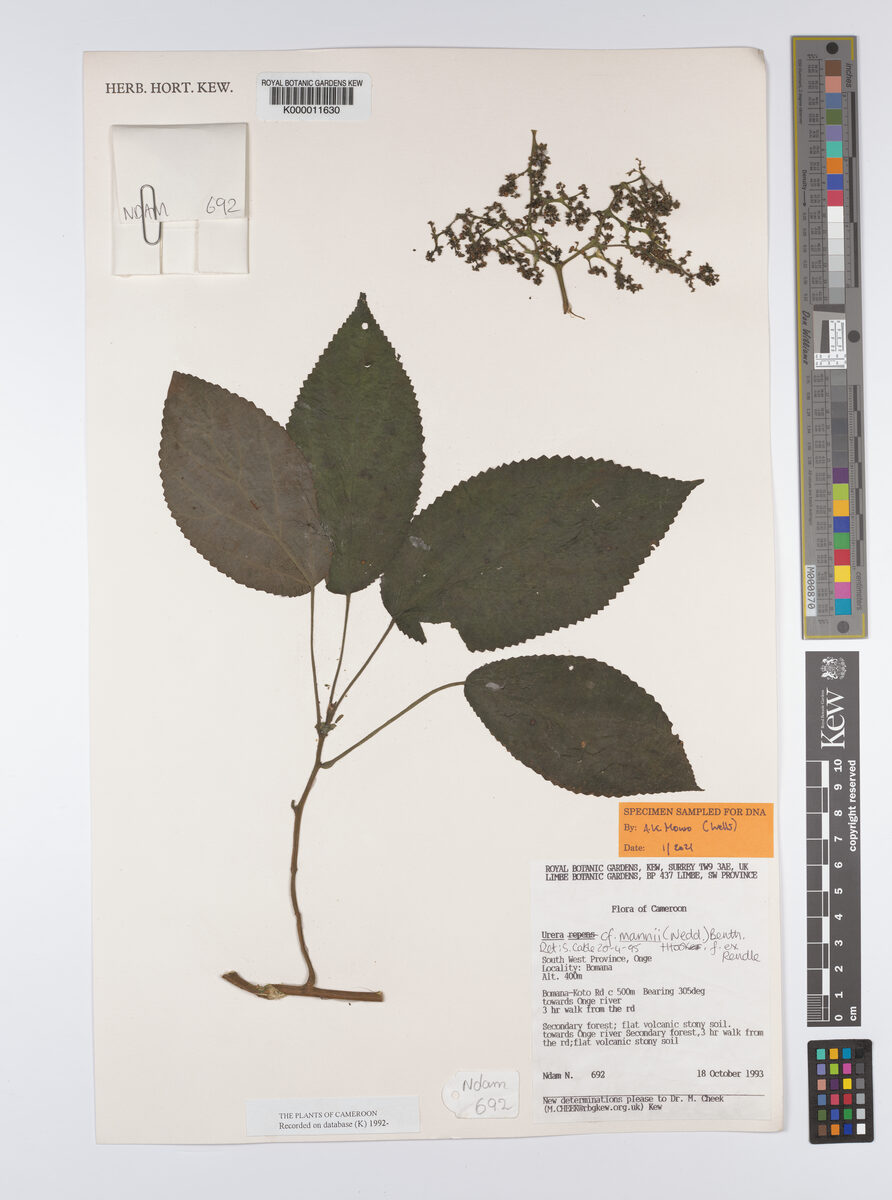
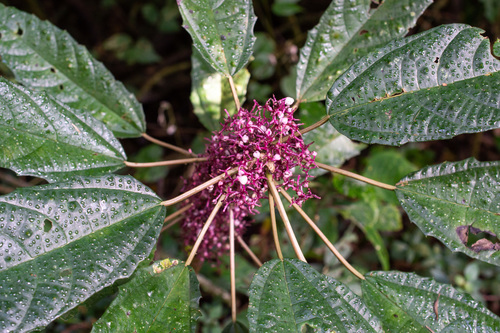
Sarcochlamys pulcherrima
Gaud.
Dogal-tree
iNaturalist· cc0
no rights reserved, uploaded by S.MORE
wikimedia· cc-by-sa
Wikimedia Commons - Chiring chandan
Description
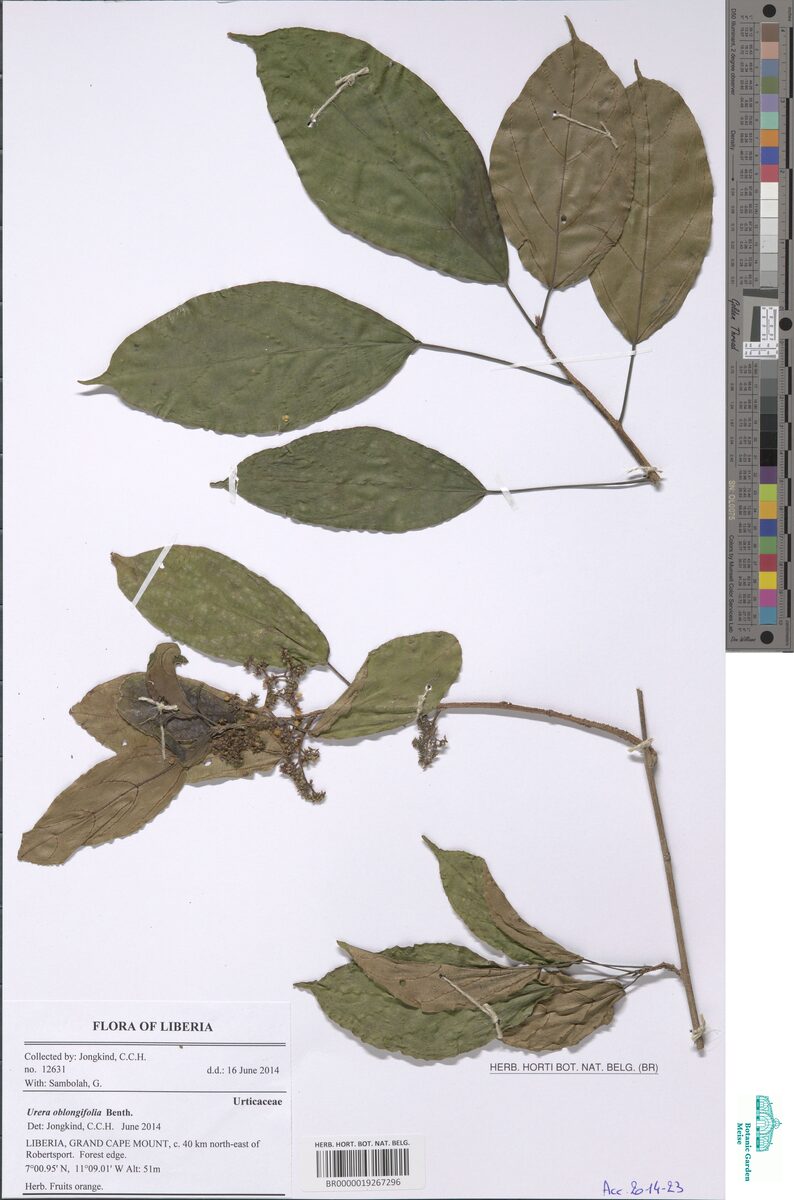
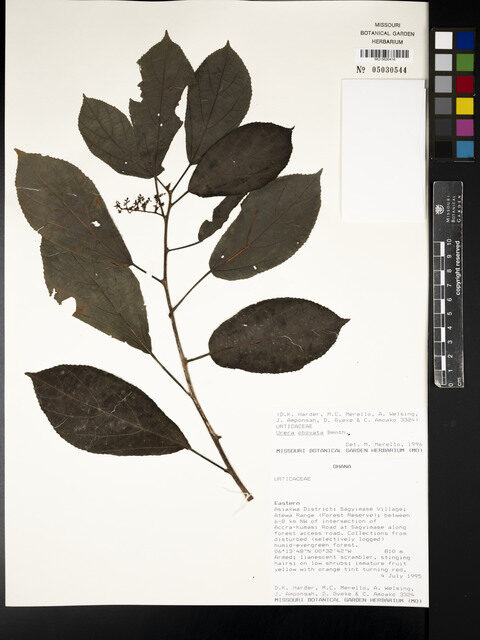
A shrub or small tree. It keeps its leaves throughout the year. The small branches are hairy. The leaves are alternate and narrowly sword shaped. They have teeth along the edge and are shiny above but rough underneath. Flowers contain both sexes. They are in groups in the axils of leaves. The fruit is dry.
Edible Uses
Young shoots, leaves, and fruit are cooked and eaten as a vegetable, often prepared with pork or banana flowers.
Traditional Uses
The young shoots and leaves and fruit are cooked and eaten as a vegetable. They are often cooked with pork. They are also cooked with banana flowers.
Distribution
It is a subtropical plant.
Where It Grows
Asia, Bangladesh, China, India, Myanmar, Northeastern India, SE Asia,
Other Uses
A fibre is obtained from the stems. A good fibre for ropes. It has been used as a substitute for ramie fibre (obtained from Boehmeria nivea) for making ropes, cloth etc. The leaves and twigs, combined with the bark of Albizzia spp, yields a madder-brown dye. The pale reddish wood is rather soft and light.
Other Information
Leaves are sold in local markets.
Nutrition
| Part | Moisture | kJ | kcal | Protein | Vit A | Vit C | Iron | Zinc |
|---|---|---|---|---|---|---|---|---|
| Leaves | 82.4 | — | 354.6 | 15.6 | — | — | 0.4 | 0.4 |
Synonyms
Also Known As
Adumbra, Ambe, Dieng-langshir, Dieng-soh-khwa-lali, Endaugi, Hka-mari, Lengo, Mechaki, Mesaki, Misagi-phang, Mishaigi, Notke, Ombe, Sanmarti, Sat-sha
References (12)
- Ambasta S.P. (Ed.), 2000, The Useful Plants of India. CSIR India. p 550
- Das, S. and Mohiuddin, M., 2012, Gender role in Home Garden Management in the Indigenous Community: A case study in Bandarban Hill District, Bangladesh. International Journal of Social Forestry. 5(1):22-37
- Dobriyal, M. J. R. & Dobriyal, R., 2014, Non Wood Forest Produce an Option for Ethnic Food and Nutritional Security in India. Int. J. of Usuf. Mngt. 15(1):17-37
- Medhi, P. & Borthakur, S. K., 2012, Phytoresources from North Cachur Hills of Assam -3: Edible plants sold at Hflong market. Indian Journal or Natural Products and Resources. 3(1) pp 84-109
- Medhi, P. & Borthakur, S. K., 2013, Wild edible plants sold by the Zeme Nagas at the makeshift market of Mahur, Dima Hasao district of Assam. Pleione 7(1): 84 - 93. 2013
Show all 12 references Hide references
- Medhi, P., Sarma, A and Borthakur, S. K., 2014, Wild edible plants from the Dima Hasao district of Assam, India. Pleione 8(1): 133-148
- Patiri, B. & Borah, A., 2007, Wild Edible Plants of Assam. Geethaki Publishers. p 132
- Pegu, R., et al, 2013, Ethnobotanical study of Wild Edible Plants in Poba Reserved Forest, Assam, India. Research Journal of Agriculture and Forestry Sciences 1(3):1-10
- Sawian, J. T., et al, 2007, Wild edible plants of Meghalaya, North-east India. Natural Product Radiance Vol. 6(5): p 421
- Seal, T., et al, 2017, Nutritional potential of five unexplored wild edible plants consumed by the tribal people of Arunachal Pradesh state in India. International Journal of Food Science and Nutrition. Volume 2; Issue 2; Page No. 101-105
- Singh, B., et al, 2012, Wild edible plants used by Garo tribes of Nokrek Biosphere Reserve in Meghalaya, India. Indian Journal of Traditional Knowledge. 11(1) pp 166-171
- Singh, H.B., Arora R.K.,1978, Wild edible Plants of India. Indian Council of Agricultural Research, New Delhi. p 37