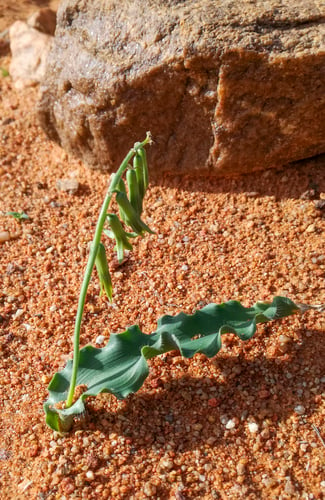
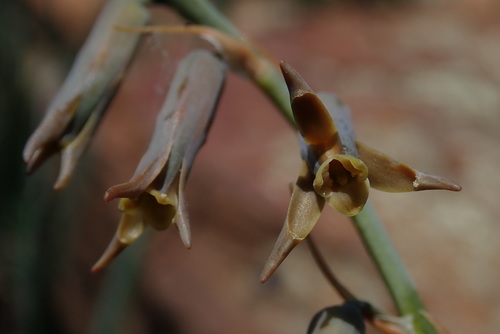
Asparagus officinalis
L.
Asparagus
iNaturalist· cc-by-nc
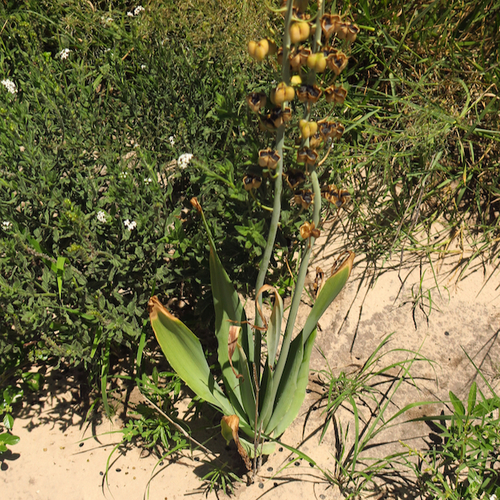
(c) Wayne Longbottom, some rights reserved (CC BY-NC), uploaded by Wayne Longbottom
iNaturalist· cc-by-nc
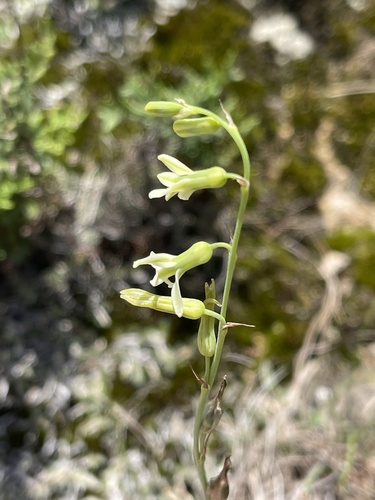
(c) Denis Gallant, some rights reserved (CC BY-NC), uploaded by Denis Gallant
iNaturalist· cc-by-sa
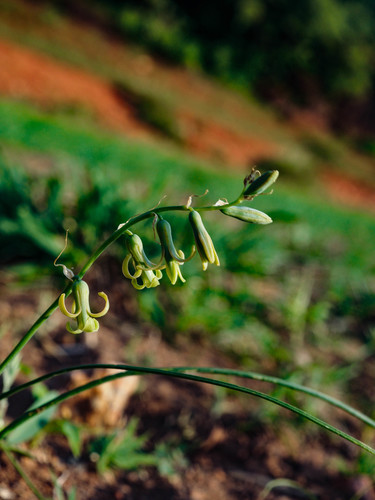
(c) Andreas Rockstein, some rights reserved (CC BY-SA)
Summary
Source: WikipediaA slow-growing dioecious perennial reaching 1.5 m tall by 0.8 m wide. Hardy to UK zone 4. Flowers in August; seeds mature September to October. Both sexes required for seed production. Bee-pollinated, not self-fertile, and noted for attracting wildlife. Adapts to light sandy, medium loamy, and heavy clay soils with good drainage. Tolerates very acidic, very alkaline, and saline soils. Suits mildly acidic to mildly alkaline pH. Grows in semi-shade or full sun, prefers moist soil, and withstands maritime exposure.
Description
A herb. A perennial plant with leaves like a feather and an underground root stock. It grows to 1.5 m high and spreads to 1 m across. The stems are erect but often hang over at the tips. The branches are soft. The leaves are feathery and a rich green colour. The flowers are small and greenish. They are of both sexes and occur either singly or in clusters of 2-4. The fruit are red berries. They are produced on female plants. They are 7-8 mm across. There are 2 or 3 seeds.
Edible Uses
Edible Parts: Shoots Stem Edible Uses: Coffee Young shoots - raw or cooked[2, 5, 15, 16, 27, K]. Considered a gourmet food, the shoots are harvested in the spring. We find them very acceptable raw in salads, with a hint of onion in their flavour. They are normally boiled or steamed and used as a vegetable. Male plants produce the best shoots. Do not over-harvest the plant because this would weaken it in the following year. The shoots are a good source of protein and dietary fibre. Roasted seeds are a coffee substitute. References More on Edible Uses Composition Figures in grams (g) or miligrams (mg) per 100g of food. Stem (Fresh weight) 26 Calories per 100g Water : 91.7% Protein: 2.5g; Fat: 0.2g; Carbohydrate: 5g; Fibre: 0.7g; Ash: 0.6g; Minerals - Calcium: 22mg; Phosphorus: 62mg; Iron: 1mg; Magnesium: 0mg; Sodium: 2mg; Potassium: 278mg; Zinc: 0mg; Vitamins - A: 540mg; Thiamine (B1): 0.18mg; Riboflavin (B2): 0.2mg; Niacin: 1.5mg; B6: 0mg; C: 33mg; Reference: Notes:
Traditional Uses
The young shoots are eaten cooked. They should only be washed just before cooking. The tuberous roots of some wild asparagus plants are eaten in China. Young roots should be used. The seeds have been used as a substitute for coffee.
Medicinal Uses
Antibiotic Antispasmodic Aperient Cancer Cardiac Demulcent Diaphoretic Diuretic Laxative Sedative Tonic Urinary Asparagus has been cultivated for over 2,000 years as a vegetable and medicinal herb. Both the roots and the shoots can be used medicinally, they have a restorative and cleansing effect on the bowels, kidneys and liver. The plant is antispasmodic, aperient, cardiac, demulcent, diaphoretic, diuretic, sedative and tonic. The freshly expressed juice is used. The root is diaphoretic, strongly diuretic and laxative. An infusion is used in the treatment of jaundice and congestive torpor of the liver. The strongly diuretic action of the roots make it useful in the treatment of a variety of urinary problems including cystitis. It is also used in the treatment of cancer. The roots are said to be able to lower blood pressure. The roots are harvested in late spring, after the shoots have been cut as a food crop, and are dried for later use. The seeds possess antibiotic activity. Another report says that the plant contains asparagusic acid which is nematocidal and is used in the treatment of schistosomiasis.
Known Hazards
Large quantities of the shoots can irritate the kidneys. The berries are mildly poisonous.
Distribution
It is a temperate or Mediterranean plant. It needs a temperature of 16-24°C for good growth. It needs a lower temperature for 60-100 days when the plants are dormant. In Papua New Guinea it is grown mainly in the highlands at over 1000 m altitude in the tropics. It grows up to 2600 m. It can be grown on the tropical coast with special management. It prefers humus rich, moist, well drained soils. It does best in an open sunny position. It is frost resistant but drought tender. A pH of 6-6.8 is suitable. In China it grows naturally on the steppes in NW Xinjiang. It suits hardiness zones 4-8.
Where It Grows
Africa, Albania, Andes, Argentina, Armenia, Asia, Australia, Austria, Azerbaijan, Balkans, Belgium, Bosnia, Britain, Bulgaria, Cambodia, Canada, Caucasus, Central America, Central Asia, China, Colombia, Croatia, Cuba, Cyprus, Czech Republic, Denmark, Dominican Republic, East Africa, Ecuador, Egypt, Europe, France, Georgia, Germany, Greece, Guam, Haiti, Hawaii, Hungary, India, Indochina, Indonesia, Iran, Ireland, Italy, Kazakhstan, Kenya, Korea, Laos, Luxembourg, Macedonia, Malawi, Malaysia, Mediterranean, Middle East, Moldova, Mongolia, Myanmar, Netherlands, North Africa, North America, Northeastern India, Norway, Pacific, Pakistan, Papua New Guinea, PNG, Philippines, Poland, Portugal, Puerto Rico, Romania, Russia, Sao Tome and Principe, Scandinavia, SE Asia, Serbia, Siberia, Sicily, Slovenia, Solomon Islands, South Africa, Southern Africa, South America, Spain, Sri Lanka, Switzerland, Tasmania, Thailand, Turkey, Türkiye, Tuvalu, USA, Uzbekistan, Vietnam, West Indies, Yugoslavia,
Cultivation
Plants can be grown from seed. It is best to soak the seeds for 24 hours then sow them in a nursery. They are transplanted after 8-12 months. A spacing or 1 m x 1 m is suitable. If white shoots are required, the shoots need to be kept covered with soil. Shoots turn green in sunlight. Plants can also be grown by division of the clump. These are planted 15 cm deep. For seed production a male plant is needed for each 4 female plants. Bees help pollination.
Propagation
Seed - pre-soak for 12 hours in warm water and then sow in spring or as soon as the seed is ripe in early autumn in a greenhouse. It usually germinates in 3 - 6 weeks at 25°c. Prick out the seedlings into individual pots when they are large enough to handle and grow them on in a sunny position in the greenhouse for their first winter. Plant them out into their permanent positions in late spring or early summer. Division in early spring as the plant comes into growth.
Other Uses
Insecticide Asparagus can be used in agroforestry as a perennial vegetable crop. It can be interplanted with other species and can serve as a ground cover that helps suppress weeds. The plant contains asparagusic acid, which has nematocidal properties. 1. Nectary - Flowers rich in nectar and pollen: No – While asparagus does produce flowers, they are not particularly rich in nectar or pollen compared to other flowering plants. 2. Wildlife - Food (Fruit, Seeds, Leaf litter, Shelter, Nesting, Roosting): Yes – The young shoots are edible for humans and can attract wildlife; however, the plant itself does not provide significant food or shelter directly for larger wildlife. 3. Invertebrate Shelter (Overwintering sites, Leaf litter, Groundcover): Yes – Asparagus plants can offer some shelter through their foliage, and leaf litter can provide overwintering sites for invertebrates. 4. Pest Confuser (Smell): No – Asparagus is not specifically known for having a strong smell that would confuse pests. Special Uses Attracts Wildlife Food Forest
Production
The first harvest is 18-24 months after planting. The shoots are cut before they open out into the ferny erect stems. They are cut below ground level when about 15-20 cm high.
Other Information
It is a commercially cultivated vegetable. It is sold in local markets. Not widely grown in Papua New Guinea and then mostly near the houses of Europeans.
Notes
There are between 160-300 Asparagus species.
Nutrition
| Part | Moisture | kJ | kcal | Protein | Vit A | Vit C | Iron | Zinc |
|---|---|---|---|---|---|---|---|---|
| Stalk - raw | 93.6 | 72 | 17 | 1.9 | 58 | 21 | 1 | 0.5 |
| Stalk - boiled | 95.4 | 52 | 12 | 1.7 | 50 | 16 | 0.6 | 0.3 |
| Roots | — | — | — | — | — | — | — | — |
| Seeds - coffee | — | — | — | — | — | — | — | — |
Synonyms
Also Known As
Asparges, Ayrelli, Esparrago, Halyum, Hathavariya, Hillua, Kannyut, Katsitsimzukwa, Nag-down, Shi diao bai, Sotomool, Sparanghel, Sparoga, Tsnebek, Tsnepak
References (75)
- Aberoumand, A. and Deokule, S. S., 2009, Determination of Elements Profile of Some Wild Edible Plants. Food Anal. Methods. 2:116-119
- Ali, H., et al, 2011, Ethnobotanical profile of some plant resources in Malam Jabba valley of Swat, Pakistan. Journal of Medicinal Plants Research Vol. 5(18), pp 4676-4687
- Ambasta S.P. (Ed.), 2000, The Useful Plants of India. CSIR India. p 59
- Barua, U., et al, 2007, Wild edible plants of Majuli island and Darrang districts of Assam. Indian Journal of Traditional Knowledge 6(1) pp 191-194
- Beckstrom-Sternberg, Stephen M., and James A. Duke. "The Foodplant Database." http://probe.nalusda.gov:8300/cgi-bin/browse/foodplantdb.(ACEDB version 4.0 - data version July 1994)
Show all 75 references Hide references
- Bianchini, F., Corbetta, F., and Pistoia, M., 1975, Fruits of the Earth. Cassell. p 88
- Bircher, A. G. & Bircher, W. H., 2000, Encyclopedia of Fruit Trees and Edible Flowering Plants in Egypt and the Subtropics. AUC Press. p 45
- Blamey, M and Grey-Wilson, C., 2005, Wild flowers of the Mediterranean. A & C Black London. p 484
- Bodkin, F., 1991, Encyclopedia Botanica. Cornstalk publishing, p 108
- Brown, D., 2002, The Royal Horticultural Society encyclopedia of Herbs and their uses. DK Books. p 134
- Bussman, R. W., et al, 2021, Unity in diversity—food plants and fungi of Sakartvelo (Republic of Georgia), Caucasus. Journal of Ethnobiology and Ethnomedicine (2021) 17:72 p 5
- Cerne, M., 1992, Wild Plants from Slovenia used as Vegetables. Acta Horticulturae 318.
- Cheifetz, A., (ed), 1999, 500 popular vegetables, herbs, fruits and nuts for Australian Gardeners. Random House p 35
- Chen Xinqi, Liang Songyun, Xu Jiemei, Tamura M.N., Liliaceae. Flora of China. p 145
- Chin, H. F., 1999, Malaysian Vegetables in Colour. Tropical Press. p 64
- Ciftcioglu, C. G., 2015, Sustainable wild-collection of medicinal and edible plants in Lefke region of North Cyprus. Agroforest Syst. Springer
- Ciocarlan, N. & Ghendov, V., 2015, Ethnobotanical and Ecological Studies of Wild Edible Plants from Bugeac Steppe, Republic of Moldova. Journal of EcoAgriTourism. Cailta terra Vol. 11(2):
- Cundall, P., (ed.), 2004, Gardening Australia: flora: the gardener's bible. ABC Books. p 196
- Curtis, W.M., & Morris, D.I., 1994, The Student's Flora of Tasmania. Part 4B St David's Park Publishing, Tasmania, p 370
- Ekman Herbarium records Haiti
- Ertug, F, Yenen Bitkiler. Resimli Türkiye Florası -I- Flora of Turkey - Ethnobotany supplement
- Esperanca, M. J., 1988. Surviving in the wild. A glance at the wild plants and their uses. Vol. 1. p 69
- Facciola, S., 1998, Cornucopia 2: a Source Book of Edible Plants. Kampong Publications, p 32
- Flora of China. www.eFloras.org
- Foo, J.T.S.(ed), 1996, A Guide to Common Vegetables. Singapore Science Foundation. p 113
- French, B., 1986, Food Plants of Papua New Guinea, Asia Pacific Science Foundation p 131
- French, B.R., 2010, Food Plants of Solomon Islands. A Compendium. Food Plants International Inc. p 152
- Geraci, A., et al, 2018, The wild taxa utilized as vegetables in Sicily (Italy): a traditional component of the Mediterranean diet. Journal of Ethnobiology and Ethnomedicine (2018) 14:14
- Grubben, G. J. H. and Denton, O. A. (eds), 2004, Plant Resources of Tropical Africa 2. Vegetables. PROTA, Wageningen, Netherlands. p 95
- Hadfield, J., 2001, The A-Z of Vegetable Gardening in South Africa. Struik p 74
- Hedrick, U.P., 1919, (Ed.), Sturtevant's edible plants of the world. p 80
- Hu, Shiu-ying, 2005, Food Plants of China. The Chinese University Press. p 316
- Irving, M., 2009, The Forager Handbook, A Guide to the Edible Plants of Britain. Ebury Press p 339
- Jardin, C., 1970, List of Foods Used In Africa, FAO Nutrition Information Document Serie
- Kasper-Pakosz, R., et al, 2016, Wild and native plants and mushrooms sold in the open-air markets of south- eastern Poland. Journal of Ethnobiology and Ethnomedicine 12:45s No 2.p 57
- Kays, S. J., and Dias, J. C. S., 1995, Common Names of Commercially Cultivated Vegetables of the World in 15 languages. Economic Botany, Vol. 49, No. 2, pp. 115-152
- Kiple, K.F. & Ornelas, K.C., (eds), 2000, The Cambridge World History of Food. CUP p 1723
- Lazarides, M. & Hince, B., 1993, Handbook of Economic Plants of Australia, CSIRO. p 27
- Low, T., 1992, Bush Tucker. Australia’s Wild Food Harvest. Angus & Robertson. p 156
- Luczaj et al, 2013, Wild vegetable mixes sold in the markets of Dalmatia (southern Croatia). Journal of Ethnobiology and Ethnomedicine. 8:2
- Luczaj, L. et al, 2014, Wild Food Plants of Dalmatia (Croatia). in A. Pieroni, C. L. Quave (eds.), Ethnobotany and Biocultural Diversities in the Balkans, p 138
- Mabey, R., 1973, Food for Free. A Guide to the edible wild plants of Britain, Collins. p 115
- MacKinnon, A., et al, 2009, Edible & Medicinal Plants of Canada. Lone Pine. p 174
- Macmillan, H.F. (Revised Barlow, H.S., et al), 1991, Tropical Planting and Gardening. Sixth edition. Malayan Nature Society. Kuala Lumpur. p 359
- Martin, F.W. & Ruberte, R.M., 1979, Edible Leaves of the Tropics. Antillian College Press, Mayaguez, Puerto Rico. p 202
- Miguel, E., et al, 1989, A checklist of the cultivated plants of Cuba. Kulturpflanze 37. 1989, 211-357
- Nanagulyan, S., et al, 2020, Wild plants and fungi sold in the markets of Yerevan (Armenia). Journal of Ethnobiology and Ethnomedicine 16:26
- Norrington, L., & Campbell, C., 2001, Tropical Food Gardens. Bloomings Books. p 24
- Ochse, J.J. et al, 1931, Vegetables of the Dutch East Indies. Asher reprint. p 457
- Paczkowska, G. & Chapman, A.R., 2000, The Western Australian Flora. A Descriptive Catalogue. Western Australian Herbarium. p 37
- Peduruhewa, P. S., et al, 2021, Potential of Underutilized Wild Edible Plants as the Food for the Future – A Review. Journal of Food Security, Vol. 9, No. 4, 136-147
- Plants of Haiti Smithsonian Institute http://botany.si.edu
- Redzic, S. J., 2006, Wild Edible Plants and their Traditional Use in the Human Nutrition in Bosnia-Herzegovina. Ecology of Food and Nutrition, 45:189-232
- Ruiters-Welcome, A. K., 2019, Food plants of southern Africa. Ph.D. thesis. Univ. of Johannesburg p 30
- Schneider, E., 2001, Vegetables from Amaranth to Zucchini: The essential reference. HarperCollins. p 26
- Sharma, B.B., 2005, Growing fruits and vegetables. Publications Division. Ministry of Information and broadcasting. India. p 203
- Siemonsma, J. S. and Piluek, K. (Eds), 1994, Plant Resources of South-East Asia No. 8 Vegetables. Prosea Foundation, Bogor, Indonesia, p 91
- Simkova, K. et al, 2014, Ethnobotanical review of wild edible plants used in the Czech Republic. Journal of Applied Botany and Food Quality 88, 49-67
- Smith, P.M., 1979, Asparagus, in Simmonds, N.W., (ed), Crop Plant Evolution. Longmans. London. p 315
- Sp. pl. 1:313. 1753
- Staples, G.W. and Herbst, D.R., 2005, A tropical Garden Flora. Bishop Museum Press, Honolulu, Hawaii. p 682
- Stone, B. C., 1970, The Flora of Guam. A Manual for the Identification of the Vascular Plants of the Island. Micronesica. Journal of the University of Guam. p 115
- Tardio, J., et al, 2006, Ethnobotanical review of wild edible plants in Spain. Botanical J. Linnean Soc. 152, 27-71
- Tasmanian Herbarium Vascular Plants list p 68
- Terra, G.J.A., 1973, Tropical Vegetables. Communication 54e Royal Tropical Institute, Amsterdam, p 26
- Thaman, R. R, 2016, The flora of Tuvalu. Atoll Research Bulletin No. 611. Smithsonian Institute p 48
- Tindall, H.D., 1983, Vegetables in the Tropics, Macmillan p 322
- Torre, de la L., et al, 2008, Enciclopedia de las Plantas Útiles del Ecuador. Herbario QCA. Pontificia Universidad Católica del Ecuador. p 211
- Tozer, F., 2007, The Uses of Wild Plants. Green Man Publishing. p 42
- USDA, ARS, National Genetic Resources Program. Germplasm Resources Information Network - (GRIN). [Online Database] National Germplasm Resources Laboratory, Beltsville, Maryland. Available: www.ars-grin.gov/cgi-bin/npgs/html/econ.pl (10 April 2000)
- van Wyk, B., 2005, Food Plants of the World. An illustrated guide. Timber press. p 78
- Welcome, A. K. & Van Wyk, B.-E., 2019, An inventory and analysis of the food plants of southern Africa. South African Journal of Botany 122 (2019) 136–179
- Wiersema, J. H. & Leon, B., 2013, World Economic Plants. A Standard Reference CRC Press. 2nd Ed. p 76
- Williamson, J., 2005, Useful Plants of Malawi. 3rd. Edition. Mdadzi Book Trust. p 31
- World Checklist of Useful Plant Species 2020. Royal Botanic Gardens, Kew