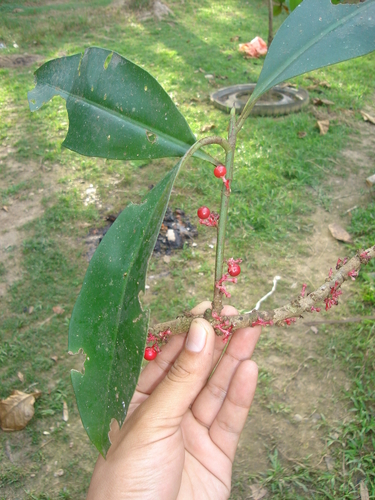
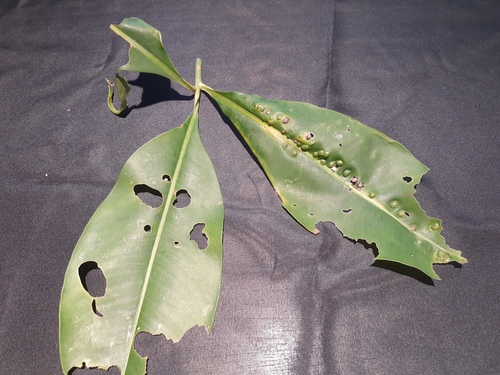
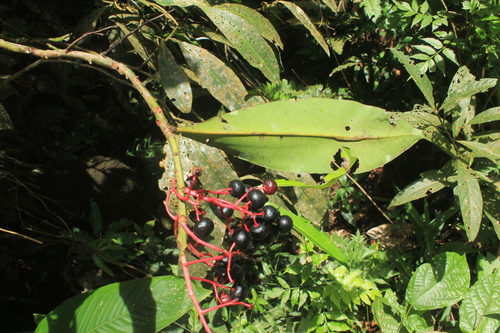
Lysimachia candida
Lindl.
iNaturalist· cc-by-nc
(c) jianglei, some rights reserved (CC BY-NC)
iNaturalist· cc-by-nc
(c) Yao Li, some rights reserved (CC BY-NC), uploaded by Yao Li
Description
A herb. It grows each year from seeds or completes its life-cycle over 2 years. It grows 10-30 cm tall. The leaves at the base are spoon shaped and 3-6 cm long by 1-2 cm wide. The leaves on the stem are alternate and 1-5 cm long by 1 cm wide.
Edible Uses
The leaves are eaten cooked as a vegetable, traditionally served with fish.
Traditional Uses
It is eaten cooked as a vegetable with fish.
This uses section is brief — help expand it
Distribution
It is a subtropical plant. It grows in wet areas near cultivated fields between 100-2,100 m above sea level in southern China. In Sichuan and Yunnan.
Where It Grows
Asia, China, Himalayas, India, Indonesia, Japan, Myanmar, SE Asia, Taiwan, Tibet, Vietnam,
Notes
There are about 150 Lysimachia species.
Synonyms
Also Known As
Kengoi, Lymac trang
References (6)
- Ambasta, S.P. (Ed.), 2000, The Useful Plants of India. CSIR India. p 344
- Arora, R. K., 2014, Diversity in Underutilized Plant Species - An Asia-Pacific Perspective. Bioversity International. p 42
- Burkill, I.H., 1966, A Dictionary of the Economic Products of the Malay Peninsula. Ministry of Agriculture and Cooperatives, Kuala Lumpur, Malaysia. Vol 2 (I-Z) p 1402
- Meitei, L. R., et al, 2022, An ethnobotanical study on the wild edible plants used by forest dwellers in Yangoupokpi Lokchao Wildlife Sanctuary, Manipur, India. Ethnobotany Research and Application 23:15
- Singh, H.B., Arora R.K.,1978, Wild edible Plants of India. Indian Council of Agricultural Research, New Delhi. p 28
Show all 6 references Hide references
- WATT,