Maesa argentea
(Wall.) A. DC.
Phusera, Gogsa
gbif· cc-by
GBIF
gbif· cc-by
GBIF
gbif· cc-by
GBIF
Description
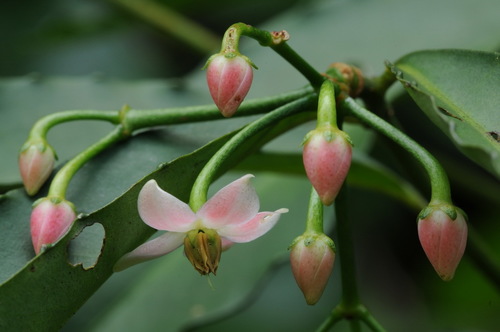
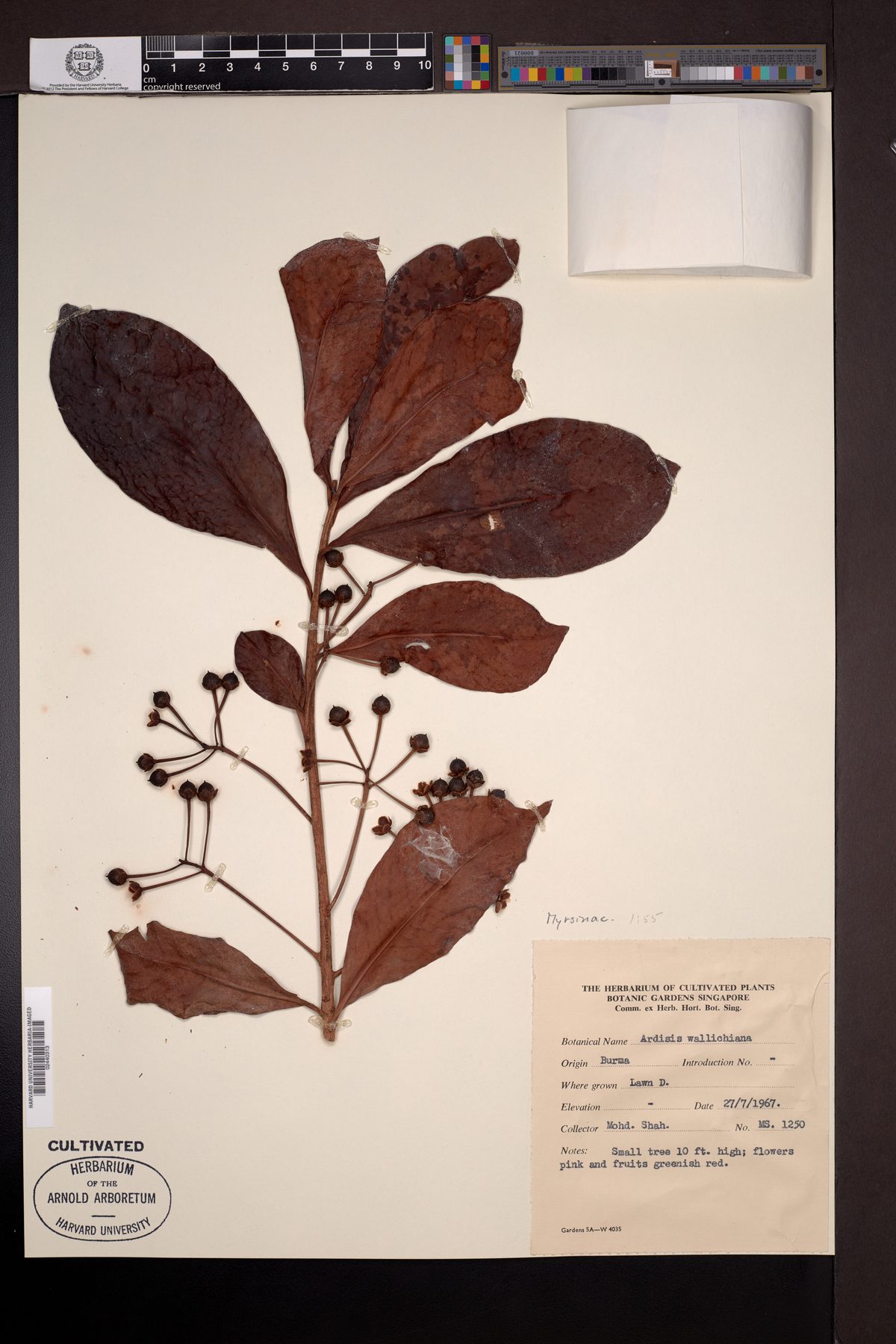
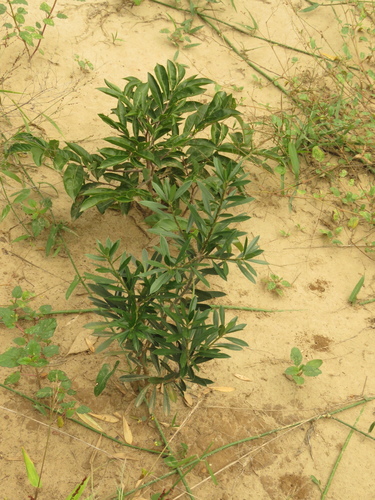
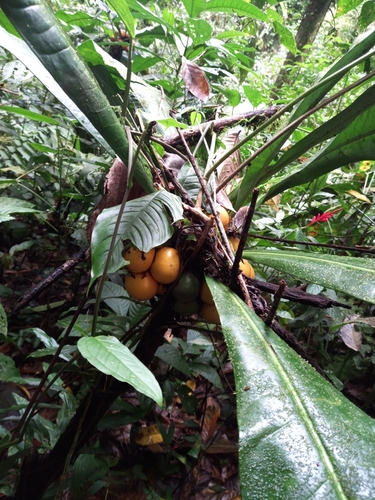
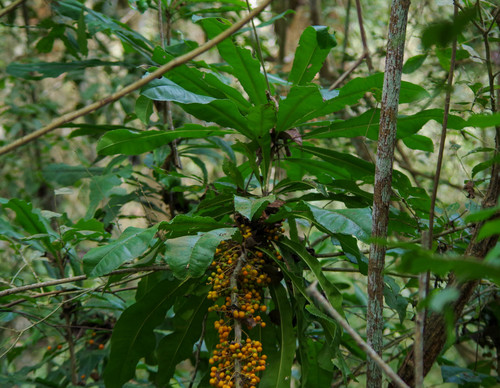
A shrub or small tree. It can be 5 m tall. The small branches have glands. The pith is solid. The leaf stalk is 1.8-2 cm long. The leaf blade is oval and 12-17 cm long by 5-9 cm wide. They can be larger. They are rougher underneath. There are teeth along the edge. The leaf tapers to the tip. There are about 8 side veins on each side of the main vein. The flowering stalk is in the axils of leaves. It is 1-4 cm long. The flowers are white and 3 mm across. The fruit are round and 3-5 mm across. They are fleshy.
Edible Uses
The berries are eaten.
Traditional Uses
The berries are eaten.
This uses section is brief — help expand it
Distribution
It is a subtropical plant. They grow in broad-leaved forest and near streams and in damp areas between 1500-2900 m altitude in S China. In Sichuan and Yunnan.
Where It Grows
Asia, China, Himalayas, India, Indochina, Myanmar, Nepal, SE Asia,
Notes
There are about 75-200 Maesa species. They are mostly tropical. They are also put in the family Maesaceae. They are also put in the family Myrsinaceae.
References (6)
- Ambasta S.P. (Ed.), 2000, The Useful Plants of India. CSIR India. p 348
- Chen Jie, Pipoly 3, J.J., Myrsinaceae. Flora of China.
- Hedrick, U.P., 1919, (Ed.), Sturtevant's edible plants of the world. p 396
- Hu, Shiu-ying, 2005, Food Plants of China. The Chinese University Press. p 617
- Schatz, G.E., 2001, Generic Tree Flora of Madagascar. Royal Botanical Gardens, Kew and Missouri Botanical Garden. p 237 (Genus)
Show all 6 references Hide references
- Singh, H.B., Arora R.K.,1978, Wild edible Plants of India. Indian Council of Agricultural Research, New Delhi. p 66