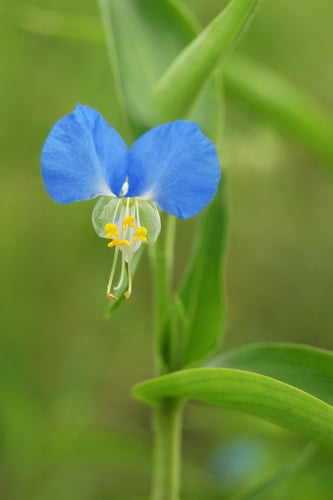
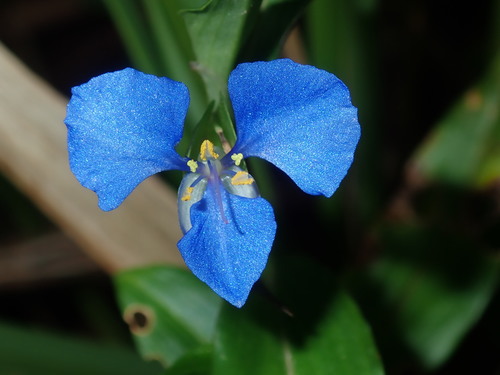
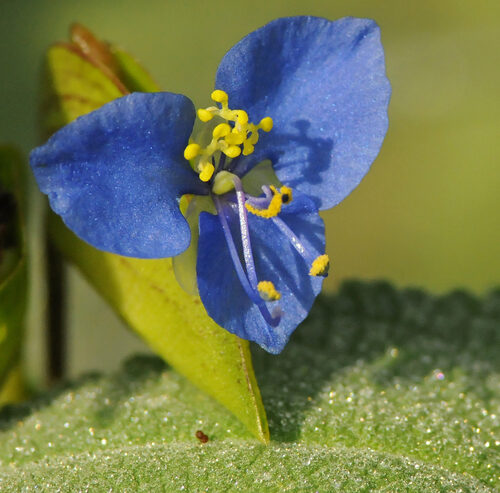
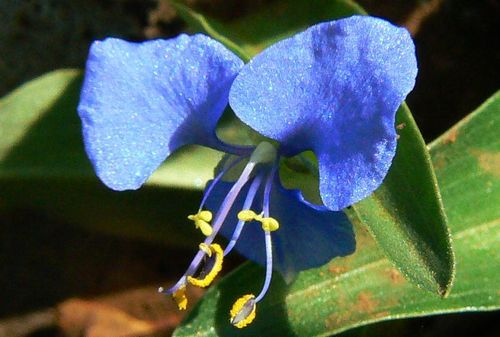
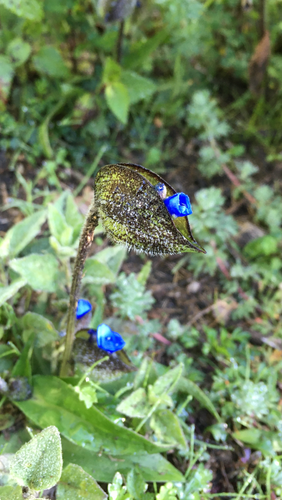
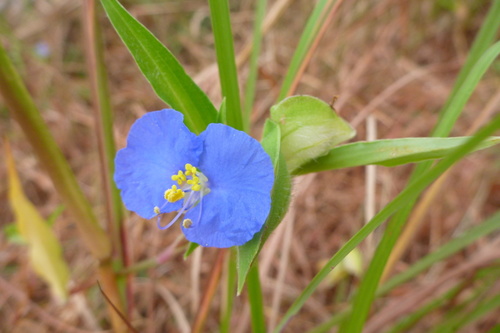
Cyanotis tuberosa
Roem. and Schult.
Sahyadri dew-grass, Greater cat ears
iNaturalist· cc-by-nc-sa
(c) Caesar, some rights reserved (CC BY-NC-SA)
iNaturalist· cc-by
(c) Swarochi Tathagath, some rights reserved (CC BY)
Summary
Source: WikipediaCyanotis tuberosa, is a species of plants in the Commelinaceae family.
Description
A succulent herb. It is creeping. It grows 20-90 cm tall. It forms tubers. The stems are hairy on one side. The leaves are 15-25 cm long and 1-2 cm wide. They grow from the roots. The upper stem leaves are shorter. The flowers are bluish-purple. They are enclosed in a pair of oval folded bracts. The fruit is an oval capsule. The seeds are black.
Edible Uses
The leaves are used as a potherb. The tuberous root is cooked and eaten. The rhizome is chewed for its moisture content.
Traditional Uses
The leaves are used as a potherb. The rhizome is chewed for its moisture. The tuberous root is cooked and eaten.
This uses section is brief — help expand it
Distribution
It is a tropical plant. It grows in forests and on hills. It grows among wet rocks.
Where It Grows
Asia, India,
Synonyms
Also Known As
Merom chunchi, Naladdo, Netha kina, Yemme gedde
References (6)
- Arora, R. K., 2014, Diversity in Underutilized Plant Species - An Asia-Pacific Perspective. Bioversity International. p 39 (As Cynotis)
- Dey, A. & Mukhererjee, A., 2015, Living and Survival Amidst Hunger: Wild Edible Botanicals as a Prime Forest Productivity in the Rural Purulia District, West Bengal, India from Colonial to Present. Research Journal of Forestry 9(3): 71-86
- Kumar, G.M., & Shiddamallayya, N., 2014, Documentation of Wild Plant Tubers as Food Resources in Hassan District, Karnataka, International Journal of Applied Biology and Pharmaceutical Technology. 5(2) p 90
- Samydurai, P., et al, 2012, Wild habits of Kolli Hills being staple food of inhabitant tribes of eastern Ghats, Tamil Nadu, India. Indian Journal of Natural Products and Resources. 3(3) September 2012 pp 432-437
- Seidemann J., 2005, World Spice Plants. Economic Usage, Botany, Taxonomy. Springer. p 128
Show all 6 references Hide references
- Singh, H.B., Arora R.K.,1978, Wild edible Plants of India. Indian Council of Agricultural Research, New Delhi. p 25