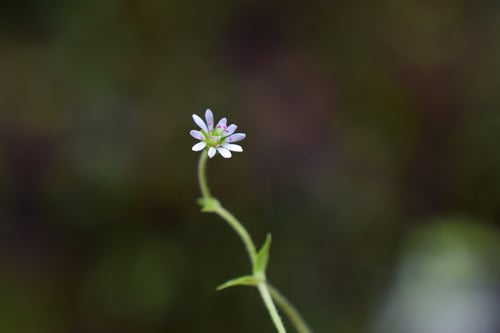
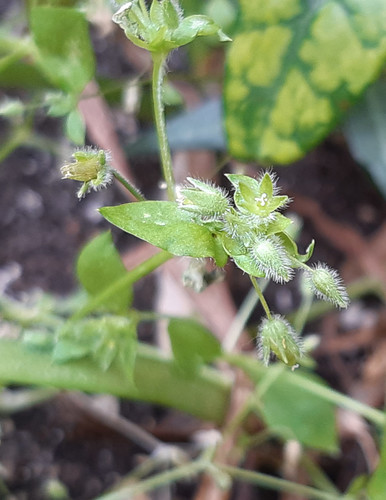
Lepyrodiclis holosteoides
(C. A. Mey.) Fenzl. ex Fisch. & C. A.Mey.
iNaturalist· cc-by-nc
(c) Aleksandr Naumenko, some rights reserved (CC BY-NC), uploaded by Aleksandr Naumenko
iNaturalist· cc-by-nc
(c) Aziza Norxodjayeva Muzafarovna, some rights reserved (CC BY-NC)
Description
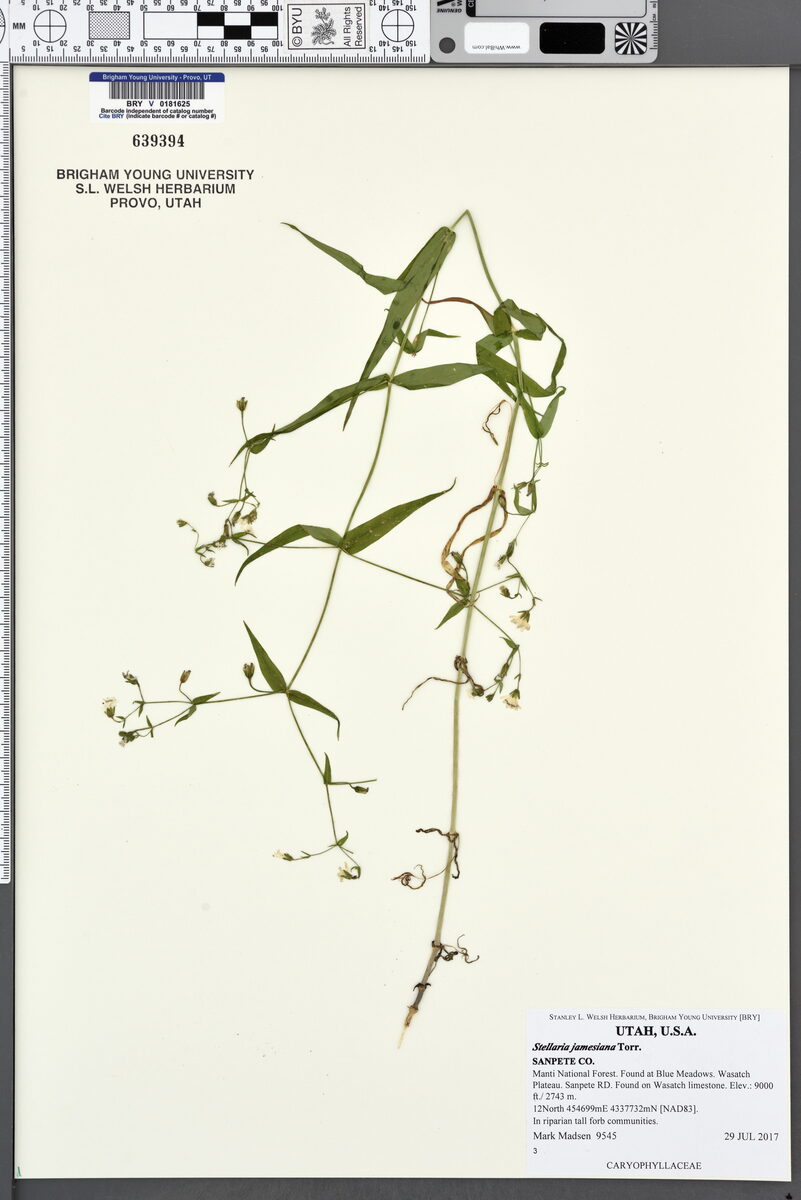
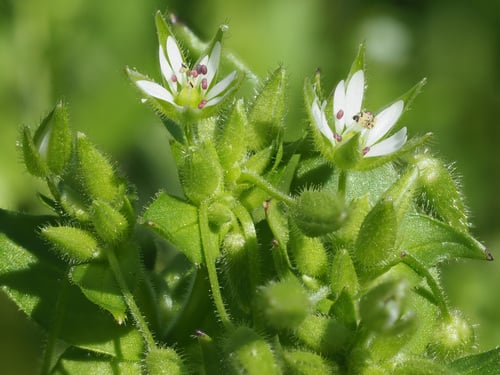
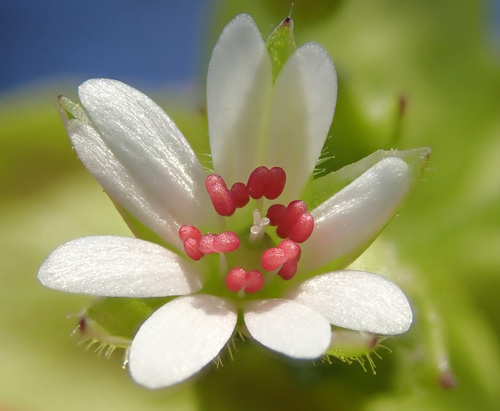
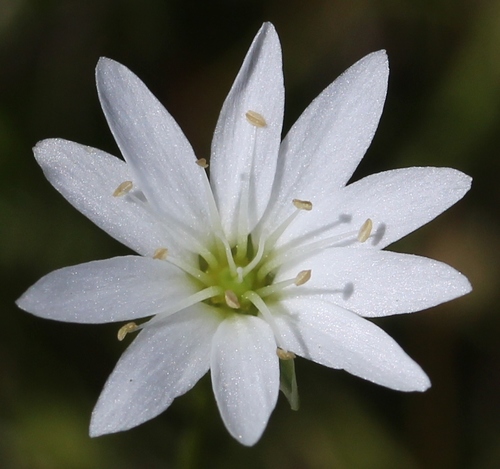
A herb. It grows 40-100 cm tall. There are lines along the stems. The leaves are narrowly sword shaped and 3-7 cm long by 2-5 mm wide. They are hairy underneath. The flowers are in groups near the top of the plant or in the axils of leaves. The flower petals are white.
Edible Uses
The leaves are eaten as a vegetable.
Traditional Uses
The leaves are eaten as a vegetable.
This uses section is brief — help expand it
Distribution
It is a temperate plant. In Nepal it grows between 3,900-4,100 m above sea level. In China it grows in the Gobi desert between 1,200-4,100 m above sea level. In Sichuan.
Where It Grows
Afghanistan, Asia, Central Asia, China, Himalayas, India, Kazakhstan, Mongolia, Myanmar, North America, Nepal, NW India, Pakistan, SE Asia, Tajikistan, Tibet, USA,
Notes
There are about 150-160 Arenaria species. An unresolved name in The Plant List.
Synonyms
References (4)
- Ambasta S.P. (Ed.), 2000, The Useful Plants of India. CSIR India. p 50 (As Arenaria holosteoides)
- Battacharyya, A., 1991, Ethnobotanical Observations in the Ladakh Region of Northern Jammu and Kashmir State, India. Economic Botany, Vol. 45, No. 3, pp. 305-308
- Dobriyal, M. J. R. & Dobriyal, R., 2014, Non Wood Forest Produce an Option for Ethnic Food and Nutritional Security in India. Int. J. of Usuf. Mngt. 15(1):17-37
- Singh, H.B., Arora R.K.,1978, Wild edible Plants of India. Indian Council of Agricultural Research, New Delhi. p 17 (As Arenaria holosteoides)