Angelica glauca
Edgew.
Smooth angelica
iNaturalist· cc-by-nc
(c) Satyen Mehta, some rights reserved (CC BY-NC), uploaded by Satyen Mehta
iNaturalist· cc-by-nc
(c) Satyen Mehta, some rights reserved (CC BY-NC)
Summary
Source: WikipediaAngelica glauca, also known as Himalayan angelica, is a species of flowering plant in the family Apiaceae. It is found from eastern Afghanistan through the western Himalayas to western Tibet. It is noted for its medicinal and aromatic properties. A. glauca grows mainly in high-altitude areas and is cultivated for its value in traditional medicine, especially its roots and essential oil. Collecting in the wild for its essential oil has driven this species to endangered status.
Description
A herb. It grows 1-2 m tall. The stem is stout and hollow. The leaves have long stalks. The leaves have 3 leaflets. They are oval and there are teeth along the edge. The flower stalk is stout and 20 cm long. There are 20 or more rays.
Edible Uses
The aromatic root is used as a food flavouring.
Traditional Uses
The crushed roots are used as a flavouring and spice. They have a celery like flavour. The dried seeds are also used as a spice.
This uses section is brief — help expand it
Medicinal Uses
The plant is used as a cordial stimulant in the treatment of dyspepsia and constipation.
Known Hazards
All members of this genus contain furocoumarins, which increase skin sensitivity to sunlight and may cause dermatitis.
Distribution
It is a temperate plant. In Pakistan it grows up to 4,000 m altitude. In India it grows between 2,900-3,000 m above sea level in the Himalayas.
Where It Grows
Afghanistan, Asia, China, Himalayas, India, Pakistan, Tibet,
Cultivation
We have very little information on this species and do not know how hardy it will be in Britain, though judging by its native range it should succeed outdoors in most parts of this country. The following notes are based on the general needs of the genus. Requires a deep moist fertile soil in dappled shade or full sun. Plants are reliably perennial if they are prevented from setting seed.
Propagation
Seed is best sown in a cold frame as soon as it is ripe, as viability is short. Spring sowing is possible but germination rates will be lower. Light is required for germination. Once seedlings are large enough to handle, prick them out into individual pots and grow on in a cold frame through their first winter, then plant out into permanent positions in spring. Seed can also be sown in situ as soon as it is ripe.
Other Uses
The dried roots contain approximately 1.3% essential oil.
Notes
There are 50 Angelica species. They are temperate plants.
Synonyms
Also Known As
Chora, Chohore, Choru, Chura, Hanw
References (12)
- Agarwal, R. & Chandra, V., 2019, Diversity of wild edible plants in the Mandal-Chopta forest, Uttarakhand. Journal of Medicinal Plants Studies 2019; 7(1): 89-92
- Ambasta S.P. (Ed.), 2000, The Useful Plants of India. CSIR India. p 42
- Ekka, N. S. & Ekka, A., 2016, Wild Edible plants Used by Tribals of North-east Chhattisgarh (Part-I), India. Research Journal of Recent Sciences. Vol. 5(ISC-2015), 127-131 (2016)
- Flora of Pakistan. www.eFloras.org
- Mehta, P. S. et al, 2010, Native plant genetic resources and traditional foods of Uttarakhand Himalaya for sustainable food security and livelihood. Indian Journal or Natural products and Resources. Vol 1(1), March 2010 pp 89-96
Show all 12 references Hide references
- Radha, B., et al, 2013, Wild Edible Plant Resources of the Lohba Range of Kedarnath Forest Division (KFD), Garhwal Himalaya, India. Int. Res J. Biological Sci. Vol. 2 (11), 65-73
- Seidemann J., 2005, World Spice Plants. Economic Usage, Botany, Taxonomy. Springer. p 42
- Singh, H.B., Arora R.K.,1978, Wild edible Plants of India. Indian Council of Agricultural Research, New Delhi. p10
- Thakur, D., et al, 2017, Why they eat, what they eat: patterns of wild edible plants consumption in a tribal area of Western Himalaya. Journal of Ethnobiology and Ethnomedicine (2017) 13:70
- Trans. Linn. Soc. London 20:53. 1846
- Wiersema, J. H. & Leon, B., 2013, World Economic Plants. A Standard Reference CRC Press. 2nd Ed. p 54
- World Checklist of Useful Plant Species 2020. Royal Botanic Gardens, Kew
More from Apiaceae
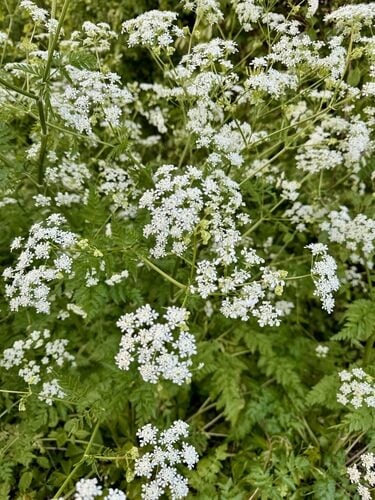
Petroselinum crispum
Parsley
Petroselinum crispum tuberosum - (Bernh.)Crov.
Hamburg Parsley
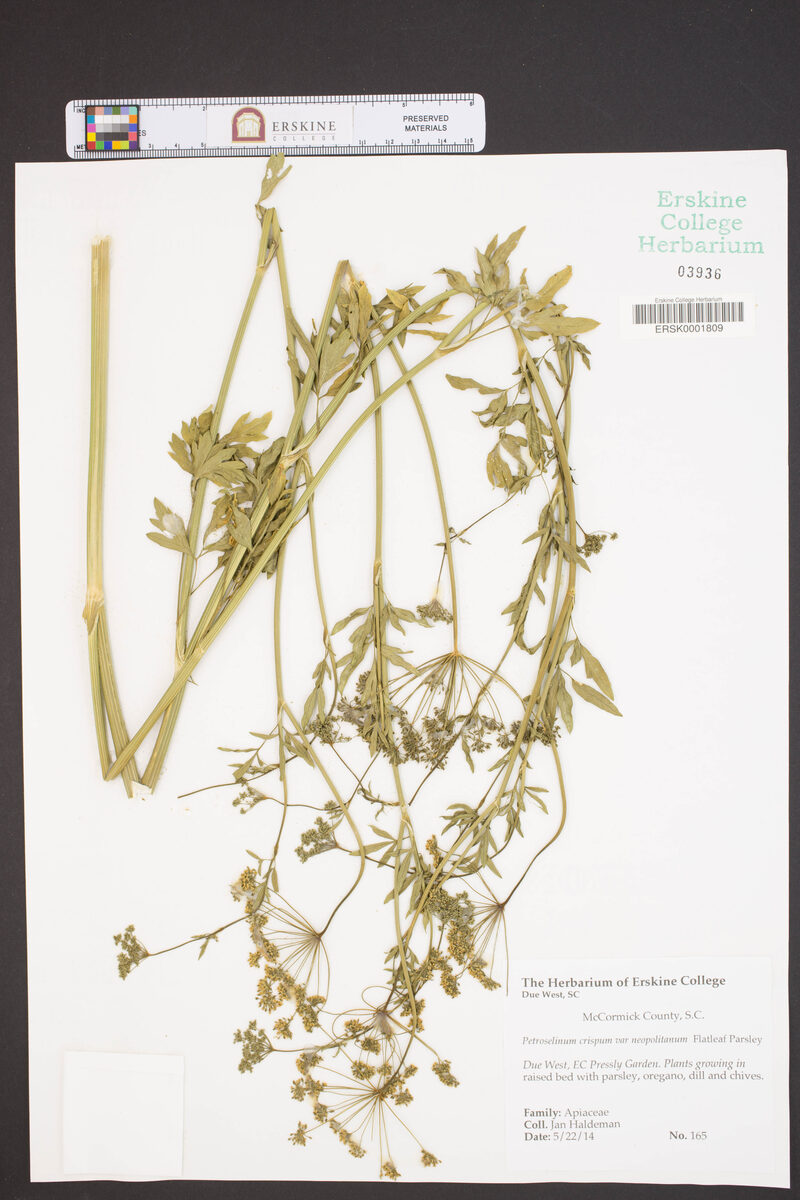
Petroselinum crispum var. neapolitanum
Italian parsley, French parsley, Flat-leaved parsley
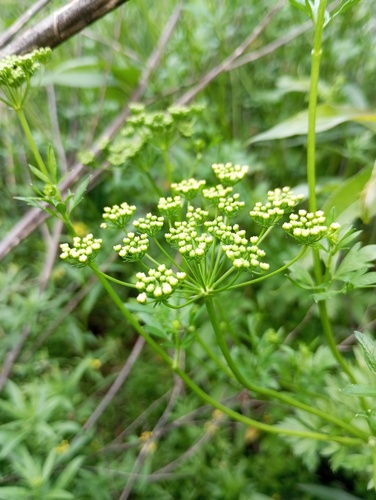
Petroselinum crispum var. tuberosum
Hamburg parsley, Turnip-rooted parsley, Parsnip-rooted parsley, German parsley
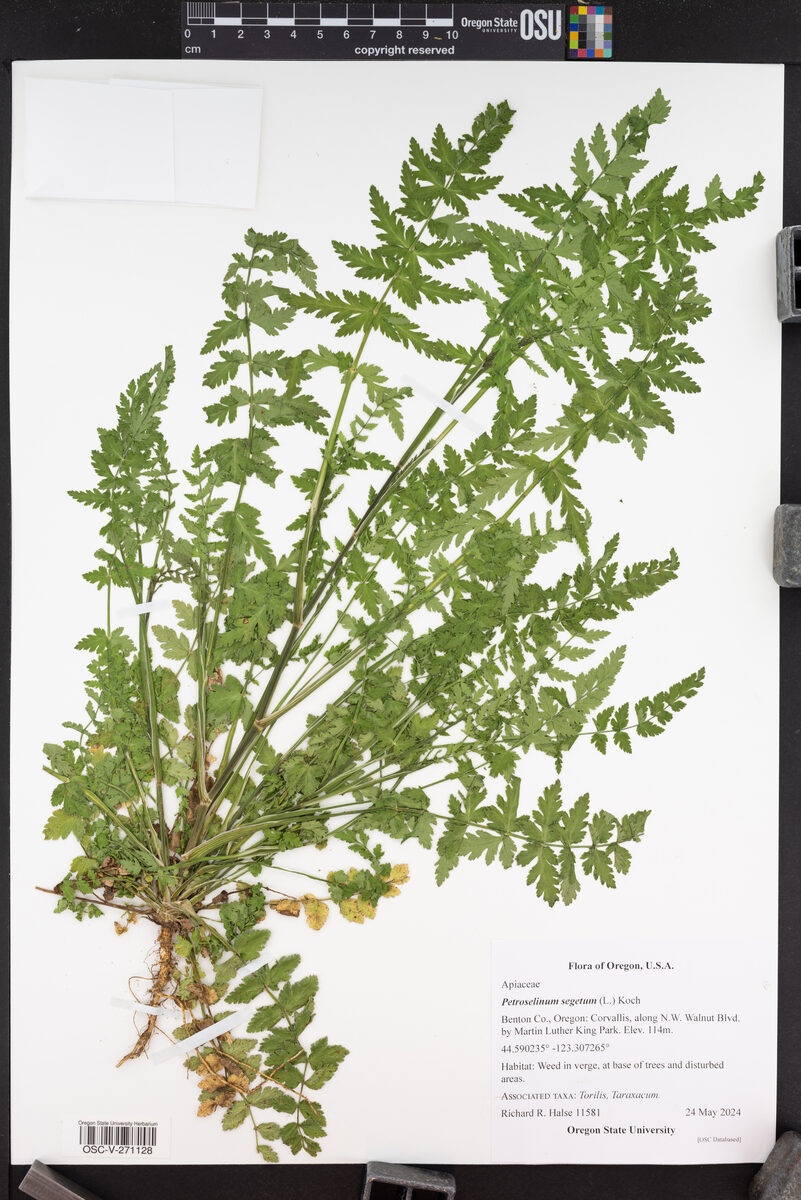
Petroselinum segetum - (L.)Koch.
Corn Caraway
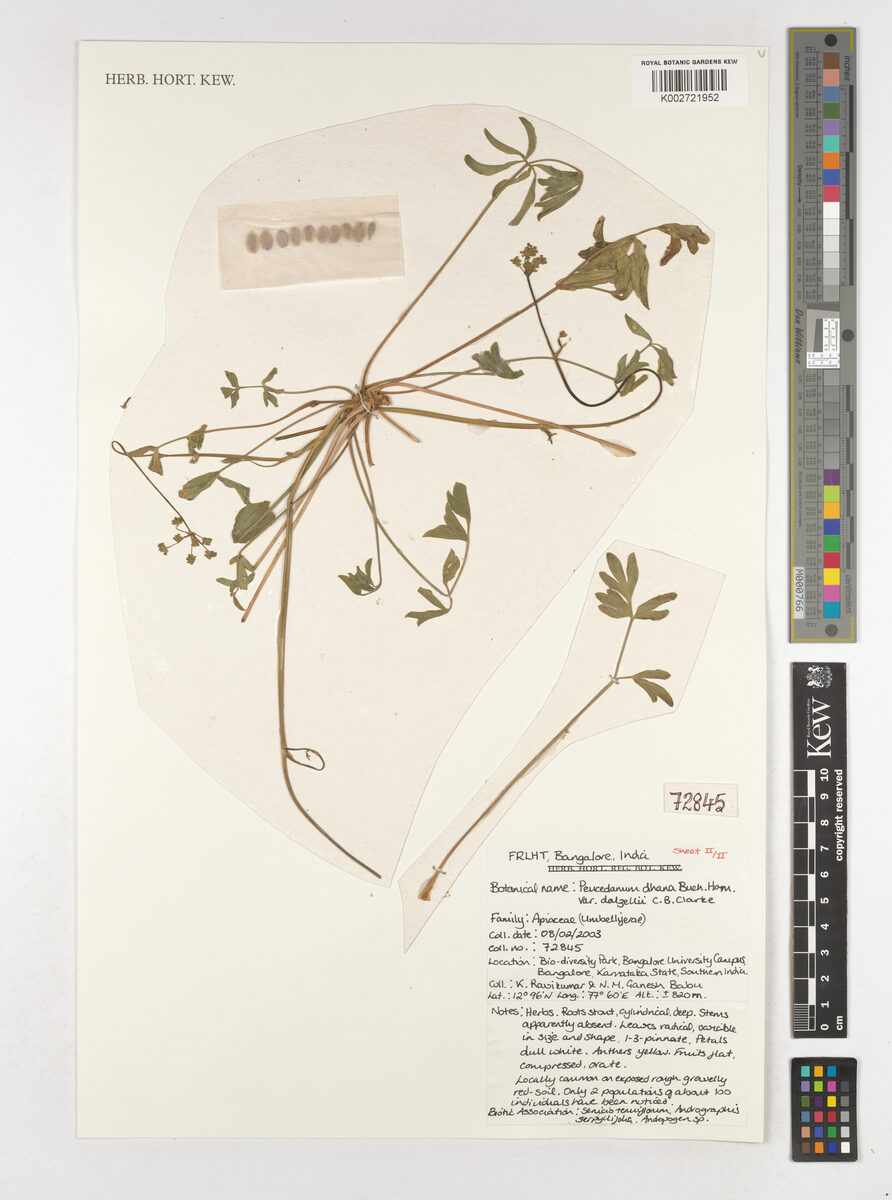
Peucedanum dhana
Hill carrot