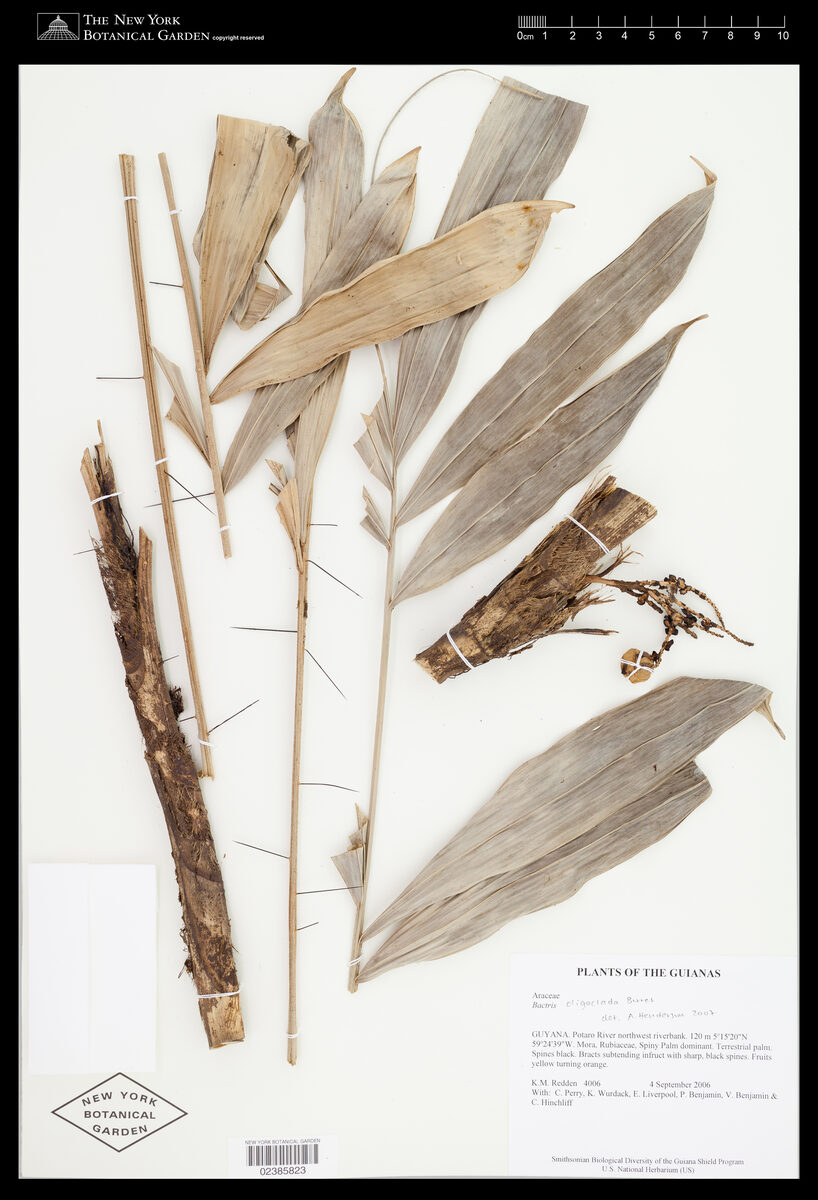
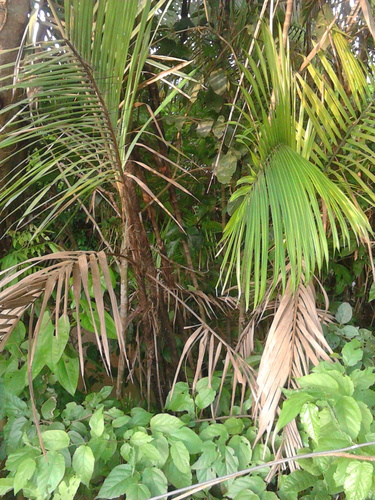
Attalea butyracea
(Mutis ex L.f.) Wess. Boer.
Wine palm, Palma real, Jagua
iNaturalist· cc-by
(c) Forest and Kim Starr, some rights reserved (CC BY)
iNaturalist· cc-by-nc-sa
(c) Reinaldo Aguilar, some rights reserved (CC BY-NC-SA)
iNaturalist· cc-by-nc
(c) Luis Humberto Vicente-Rivera, some rights reserved (CC BY-NC), uploaded by Luis Humberto Vicente-Rivera
Summary
Source: WikipediaAttalea butyracea is a species of palm tree native from Mexico to northern South America.
Description
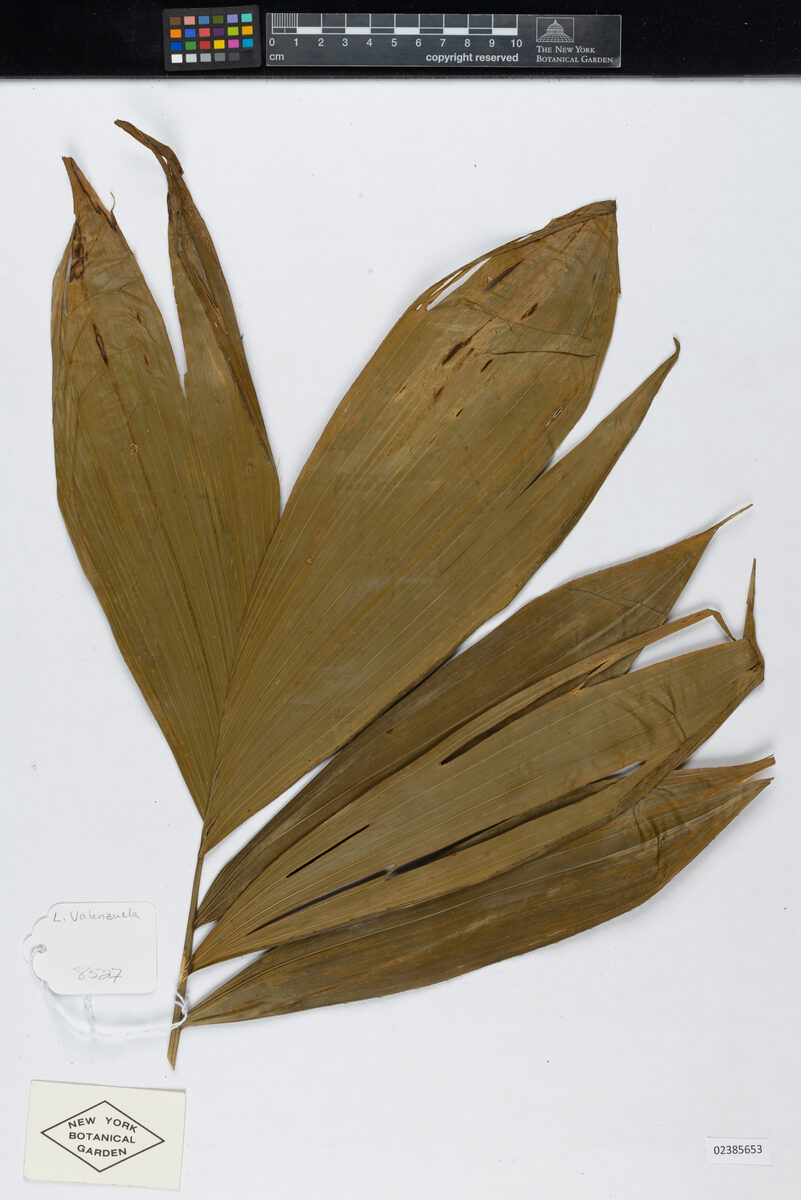
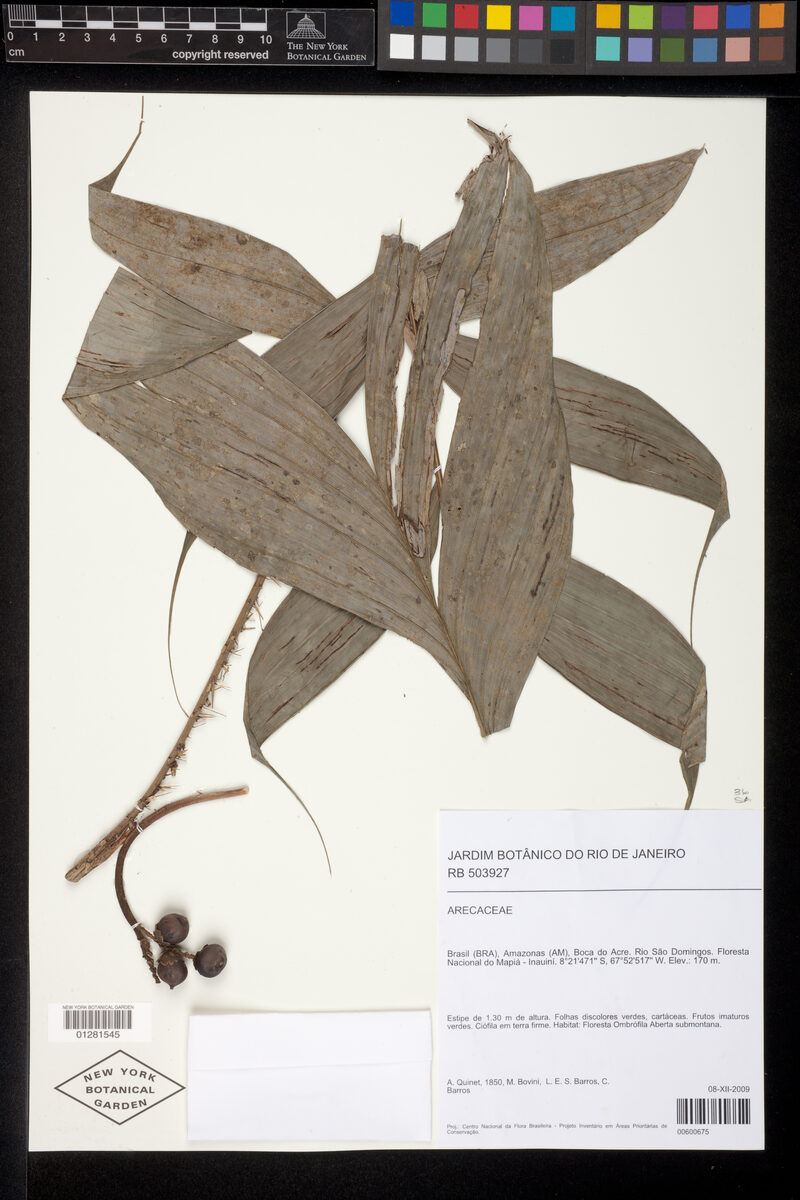
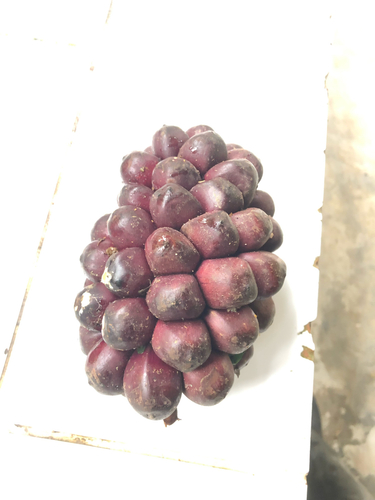
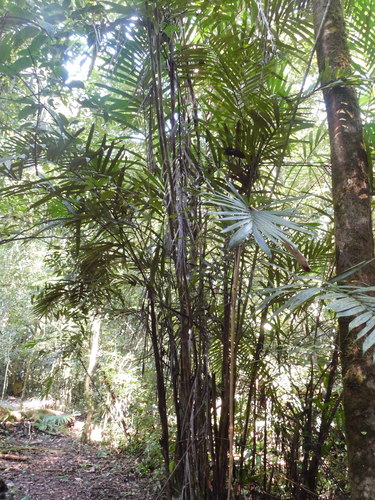
A large palm. The trunk is solitary and grey. It is smooth but with rings. It is 10-30 m tall and 40 cm across. The crown is dense with large erect leaves. The leaves are 5 m long. There are no leaf stalks. The leaf bases are broad and erect. The leaves have many broad leaflets. These are crowded along the midrib. Both ranks of leaflets are directed inwards. The flowering stalks are among the leaf bases. Each flowering stalk has a large fluted bract. The fruit are egg shaped. They are 4-5 cm long and 2-5 cm wide.
Edible Uses
Edible Parts: Fruit Oil Sap Edible Uses: Drink Oil The apical bud is eaten as a vegetable. Harvesting this bud leads to the eventual death of the trunk because it is unable to produce side shoots. Sap - fermented to yield an alcoholic beverage. The sap is obtained by removing the apical bud (which is edible). The sap collects in the hollow where the bud was. Production: Over 18-20 days the sap is collected and yields about 12 litres. Fruit - raw. The pulp is fleshy and fibrous. Good-tasting, with a thick - almost dry - consistency, and a mildly sweet and nutty flavour. The fruit is 8cm or longer and 6cm wide, borne in very large racemes. The seeds are eaten. They are mashed and mixed with roasted cooking bananas. Rich in oil. Edible oil is obtained from the seed.
Traditional Uses
The terminal bud or cabbage is cooked and eaten as a vegetable. The sap collected after the removal of the apex is fermented and drunk. The seed of the fruit is eaten. It also yields an edible oil. They are mashed and mixed with roasted cooking bananas. The fruit can also be eaten.
Medicinal Uses
None known
Distribution
A tropical plant. It grows in dry forests in the Amazon.
Where It Grows
Amazon, Australia, Brazil, Central America, Colombia, Costa Rica, Ecuador, Guiana, Mexico, North America, Panama, Peru, South America, Trinidad and Tobago, Venezuela,
Cultivation
Plants are grown from seed. The seed germinate in 2-3 months.
Propagation
Seed - pre-soak for 24 hours in warm water and sow in containers. The seed takes 2 - 3 months to germinate.
Other Uses
Fibre Oil Pioneer String Thatching Weaving Wood Other uses rating: Very High (5/5). Other Uses: The leaves are used extensively for thatching roofs and for weaving into various articles. If harvested at the correct time (with the leaves being neither too old nor too young), roofs made out of this material can last for four years or more. The large fronds are split longitudinally, along the midrib. Then they are positioned side by side and tied to rafters made of poles. Finally, the leaflets are woven together. Generally, roofs made of palm leaves must be quite steep to encourage the runoff of rainwater and to avoid seepage and leaks. A fibre obtained from the leaves can be used to make ropes and coarse fabrics. An oil obtained from the seed is used in making soaps and toiletries. Wood - used for construction. Agroforestry Uses: This species spreads very rapidly in disturbed, human-made habitats. This trait gives it excellent potential for use as a pioneer species when restoring native woodland and, given its wide range of uses, makes it especially useful when establishing woodland gardens. Special Uses Food Forest
Production
Over 18-20 days the sap is collected and yields about 12 litres.
Notes
There are between (22) 30-71 Attalea species. Some authorities divide them among Attalea, Orbignya, Scheela and Maximiliana.
Synonyms
Also Known As
Canambo, Chapaja, Corozo, Coyol real, Kadaba, Kadawe, Lukata, Mologwa, Palmera, Sapoje, Shapaja
References (27)
- Anguilar-Stoen, M, et al, 2009, Home Gardens Sustain Crop Diversity and Improve Farm Resilience in Candelaria Loxicha, Oaxaca, Mexico. Human Ecology, 37:55-77
- Balick, M.J. and Beck, H.T., (Ed.), 1990, Useful palms of the World. A Synoptic Bibliography. Colombia p 223, 310, 401 (As Scheelea brachyclada), 561 (As Attalea humboldtiana), 659 (As Scheelea preussii and Scheelea lundelii),
- Bircher, A. G. & Bircher, W. H., 2000, Encyclopedia of Fruit Trees and Edible Flowering Plants in Egypt and the Subtropics. AUC Press. p 48 (As Attalea humboldtiana)
- Blomberry, A. & Rodd, T., 1982, Palms. An informative practical guide. Angus & Robertson. p 167
- Condit, R., et al, 2011, Trees of Panama and Costa Rica. PrincetonField Guides. p 80
Show all 27 references Hide references
- D'Ambrosio, U., & Puri, R. K., 2016, Foodways in transition: food plants, diet and local perceptions of change in a Costa Rican Ngäbe community. Journal of Ethnobiology and Ethnomedicine (2016) 12:3 p 22
- Etkin, N.L. (Ed.), 1994, Eating on the Wild Side, Univ. of Arizona. p 136 (As Attalea humboldtiana),
- Facciola, S., 1998, Cornucopia 2: a Source Book of Edible Plants. Kampong Publications, p 31 (As Scheelea butyracea and Scheelea preussii)
- Glassman, A Taxonomic Treatment of the Palm Subtribe Attaleinae (Tribe Cocoeae). p 133 (As Scheelia butyracea)
- Grandtner, M. M. & Chevrette, J., 2013, Dictionary of Trees, Volume 2: South America: Nomenclature, Taxonomy and Ecology. Academic Press p 52
- Haynes, J., & McLaughlin, J., 2000, Edible palms and Their Uses. University of Florida Fact sheet MCDE-00-50-1 p 3
- Hedrick, U.P., 1919, (Ed.), Sturtevant's edible plants of the world. p 207 (As Cocos butyracea)
- Janick, J. & Paul, R. E. (Eds.), 2008, The Encyclopedia of Fruit & Nuts. CABI p 91
- Linnaea 28:267. 1857 (As Scheelea excelsa)
- Linnaea 28:268. 1857 (As Scheelea macrocarpa)
- Lopez-Diago, D. & Garcia, N., 2021, Wild edible fruits of Colombia. Biota ColomBiana 22 (2) p 30
- Lorenzi, H., Bacher, L., Lacerda, M. & Sartori, S., 2006, Brazilian Fruits & Cultivated Exotics. Sao Paulo, Instituto Plantarum de Estuados da Flora Ltda. p 88 (As Scheelea butyracea)
- Mapes, C. & Basurto, F., 2016, Biodiversity and Edible Plants of Mexico. Chapter 5 in R. Lira, et al. (eds.), Ethnobotany of Mexico, Ethnobiology, Springer. p 102
- Marcia, M. J., et al, 2011, Palm Uses in Northwestern South America: A Quantitative Review. Bot. Rev. (2011) 77:462-570
- Menninger, E.A., 1977, Edible Nuts of the World. Horticultural Books. Florida p 142 (As Scheelea macrocarpa)
- Philips, O., 1992, The potential for harvesting fruits in tropical rainforests: new data from Amazonian Peru. Biodiversity and Conservation 2, 18-38 (As Scheelea butyracea)
- Pittiera 17:312. 1988
- Roa, J. A. G. & Boada, D. S. G., 2018, Fundación para el Fortalecimiento de la Fruticultura y Plantas Alimenticias no Convencionales en Colombia.
- Segura, S. et al, 2018, The edible fruit species in Mexico. Genet Resour Crop Evol (2018) 65:1767–1793
- Torre, de la L., et al, 2008, Enciclopedia de las Plantas Útiles del Ecuador. Herbario QCA. Pontificia Universidad Católica del Ecuador. p 194
- Wickens, G.E., 1995, Edible Nuts. FAO Non-wood forest products. FAO, Rome. p170 (Also as Scheelea macrocarpa)
- World Checklist of Useful Plant Species 2020. Royal Botanic Gardens, Kew