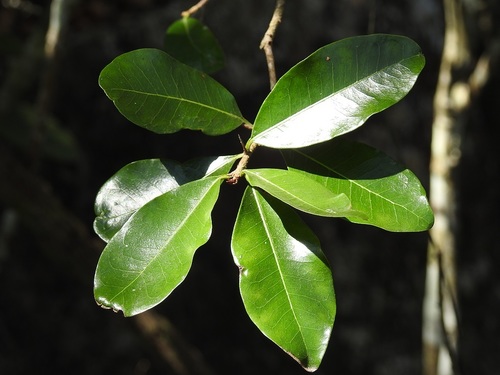
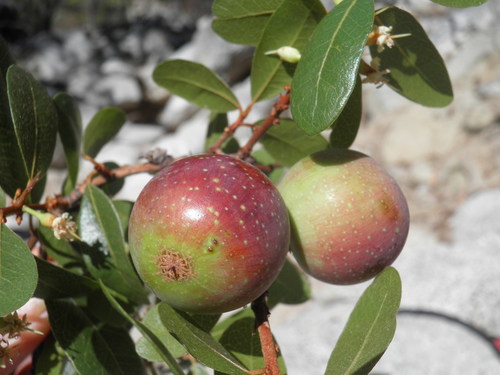
Diploknema butyracea
(Roxb.) H. J. Lam
Indian butter tree
iNaturalist· cc-by-sa
(c) Krish Dulal, some rights reserved (CC BY-SA)
iNaturalist· cc-by-nc
(c) Basu Dev Neupane, some rights reserved (CC BY-NC)
iNaturalist· cc-by-nc
(c) Basu Dev Neupane, some rights reserved (CC BY-NC)
Summary
Source: WikipediaDiploknema butyracea (Nepali: चिउरी, Chiuri), the Nepali butter tree, or the Indian butter tree, is a multi purpose tree native to the foothills of the Himalayas. An estimated number of chiuri in Nepal has been given as approximately 10.8 million trees, geographically distributed in 46 districts. It is a large tree of family Sapotaceae, flowers during cold season and fruit ripens in June–July. It commonly occurs in the sub Himalayan tract between 300-1500m from sea level.
Description
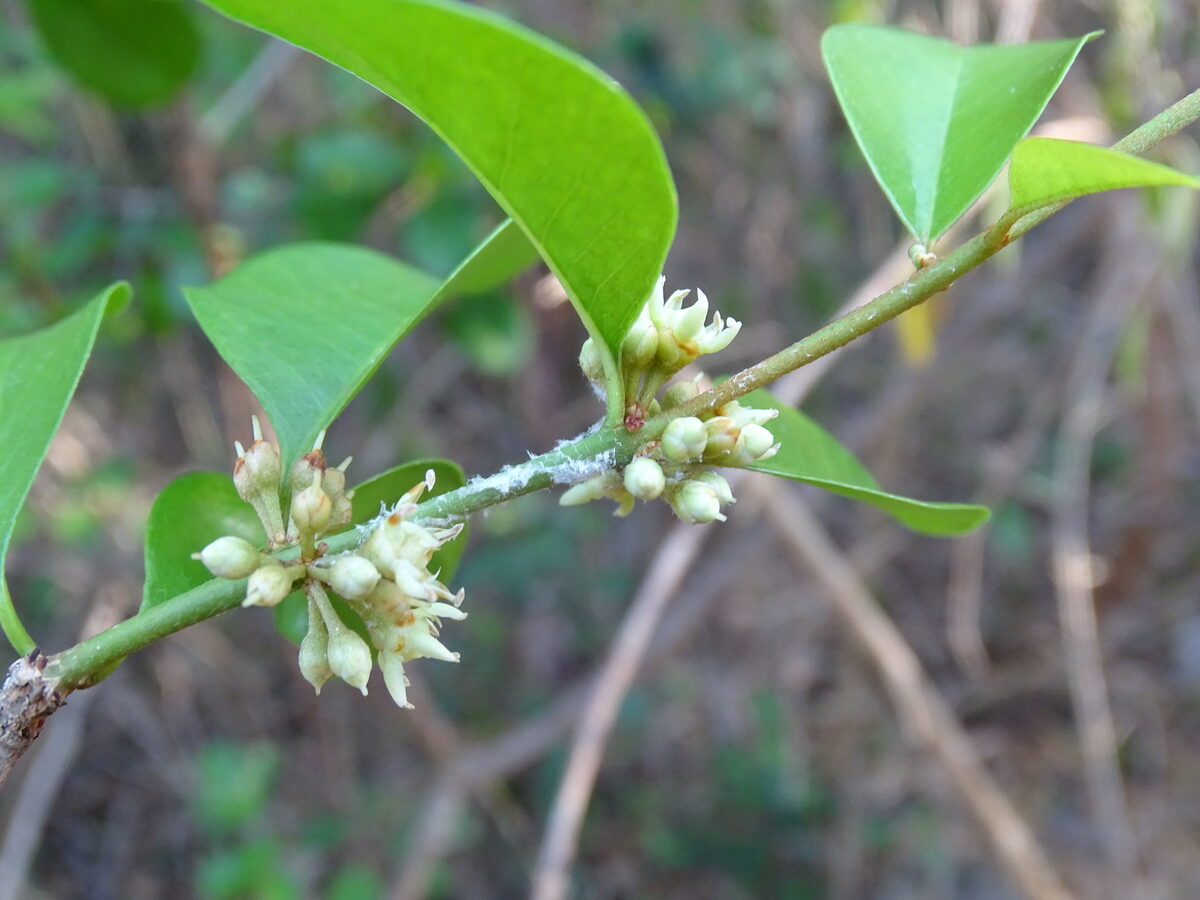
A deciduous tree. It grows to about 20 m high. The leaves are 14-30 cm long by 7.5-16 cm wide. They are crowded near the ends of branches. They are oval and taper towards the end. They are hairy underneath. The flowers are crowded at the ends of branches. They are yellow. The fruit is a berry. It is pear shaped with one or two seeds. The fruit shape varies.
Edible Uses
Fat is extracted from the seeds and named chiuri ghee or phulwara butter. D. butyracea is useful for block planting and also to be grown in the ravines of hills. The latex yielding plant such as D. butyracea suits to different edapho-climatic conditions and thus does not compete with the traditional crops. The chiuri tree has been utilised for many uses by rural households in Nepal. Ghee is used in daily cooking, as fuel for lamps, and body lotion; the fruit is eaten fresh and use for alcohol distillation, oil-cakes are utilised as manure, and the tree itself is used as firewood. Additionally, it also has significant cultural and livelihood associations with the Chepang community (Nepali:चेपांग) of Nepal and are given as dowry to daughters. Because of its cultural significance, it has been recognised as a cultural keystone species of central Nepal's Chepang people.
Traditional Uses
The juice of the inner flower parts is boiled into a syrup. This is used as a sugar. The juicy pulp of the ripe fruit is eaten raw. It has a scent and is sweet. It can be used for jam or pickles. The butter extracted from the seeds is used for cooking and lighting. It is used for cocoa butter in chocolate and in margarine. The seeds are also fermented. The seeds are roasted or fried and eaten.
Medicinal Uses
The juice of the bark is used to treat indigestion. Mixed with the bark juice of Berberis asiatica, it is used in the treatment of asthma. This juice is also used as an anthelmintic and is applied in cases of rheumatic pain and boils. The oil from the seed is applied externally in the treatment of headaches, rheumatism, boils, pimples and burns.
Distribution
It is a temperate plant. In Nepal it grows between 300-1500 m altitude.
Where It Grows
Asia, Bhutan, China, Himalayas, India, Myanmar, Nepal, Northeastern India, SE Asia, Sikkim, Tibet,
Cultivation
Plants are grown from seed. Seeds germinate in about 30 days.
Other Uses
An oil obtained from the seed is used for lighting. It is also used for making soap and candles. The seed residue, after the oil has been extracted, is used as a fertilizer that helps to protect plants from harmful insects and worms. The leaves are used as plates. The wood is used for furniture and fuel. Planted to prevent soil erosion.
Production
Yields can be 5-155 kg per tree.
Other Information
Fruit are sold in markets.
Nutrition
| Part | Moisture | kJ | kcal | Protein | Vit A | Vit C | Iron | Zinc |
|---|---|---|---|---|---|---|---|---|
| Fruit | 68.6 | — | — | 3.8 | — | — | 1.8 | — |
Synonyms
Also Known As
Bhalel, Cheuli, Cheuri, Chewra, Chewri, Chiura, Chiuree, Chiuri, Chivree, Chiwree, Chuirii, Churi, Chyuri, Chyuro, Finsheng, Pauktu, Phalwara, Pholwara, Phoolwa-oil plant, Phulvara, Phulwa, Yel, Yelkung, Yelpote, Yika
References (45)
- Acharya K. P. and Acharya, R., 2010, Eating from the Wild: Indigenous knowledge on wild edible plants in Parroha VDC of Rupandehi District, Central Nepal. International Journal of Social Forestry. 3(1):28-48
- Ambasta S.P. (Ed.), 2000, The Useful Plants of India. CSIR India. p 24
- Aryal, K. P. et al, 2009, Uncultivated Plants and Livehood Support - A case study from the Cheopang people of Nepal. Ethnobotany Research and Applications. 7:409-422
- Aryal, K. P., et al, 2018, Diversity and use of wild and non-cultivated edible plants in the Western Himalaya. Journal of Ethnobiology and Ethnomedicine (2018) 14:10
- Bajpai, O., et al, 2015, Tree species of the Himalayan Terai region of Uttar Pradesh, India: a checklist. Check List 11(4): 1718
Show all 45 references Hide references
- Bajracharya, D., 1980, Nutritive Values of Nepalese Edible Wild Fruits. Z. Lebensm. Unters. Forsch. 171: 363-366 (As Bassia butyracea)
- Brouk, B., 1975, Plants Consumed by Man. Academic Press, London. p 230 (As Madhuca butyracea)
- Bull. Jard. Bot. Buitenzorg ser. 3, 7:186. 1925
- Burkill, I.H., 1966, A Dictionary of the Economic Products of the Malay Peninsula. Ministry of Agriculture and Cooperatives, Kuala Lumpur, Malaysia. Vol 1 (A-H) p 849
- Chettri, N. & Sharma, E., Non-timber Forest Produce: Utilization, Distribution and Status in the Khangchendzonga Biosphere Reserve, Sikkim, India. (As Bassia butyracea)
- Contr. Gray Herb. 53:18. 1918 (As Madhuca butyracea)
- Dobriyal, M. J. R. & Dobriyal, R., 2014, Non Wood Forest Produce an Option for Ethnic Food and Nutritional Security in India. Int. J. of Usuf. Mngt. 15(1):17-37 (As Diploneme butyracia)
- Gautam, R. S., et al, 2020, Wild Edible Fruits of Nepal. Int. J. Appl. Sci. Biotechnol. Vol 8(3): 289-304
- Ghimeray, A. K., Lamsal, K., et al, 2010, Wild edible angiospermic plants of the Illam Hills (Eastern Nepal) and their mode of use by local community. Korean J. Pl. Taxon. 40(1) (As Bassia butyracea)
- Hedrick, U.P., 1919, (Ed.), Sturtevant's edible plants of the world. p 94 (As Madhuca butyracea)
- Karki, S., et al, 2017, Minor Fruits in Nepal: Utilization and Conservation Efforts. Proceedings of 2nd National Workshop on CUAPGR, 2017.
- Khanal, R., et al, 2014, Documenting abundance and use of underutilized plant species in the mid hill region of Nepal. ECOPRINT 21: 63-71, 2014 (As Aesandra butyracea)
- Kumar, A., et al, 2012, Ethnobotanical Edible Plant Biodiversity of Lepcha Tribes. Indian Forester, 138 (9):798-803 (As Bassia butyracea)
- Manandhar, N.P., 2002, Plants and People of Nepal. Timber Press. Portland, Oregon. p 205
- Manju, S., and Sundriyal, R. C., 2001, Wild Edible Plants of the Sikkim Humalaya: Nutritive Values of Selected Species. Economic Botany 55(3): 377-390
- Mehta, P. S. et al, 2010, Native plant genetic resources and traditional foods of Uttarakhand Himalaya for sustainable food security and livelihood. Indian Journal or Natural products and Resources. Vol 1(1), March 2010 pp 89-96 (As Aesandra butyracea)
- Menninger, E.A., 1977, Edible Nuts of the World. Horticultural Books. Florida p 29 (As Madhuca butyracea)
- Miya, M. S. & Gautum, D., 2021, Checklist of floral species at the Institute of Forestry, Pokhara Campus, Pokhara, Nepal. Journal of Institute of Forestry, Nepal 18 (2021) 133-177
- Mukhia, P.K., et al, 2013, Wild plants as Non Wood Forest Products used by the rural community of Dagana, a southern foothill district of Bhutan, SAARC Journal, 27 pages
- Pandey, Y., Upadhyay, S. & Bhatt, S. S., 2018, Phyto-chemical constituent os some wild edible fruits of Sikkim Himalaya. Journal of Pharmacognosy and Phytochemistry 2018; 7(3): 1045-1047
- Ray, A., et al, 2020, How many Wild Edible Plants do we Use. Frontiers in Sustainable Food Systems. 4:56 p 12
- Savita, et al, 2006, Studies on wild edible plants of ethnic people in east Sikkim. Asian J. of Bio Sci. (2006) Vol. 1 No. 2 : 117-125
- Shah, S. K., 2014, Dietary contribution of underutilized minor crops and indigenous plants collected from uncultivated lands and forests in Nepal. in Promotion of Underutilized Indigenous Food Resources for Food Security and Nutrition in Asia and Pacific. FAO. Bangkok p 64 (As Bassia butyracea, Madhuca butyracea)
- Sharma, G., et al, 2016, Agrobiodiversity in the Sikkim Himalaya. International Centre for Integrated Mountain Development, ICIMOD Working Paper 2016/5 p 20
- Singh, H.B., Arora R.K.,1978, Wild edible Plants of India. Indian Council of Agricultural Research, New Delhi. p 56
- Singh, K.K., Singh, M. & Joshi, S. C., 2014, Phenolic content and Antioxidant Activity of some Underutilized Wild Edible Fruits of the Sikkim Himalaya. SMU Medical Journal. Vol. 1, No. 2 July 2014
- Sundriyal, M., et al, 1998, Wild edibles and other useful plants from the Sikkim Himalaya, India. Oecologia Montana 7:43-54 (As Bassia butyracea)
- Sundriyal, Manju and Sundriyal R. C., 2001, Seed Germination and Response of Stem-cuttings to Hormonal Treatment in Six Priority Wild Edible Fruit Species in Sikkim Himalaya. Indian Forester Vol. 127 No. 6 June 2001. pp 695-717
- Sundriyal, M. & Sundriyal, R. C., 2001, Wild Edible Plants of the Sikkim Himalaya: Nutritive Value of Selected Species. Economic Botany 55(3): 377-390
- Sundriyal, Manju, and R. C. Sundriyal, 2003, Underutilized edible plants of the Sikkim Himalaya: Need for domestication. Current Science, Vol. 85, No. 6, p 731
- Sundriyal, M., et al, 2004, Dietary Use of Wild Plant Resources in the Sikkim Himalaya, India. Economic Botany 58(4) pp 626-638
- Sundriyal, M. & Sundriyal, R. C., 2004, Structure, Phenology, Fruit Yield, and Future Prospects of some Prominent Wild Edible Plant Species of the Sikkim Himalaya, India. Journal of Ethnobiology 24(1): 113-138
- Suresh, C. P. et al, 2014, Wild Edible Tree Fruits of Sikkim Himalayas. Journal of Tree Sciences 33(1): 43-48
- Thapa, L. B., et al, 2014, Wild Edible Plants used by endangered and Indigenous Raji Tribe in Western Nepal. International Journal of Applied Sciences and Biotechnology. Vol 2(3):243-252
- Tsering, J., et al, 2017, Ethnobotanical appraisal on wild edible plants used by the Monpa community of Arunchal Pradesh. Indian Journal of Traditional Knowledge. Vol 16(4), October 2017, pp 626-637
- Upreti, K., et al, 2010, Diversity and Distribution of Wild Edible Fruit Plants of Uttarakhand. in Biodiversity Potentials of the Himalaya. (As Aesandra butyracea)
- Uprety, Y., et al, 2012, Diversity of use and local knowledge of wild edible plant resources in Nepal. Journal of Ethnobotany and Ethnomedicine 8:16
- Wickens, G.E., 1995, Edible Nuts. FAO Non-wood forest products. FAO, Rome. p151
- Wild edible plants of Himachal Pradesh
- World Checklist of Useful Plant Species 2020. Royal Botanic Gardens, Kew