Pouteria guianensis
Aublet
Guianas pouteria
iNaturalist· cc-by-nc
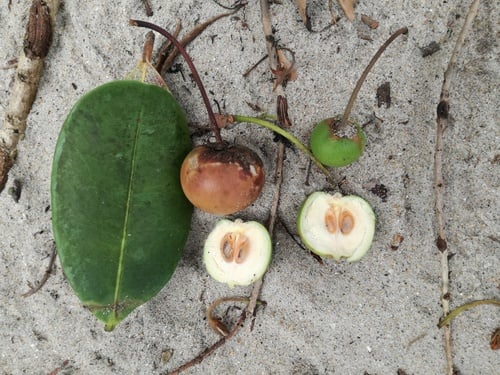
(c) Geovane Siqueira, some rights reserved (CC BY-NC), uploaded by Geovane Siqueira
iNaturalist· cc-by
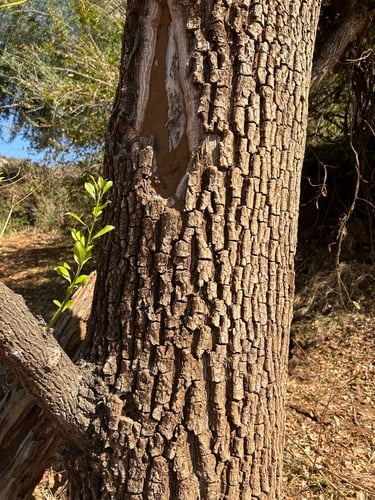
(c) Thomaz Ricardo Favreto Sinani, some rights reserved (CC BY)
iNaturalist· cc-by
(c) Thomaz Ricardo Favreto Sinani, some rights reserved (CC BY)
Summary
Medium-rate evergreen tree reaching 25 m tall and 20 m wide. Hardy to UK zone 10. Tolerates light sandy, medium loamy, and heavy clay soils with well-drained preference. Grows in mildly acid to basic soils. Requires full sun and prefers moist soil.
Description
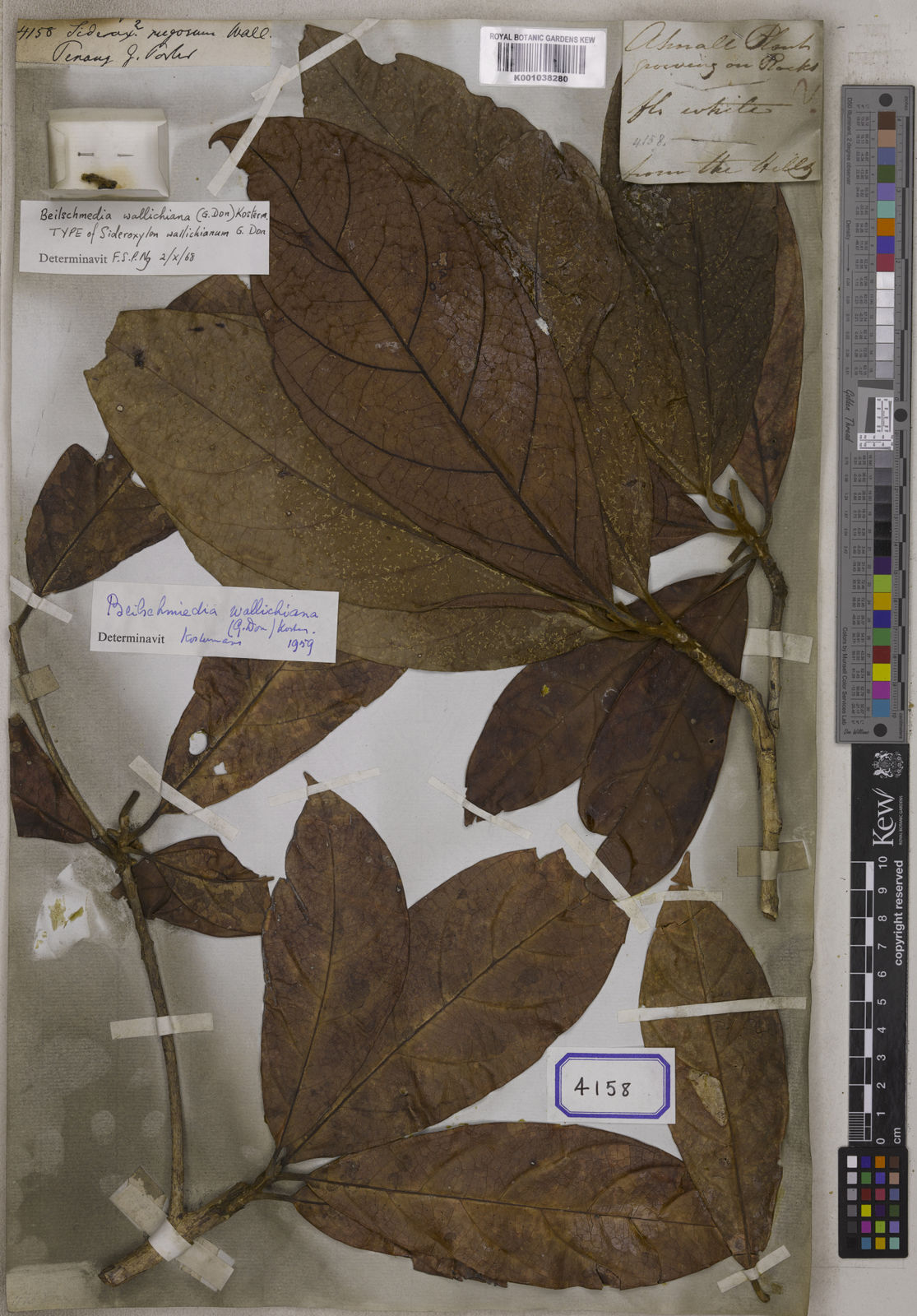
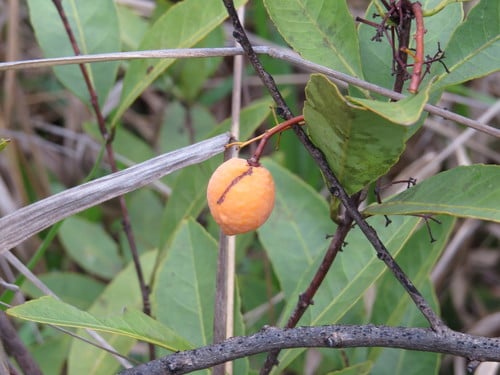
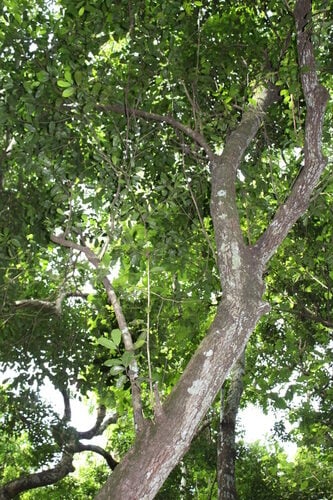
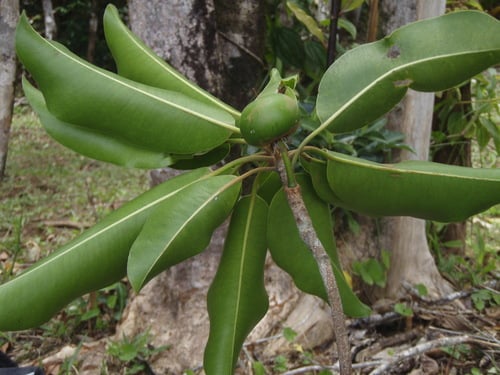
A tree. It grows 35 m tall. The trunk can be 30-90 cm across. It has narrow buttresses. The twigs are stout and covered with flattened brown hairs when young. The leaves are alternate and leathery. They are narrowly oval and 13-25 cm long by 5-10 cm wide. The flowers are in tufts in the axils of leaves. There are about 6 flowers. The stalks are 0.3 cm long and have brown hairs. The fruit occur as 1 or 2 together. The fruit is a round or oval berry. It is 5 cm long by 5 cm wide. It is dark green or yellow. It has a coating when young. The pulp is firm, sweet and edible. There are 2 seeds. They are about 2 cm long by 1.5 cm wide.
Edible Uses
The fruit is eaten raw. Its pulp is firm and sweet-tasting. Each fruit is 45–50mm long and 40–53mm wide.
Medicinal Uses
None known.
Distribution
A tropical plant. It grows in non flooded rainforest. It can grow up to 2,500 m above sea level.
Where It Grows
Amazon, Bolivia, Brazil, Central America, Colombia, Costa Rica, Ecuador, French Guiana, Guianas, Guyana, Panama, Peru, South America, Suriname, Trinidad, Venezuela,
Cultivation
Plants are grown by seeds.
Propagation
Grow from seed.
Other Uses
The heartwood ranges from light to dark brown, with pale brown sapwood. The grain is straight with no distinctive taste or aroma. The wood is very hard, strong, and durable, resisting attack by fungi and insects. Its high silica content makes it difficult to saw and causes significant blunting of cutting tools, though planing is moderately easy. The wood is used for construction and furniture-making.
Production
In Guyana it flowers from October to December and from April to June and fruits in March and April. Sometimes it only fruits every few years.
Other Information
A highly esteemed fruit.
Notes
There are about 150-320 Pouteria species. They grow in the tropics.
Synonyms
Also Known As
Asepoko, Balata, Broad leaf asepoko, Caimo, Esseboko, Jansnijder, Marapasmukri, Pepeboiti, Poyak, Redijamboka, Red tree
References (14)
- Bendezu, Y. F., 2018, Arboles nativos de lad Region Ucayali. Instituto Nacional de Innovacion Agraria. p 303
- Fouqué, A., 1972, Espèces fruitières d'Amérique tropicale. Institut français de recherches fruitierès outre-mer (ifac)
- Grandtner, M. M. & Chevrette, J., 2013, Dictionary of Trees, Volume 2: South America: Nomenclature, Taxonomy and Ecology. Academic Press p 526
- Hist. pl. Guiane 1:86, t. 33. 1775
- Johnson, M. and Colquhoun, A., 1996, Preliminary Ethnobotanical Survey of Kurupukari: An Amerindian Settlement of Central Guyana. Economic Botany, Vol. 50, No. 2, pp. 182-194
Show all 14 references Hide references
- Kermath, B. M., et al, 2014, Food Plants in the Americas: A survey of the domesticated, cultivated and wild plants used for Human food in North, Central and South America and the Caribbean. On line draft. p 691
- Lopez-Diago, D. & Garcia, N., 2021, Wild edible fruits of Colombia. Biota ColomBiana 22 (2) p 51
- Maas, P.J. M., Non-timber forest products of the North-West District of Guyana. Part 1. Nationaal Herbarium Nederland, Universiteit Utrecht.
- Maas, P.J. M., Non-Timber Forest Products of the North-West District of Guyana Part 2. The 85 most important NTFP species. p 188
- Pennington, T.D., 1990, Sapotaceae in Flora Neotropica Monograph 52. New York Botanical Gardens. p 472
- Polak, A. M., 1992, Major Timber Trees of Guyana. A Field Guide. Tropenbos Series 2. Wageningen. p 155
- Roa, J. A. G. & Boada, D. S. G., 2018, Fundación para el Fortalecimiento de la Fruticultura y Plantas Alimenticias no Convencionales en Colombia.
- van Roosmalen, M.G.M., 1985, Fruits of the Guianan Flora. Utrecht Univ. & Wageningen Univ. p 410
- Van Roosmalen, M.G.M., & Garcia, O. M., 2000, Fruits of the Amazonian Forest. Part 2: Sapotaceae. Acta Amazonica 30(2): 187-290