Dypsis canaliculata
(Jum.) Beentje & J. Dransf.
wikimedia· pd
Franz Eugen Köhler, Köhler's Medizinal-Pflanzen (via Wikimedia Commons)
Summary
Source: WikipediaDypsis canaliculata is a species of flowering plant in the family Arecaceae. It is found only in Madagascar, where it is thought that fewer than 10 individual plants exist. It was previously collected from two disjunct populations, one in Manongarivo and one in Ampasimanolotra. Both were growing on sandstone in lowland forest regions. In 2001 another small population was discovered in Zahamena National Park, and this is now the only known surviving group. To date no flowers from D. canaliculata have ever been collected for science.
Description
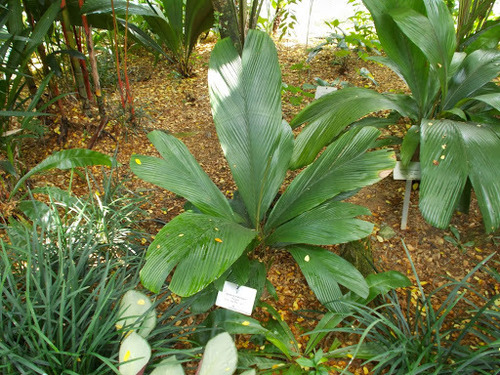
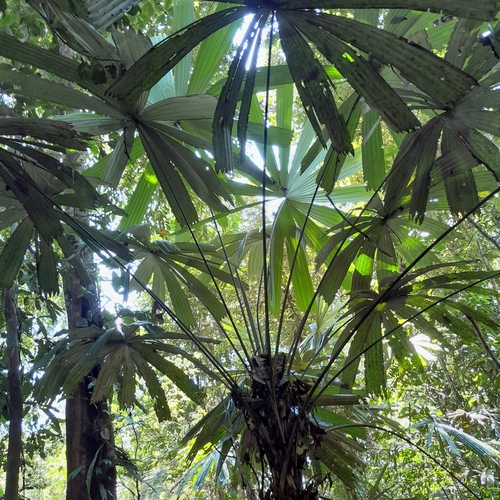
A solitary palm. It grows 10-15 m high. The trunk is 30-40 cm across. The leaves can be 3-4 m long.
This description is brief — help expand it
Edible Uses
Leaves - cooked. The apical bud, known as a 'palm heart', is eaten as a vegetable. Eating this bud leads to the death of the plant because it is unable to make side-shoots. The palm of this species is believed by some people in Madagascar to be toxic.
Traditional Uses
The palm heart is bitter.
This uses section is brief — help expand it
Medicinal Uses
The plant (parts not specified but probably the bark and/or the fruits) is used in the treatment of headaches, jaundice and hepatitis; and also as an aid to lactation.
Known Hazards
The apical bud of this plant is believed to be toxic by some people.
Distribution
A tropical plant.
Where It Grows
Africa, East Africa, Madagascar,
Notes
There are 140 Dypsis species.
Synonyms
Also Known As
Lopaka, Monimony
References (3)
- Dransfield, J. & Beentje, H., 1995, The Palms of Madagascar. Royal Botanical Gardens, Kew and The International Palm Society. p 148
- Haynes, J., & McLaughlin, J., 2000, Edible palms and Their Uses. University of Florida Fact sheet MCDE-00-50-1 p 6
- Johnson, D.V., 1998, Tropical palms. Non-wood Forest products 10. FAO Rome. p 113