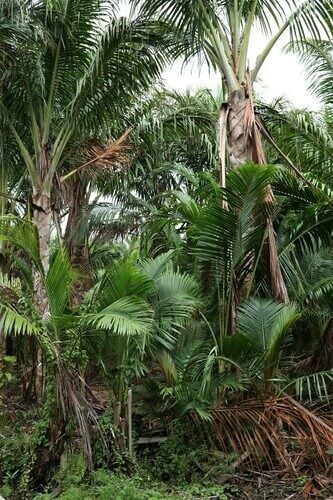
Dypsis basilonga
(Jum. & H. Perrier) Beentje & J. Dransf.;
Madiovozona
iNaturalist· cc0
no rights reserved, uploaded by Romer N. Rabarijaona
wikimedia· cc0
Wikimedia Commons - Romer Rabarijaona
Summary
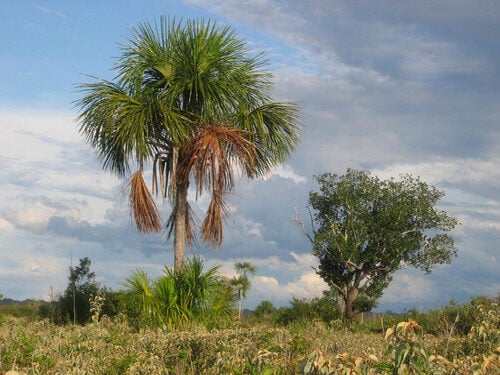
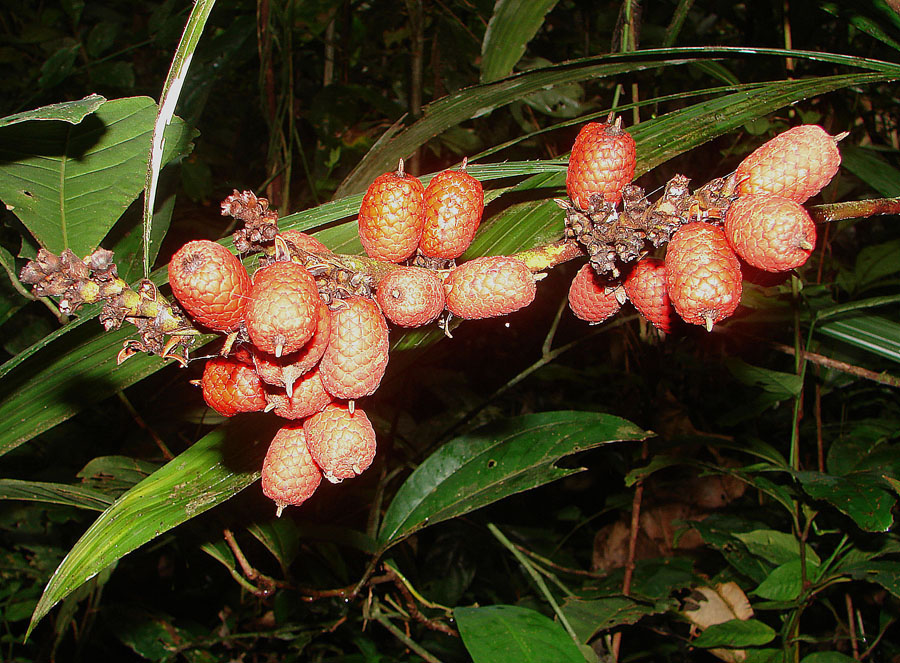
Source: WikipediaDypsis basilonga is a species of flowering plant in the family Arecaceae. It is endemic to Madagascar. It grows in humid, mossy habitat on mountains. It is threatened by overharvesting.
Description
A solitary palm in the family Arecaceae from Madagascar, growing 2-5 m tall with a trunk diameter of 10-15 cm, found at elevations between 300-500 m. This species is endangered.
Edible Uses
Leaves - cooked. The palm heart (apical bud) is reported to be an excellent vegetable. Harvesting this heart leads to the death of the plant since it is unable to produce side shoots.
Medicinal Uses
The plant (parts not specified but probably the bark and/or the fruits) is used in the treatment of headaches, jaundice and hepatitis; and also as an aid to lactation.
Distribution
A tropical plant. It grows between 300-500 m altitude in Madagascar.
Where It Grows
Africa, East Africa, Madagascar,
Notes
There are 140 Dypsis species. It is an endangered plant.
Synonyms
References (7)
- Balick, M.J. and Beck, H.T., (Ed.), 1990, Useful palms of the World. A Synoptic Bibliography. Colombia p 121 (As Neodypsis basilongus)
- Dransfield, J. & Beentje, H., 1995, The Palms of Madagascar. Royal Botanical Gardens, Kew and The International Palm Society. p 195
- Grubben, G. J. H. and Denton, O. A. (eds), 2004, Plant Resources of Tropical Africa 2. Vegetables. PROTA, Wageningen, Netherlands. p 290
- Haynes, J., & McLaughlin, J., 2000, Edible palms and Their Uses. University of Florida Fact sheet MCDE-00-50-1 p 5
- Johnson, D.V., 1998, Tropical palms. Non-wood Forest products 10. FAO Rome. p 113
Show all 7 references Hide references
- van der Burg, W.J., 2004. Dypsis baronii (Becc.) Beentje & J.Dransf. [Internet] Record from Protabase. Grubben, G.J.H. & Denton, O.A. (Editors). PROTA (Plant Resources of Tropical Africa), Wageningen, Netherlands. < http://database.prota.org/search.htm>. Accessed 15 October 2009.
- World Checklist of Useful Plant Species 2020. Royal Botanic Gardens, Kew