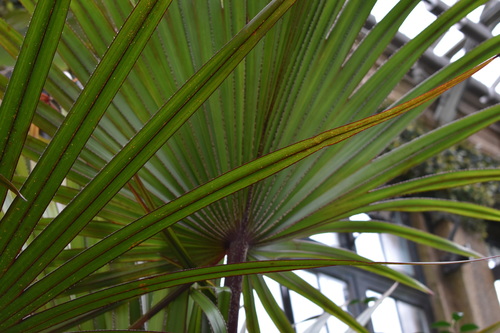
Bactris plumeriana
Mart.
Coco macaco
iNaturalist· cc-by-nc
(c) Martin Reith, some rights reserved (CC BY-NC), uploaded by Martin Reith
iNaturalist· cc-by-nc
(c) Martin Reith, some rights reserved (CC BY-NC), uploaded by Martin Reith
iNaturalist· cc-by-nc
(c) Martin Reith, some rights reserved (CC BY-NC), uploaded by Martin Reith
Summary
Source: WikipediaBactris plumeriana is a species of palm endemic to Hispaniola.
Description
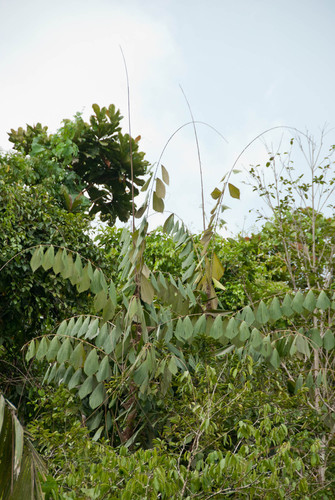
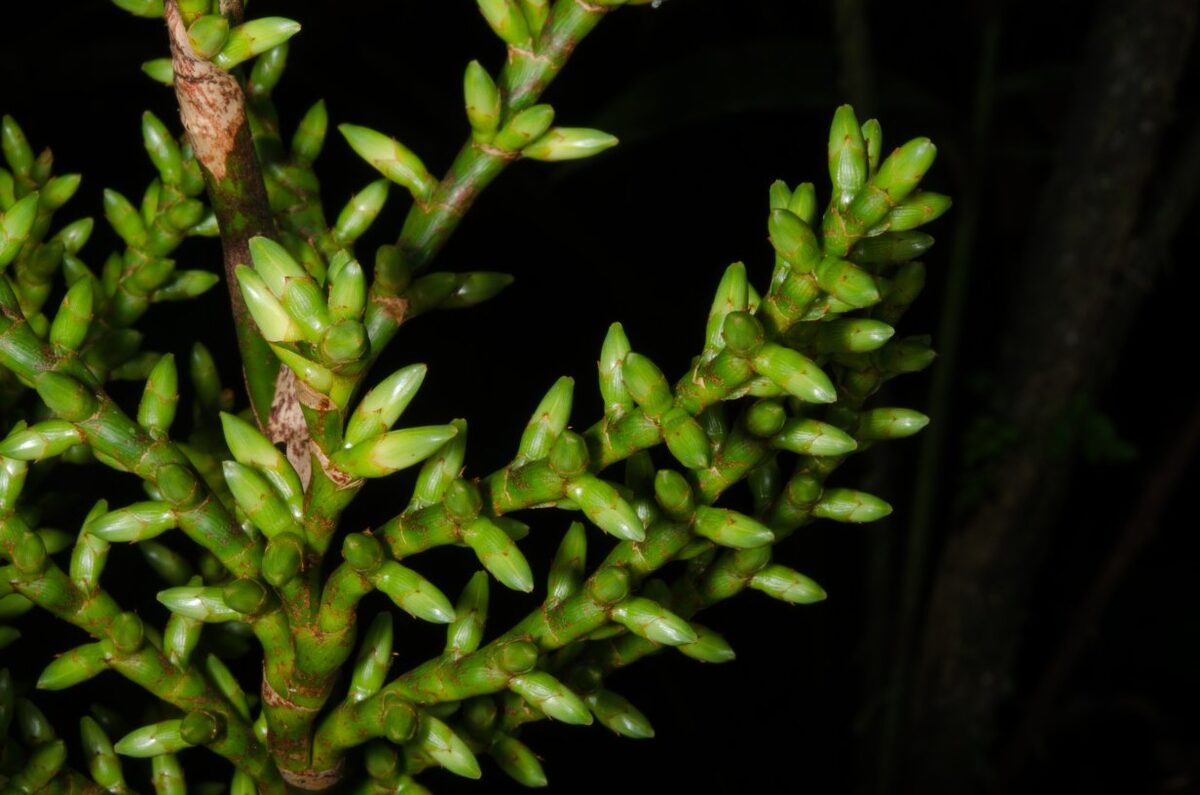
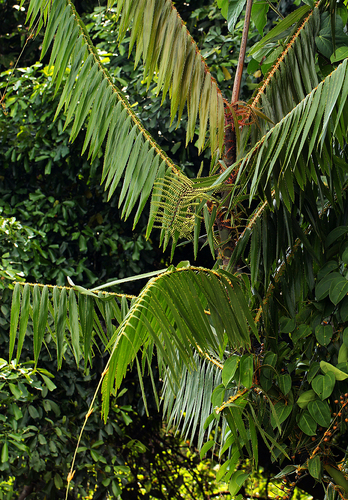
A palm which forms clusters. The trunks are 8-10 m high and 12 cm across. The stems are dark. There are dark rings of long black spines. There are 7-12 leaves. The leaves are 2.6 m long. They are covered with black spines. The spines on the leaf stalk are in 3 rows. There are 50-70 leaflets on each side of the leaf. The leaflets grow at different angles. This gives the leaves a feathery appearance. The leaflets are spiny on the edges. The flowering stalk has 40-60 flowering branches. The bracts is black and spiny. The fruit are round and 1-1.6 cm across. They are orange-red.
Edible Uses
The round orange-red fruit are eaten fresh.
Distribution
A tropical plant. It grows along the edges of hilly evergreen forest. It is usually below 500 m altitude.
Where It Grows
Central America, Cuba, Dominican Republic, Haiti*, Hispaniola, Jamaica, West Indies*,
Notes
There are 239 Bactris species. There are 75 species in tropical America. Most Bactris have fruit that are edible but many are not attractive.
Synonyms
Also Known As
Coco macaque, Prickly pole
References (6)
- A. D. d'Orbigny, Voy. Amerique mer. 7(3). Palmiers 64. 1844
- Haynes, J., & McLaughlin, J., 2000, Edible palms and Their Uses. University of Florida Fact sheet MCDE-00-50-1 p 3
- Henderson, A., Galeano, G and Bernal, R., 1995, Field Guide to the Palms of the Americas. Princeton. p 194
- Johnson, D.V., 1998, Tropical palms. Non-wood Forest products 10. FAO Rome. p 91
- Plants of Haiti Smithsonian Institute http://botany.si.edu
Show all 6 references Hide references
- Riffle, R.L. & Craft, P., 2003, An Encyclopedia of Cultivated Palms. Timber Press. p 269