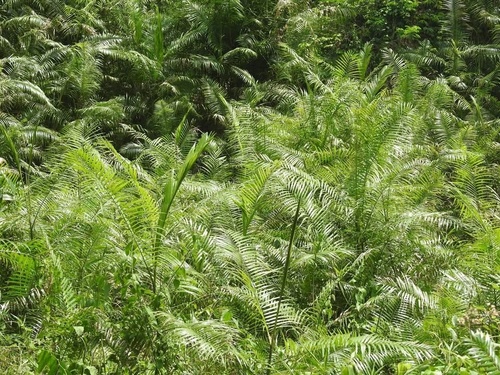
Calamus merrillii
Becc.
Palasan, Rattan palm
gbif· cc0
President and Fellows of Harvard College
gbif· cc0
President and Fellows of Harvard College
gbif· cc0
President and Fellows of Harvard College
Description
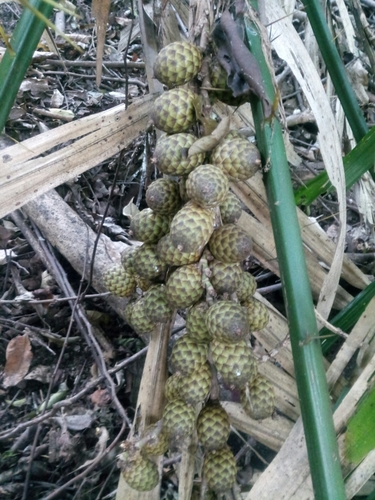
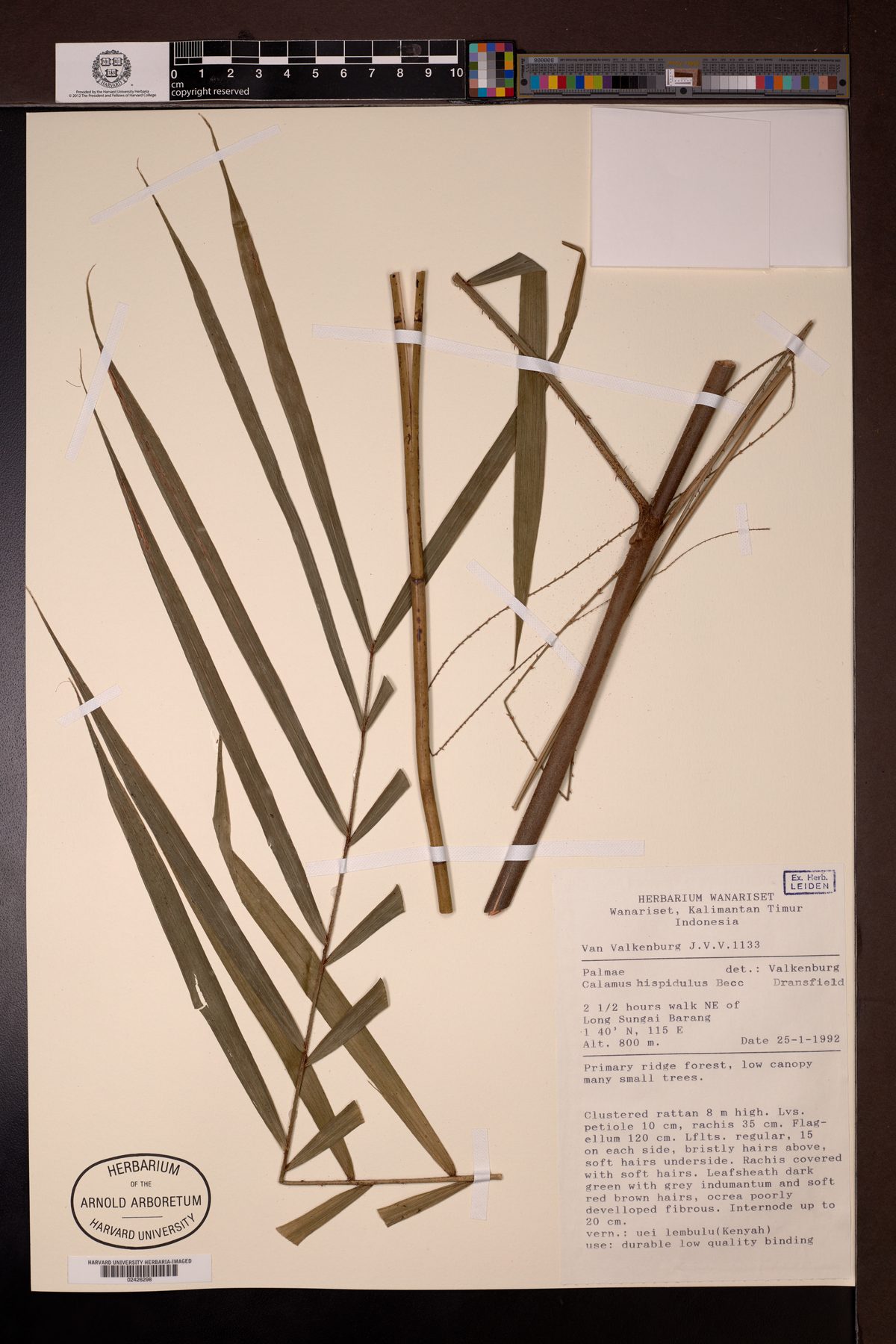
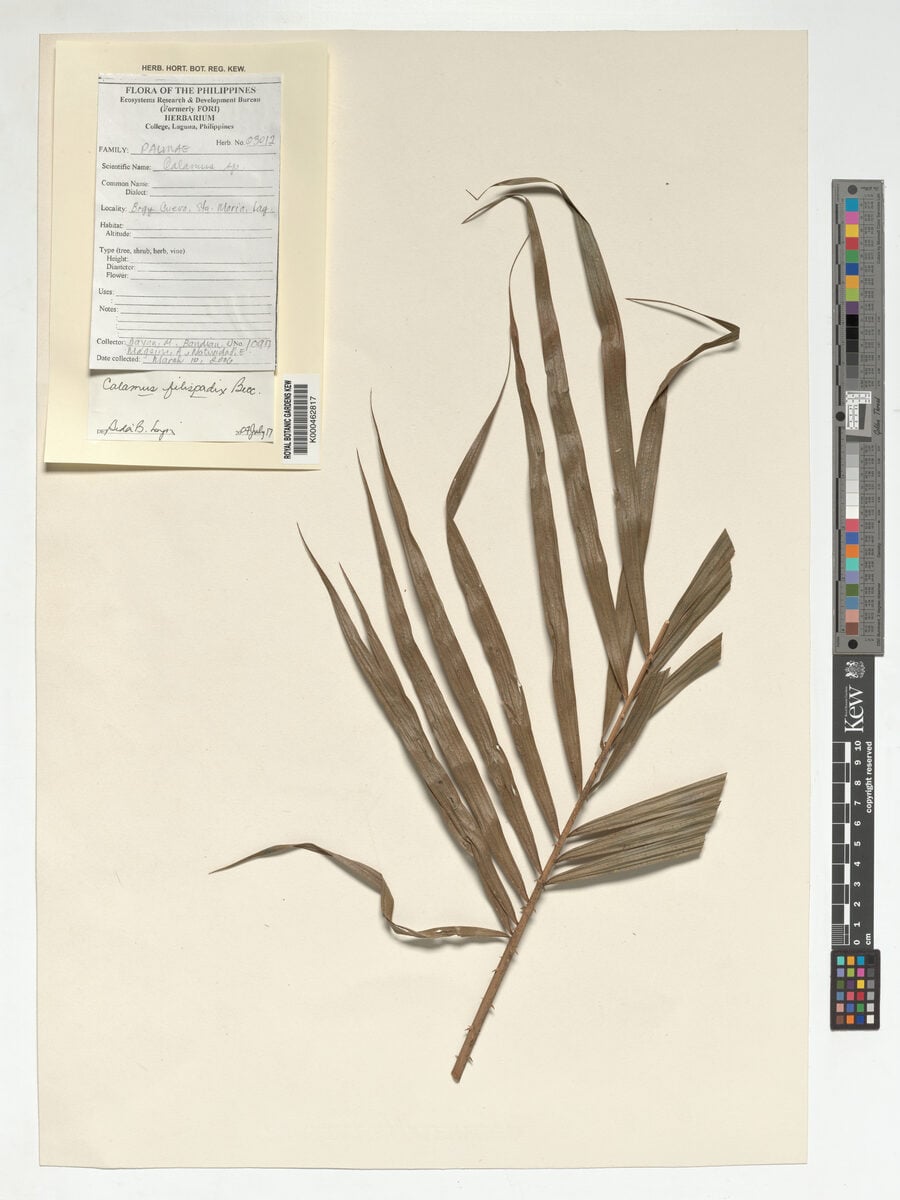
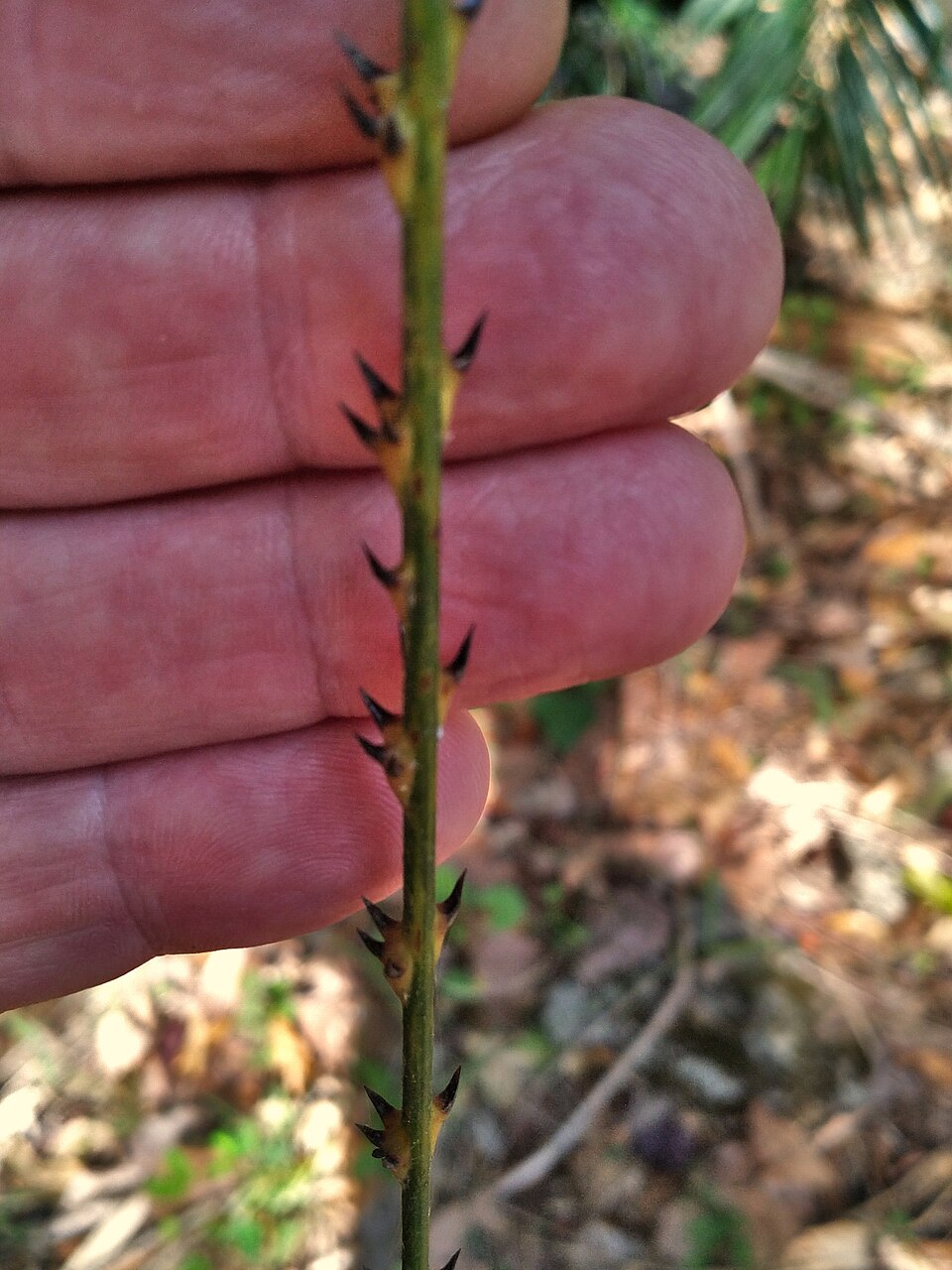
A vigorous climbing palm. It has slender stems which can be 60 m long. The fronds have leaflets along the stalk. These bear hooks which help the plant to climb. The young stem have many spines. The fruit are white and about 1 cm across. They are edible.
Edible Uses
In forests where rattan grows, its economic value can play a crucial role in conservation efforts. By offering an alternative source of income, rattan harvesting can deter loggers from engaging in timber logging. Harvesting rattan canes is simpler and requires less sophisticated tools compared to logging operations. Furthermore, rattan grows rapidly, which facilitates quicker replenishment compared to tropical wood species.This economic incentive supports forest maintenance by providing a profitable crop that complements rather than competes with trees. However, the long-term profitability and utility of rattan compared to other alternatives remain subjects of ongoing evaluation and study. Cleaned rattan stems with the leaf sheaths removed are superficially similar to bamboo. Unlike bamboo, rattan stems are not hollow. Most (70%) of the world's rattan population exists in Indonesia, distributed among the islands Borneo, Sulawesi, and Sumbawa. The rest of the world's supply comes from the Philippines, Sri Lanka, Malaysia, Bangladesh and Assam, India.
Medicinal Uses
In early 2010, scientists in Italy announced that rattan wood would be used in a new "wood to bone" process for the production of artificial bone. The process takes small pieces of rattan and places them in a furnace. Calcium and carbon are added. The wood is then further heated under intense pressure in another oven-like machine, and a phosphate solution is introduced. This process produces almost an exact replica of bone material. The process takes about 10 days. At the time of the announcement the bone was being tested in sheep, and there had been no signs of rejection. Particles from the sheep's bodies have migrated to the "wood bone" and formed long, continuous bones. The new bone-from-wood programme is being funded by the European Union. By 2023, experimental implants into humans were taking place.
Distribution
A tropical plant. It does best in tropical conditions.
Where It Grows
Asia, Australia, Indochina, Pacific, Philippines, SE Asia, Thailand,
Cultivation
Grows best in the dappled shade of semi-open forest. Prefrs a warm, sheltered, moist position. A fast-growing palm, the stems attain their full length of 15 metres or more after 5 - 8 years. Just before or after planting seedlings of this species, the existing canopy needs to be manipulated to allow for 50% light/shade conditions in order to encourage vigorous growth of the seedlings. Circle-weeding of sthe young plants is done 3 - 4 times a year for up to 3 years. Planting lines need to be kept clean up to a distance of 1 metre on either side to allow for easy access and maintenance. Gatherers cut the cane off above the surface of the ground and pull down the entire stem. The rattan is then stripped of leaves and the cane is cut into convenient lengths, ranging from 3 - 6 metres, which are then bent sharply at the middle and tied into bundles for convenient transportation. The external part may be stripped from the cane in the forest or the entire canes may be transported, depending on how the product is to be used.
Propagation
Seed - the fruits are thoroughly washed to remove the fleshy coat and most seeds are sown in beds. The seedlings are kept in shade and usually potted in plastic bags after some weeks, and watered daily until they attain a height of 20 - 30cm. These are then transplanted to the forest (allowing some light to penetrate through the canopy).
Other Uses
The canes are of excellent quality, being smooth, easy to work, with a high finishing quality. The entire stems are used for making 'bent wood' chair frames, as cables for ferry boats, for hauling logs, standing-rigging on small sailing vessels, and sometimes to support short suspension bridges. The split canes are used for making mats, hats, baskets, chairs, various types of fish traps, and the bottoms and backs of 'cane-bottomed' chairs. The interior parts of the stem, which are softer than the outer part, are used for making 'reed' furniture. The long and slender stems of Calamus species are put to various uses according to their size, length, flexibility, elasticity and toughness. The most slender canes are employed entire for binding purposes, and in making chairs, blinds, mats, wicker or basketwork, fishing implements, etc. Twisted together, they make very strong cables. The largest and more resistent canes are used entire as cables, the framework of wicker chairs etc. Usually, however, for many purposes the stems are split throughout their length into 2 - 4 or more strips from which the inner soft brittle and spongy portion is removed by means of a knife or same other instrument, so as to leave the external portion, which is hard, tough, flexible, elastic and has its outer surface very clean and smooth as if it had been varnished. Strips vary in width according to the use to which they are to be put. Those for delicate work, such as the network of furniture, small bags, hats, etc, are from 1 - 3mm wide; those employed as lashings in native housebuilding or in fastening the removable head of the Malay axe to its handle are from 5-6 mm wide. Collecting and preparing the stems is very simple. The stem is cut near the ground and detached from the trees by taking a strong hold of its base and thus pulling down the entire plant with its leaves. The most recent growth at the top of the plant is removed and then, handling it from the upper end, the stem is forcibly drawn in the opposite direction between two pieces of wood, thus removing the spiny coverings. It is then cut into lengths of about 5 metres, each piece is bent into two equal parts and the stems are fastened into bundles ready for market. The most valued stems are not thicker than a man's little finger and have a fine polished straw-yellow glassy surface.
Production
It is a fast growing palm.
Notes
There are 375-400 Calamus species. There are 175 species in tropical Asia.
Synonyms
Also Known As
Waii
References (5)
- Call, C. A., et al, 2004, Participatory Rural Appraisal in the Upland Ecosystem of Mt Malindang, Misamis Occidental, Philippines. Biodiversity Research Programme for Development in Mindanao. p 53
- Johnson, D.V., 1998, Tropical palms. Non-wood Forest products 10. FAO Rome. p 66
- Jones, D.L., 1994, Palms throughout the World. Smithtonian Institution, Washington. p 157
- Jones, D.L., 2000, Palms of Australia 3rd edition. Reed/New Holland. p 129
- Webbia 1:347. 1905