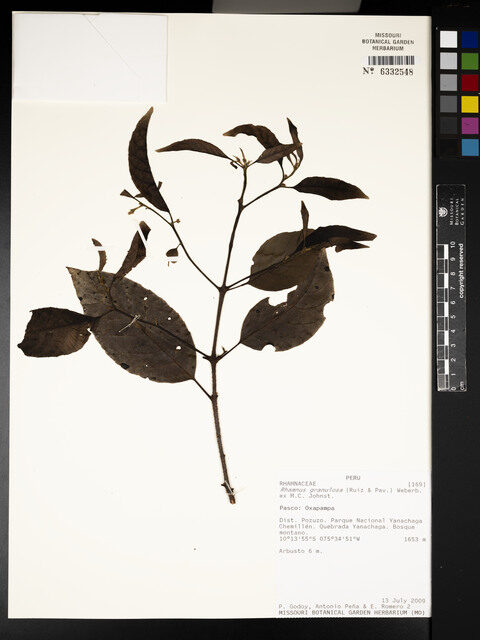
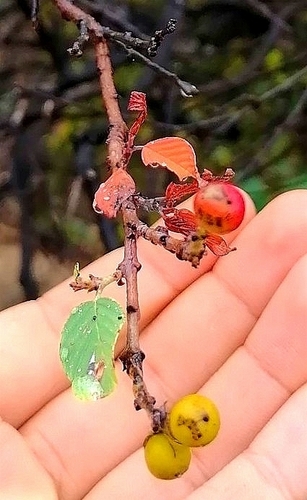
Ziziphus lotus
(L.) Lam.
Jujube lotus, Lotus fruit
iNaturalist· cc-by-nc
(c) Juan Valentín, some rights reserved (CC BY-NC), uploaded by Juan Valentín
iNaturalist· cc-by-nc
(c) Juan Valentín, some rights reserved (CC BY-NC)
Summary
Source: WikipediaZiziphus lotus is a small deciduous tree in the buckthorn family Rhamnaceae, native to the Mediterranean region, including the Sahara in Morocco and also Somalia. It is one of several species called "jujube", and is closely related to Z. jujuba, the true jujube.
Description
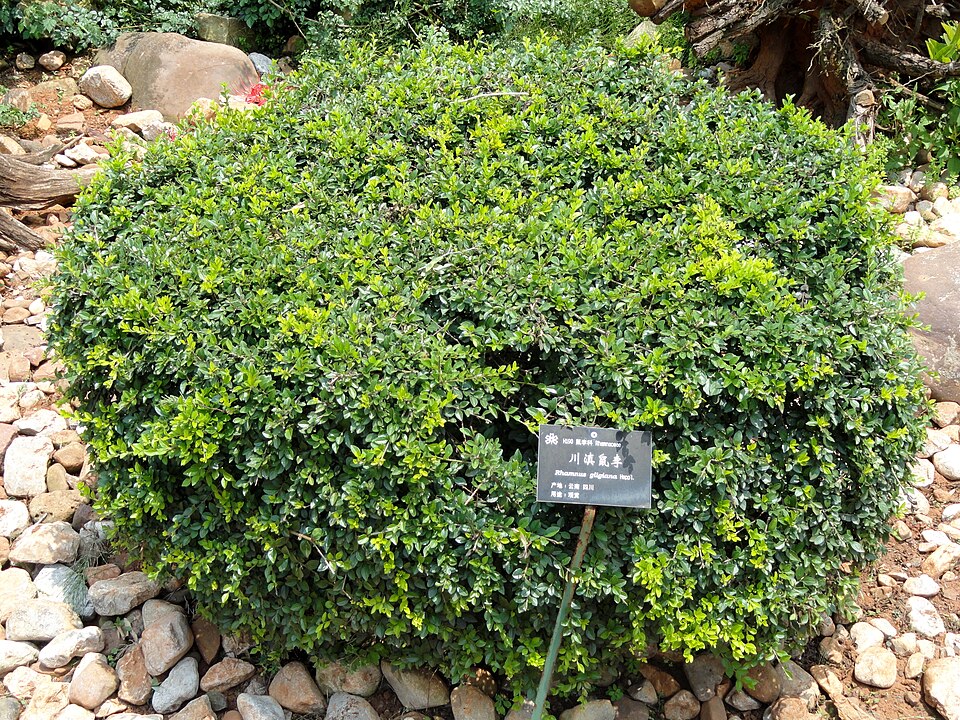
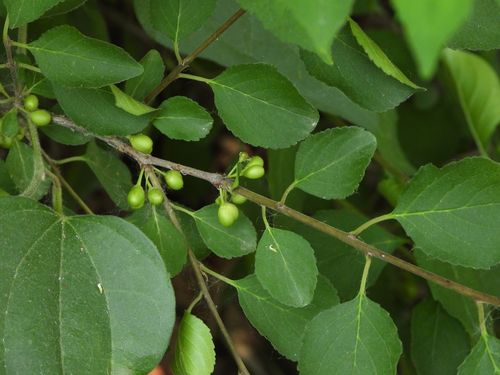
A low bush or shrub. It grows 2 m tall. The twigs are grey. The leaves have shallow, blunt teeth. It loses its leaves during the year. The fruit is slightly smaller than a jujube and less sweet. It is round and yellowish-orange to purple.
Edible Uses
The fresh and dried fruit are eaten raw. The fruit are occasionally made into bread or wine.
Traditional Uses
The fruit are occasionally eaten or made into bread or wine. The fresh and dried fruit are eaten raw.
This uses section is brief — help expand it
Distribution
It is a Mediterranean plant. It grows in dry habitats. It grows in the Sahel and Sahara in West Africa. It can grow in arid places.
Where It Grows
Africa, Algeria, Asia, Burkina Faso, Cyprus, Egypt, Europe, Greece, Israel, Italy, Jordan, Libya, Mali, Mauritania, Mediterranean, Middle East, Morocco, North Africa, Palestine, Portugal, Sahel, Spain, Syria, Tunisia, Turkey, Türkiye, West Africa, Western Sahara,
Cultivation
It can be grown as a hedge.
Other Information
It is cultivated.
Notes
This is the "lotus fruit" of ancient myths.
Nutrition
| Part | Moisture | kJ | kcal | Protein | Vit A | Vit C | Iron | Zinc |
|---|---|---|---|---|---|---|---|---|
| Fruit | — | — | — | 1.4 | 5.7 | 1.3 | — | — |
Synonyms
Also Known As
Arto, Azoguar, Cedra, Gonnara, N'bag, Sari hunnap, Sder, S'durr, Sedra, Sidir
References (29)
- Al-Qura'n, S. A., 2010, Ethnobotanical and Ecological Studies of Wild Edible Plants in Jordan. Libyan Agriculture Research Center Journal International 1(4):231-243
- Blamey, M and Grey-Wilson, C., 2005, Wild flowers of the Mediterranean. A & C Black London. p 130
- Boudraa, S. et al, 2010, Mineral and vitamin composition of fruits of five underexploited species in Algeria: Fruits. Vol. 65:75-84
- Burkill, H. M., 1985, The useful plants of west tropical Africa, Vol. 4. Kew.
- Ciftcioglu, C. G., 2015, Sustainable wild-collection of medicinal and edible plants in Lefke region of North Cyprus. Agroforest Syst. Springer
Show all 29 references Hide references
- Della, A., et al, 2006, An ethnobotanical survey of wild edible plants of Paphos and Larnaca countryside of Cyprus. J. Ethnobiol. Ethnomed. 2:34
- Dop, M. C., et al, 2019, Identification and frequency of consumption of wild edible plants over a year in central Tunisia: a mixed-methods approach. Public Health Nutrition: 23(5), 782–794
- J. B. A. P. M. de Lamarck & L. A. J. Desrousseaux, Encycl. 3:317. 1789
- Ertug, F, Yenen Bitkiler. Resimli Türkiye Florası -I- Flora of Turkey - Ethnobotany supplement
- Facciola, S., 1998, Cornucopia 2: a Source Book of Edible Plants. Kampong Publications, p 192
- Flowerdew, B., 2000, Complete Fruit Book. Kyle Cathie Ltd., London. p 163
- Ghanimi, R., et al, 2022, Ethnobotanical study on wild edible plants traditionally used by Messiwa people, Morocco. Journal of Ethnobiology and Ethnomedicine. 18:16
- Gouldstone, S., 1983, Growing your own Food-bearing Plants in Australia. Macmillan p 104
- Hedrick, U.P., 1919, (Ed.), Sturtevant's edible plants of the world. p 705
- http://cypruswildflowers.com
- INFOODS:FAO/INFOODS Databases
- Jardin, C., 1970, List of Foods Used In Africa, FAO Nutrition Information Document Series No 2.p 169
- John, L., & Stevenson, V., 1979, The Complete Book of Fruit. Angus & Robertson p 165
- Mahklouf, M. H., 2019, Ethnobotanical Study of Edible Wild Plants in Libya. European Journal of Ecology. 5(2): 30-40
- Nassif, F., & Tanji, A., 2013, Gathered food plants in Morocco: The long forgotten species in Ethnobotanical Research. Life Science Leaflets 3:17-54
- Rivera, D. et al, 2006, Gathered Mediterranean Food Plants - Ethnobotanical Investigations and Historical Development, in Heinrich M, Müller WE, Galli C (eds): Local Mediterranean Food Plants and Nutraceuticals. Forum Nutr. Basel, Karger, 2006, vol 59, pp 18–74
- Royal Botanic Gardens, Kew (1999). Survey of Economic Plants for Arid and Semi-Arid Lands (SEPASAL) database. Published on the Internet; http://www.rbgkew.org.uk/ceb/sepasal/internet [Accessed 10th June 2011]
- Tanji, A and Nassif, F., 1995, Edible Weeds in Morocco. Weed Technology. Vol. 9, No. 3, pp. 617-620
- Tardio, J., et al, Ethnobotanical review of wild edible plants in Spain. Botanical J. Linnean Soc. 152 (2006), 27-71
- Tukan, S. K., et al, 1998, The use of wild edible plants in the Jordanian diet. International Journal of Food Sciences and Nutrition. 49:225-235
- Uphof,
- van Wyk, B., 2005, Food Plants of the World. An illustrated guide. Timber press. p 391
- World Checklist of Useful Plant Species 2020. Royal Botanic Gardens, Kew
- Zeven, A. C. & de West, J. M. J., 1982, Dictionary of cultivated plants and their regions of diversity. Wageningen. p 118