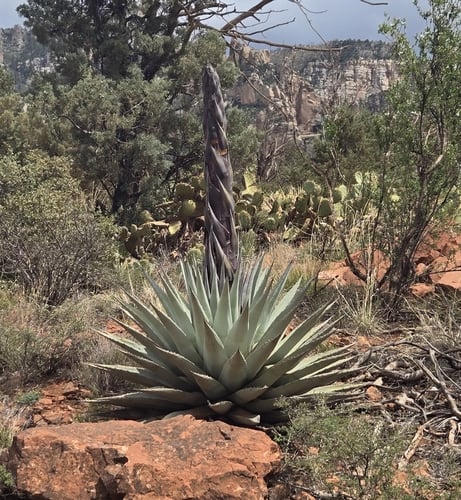
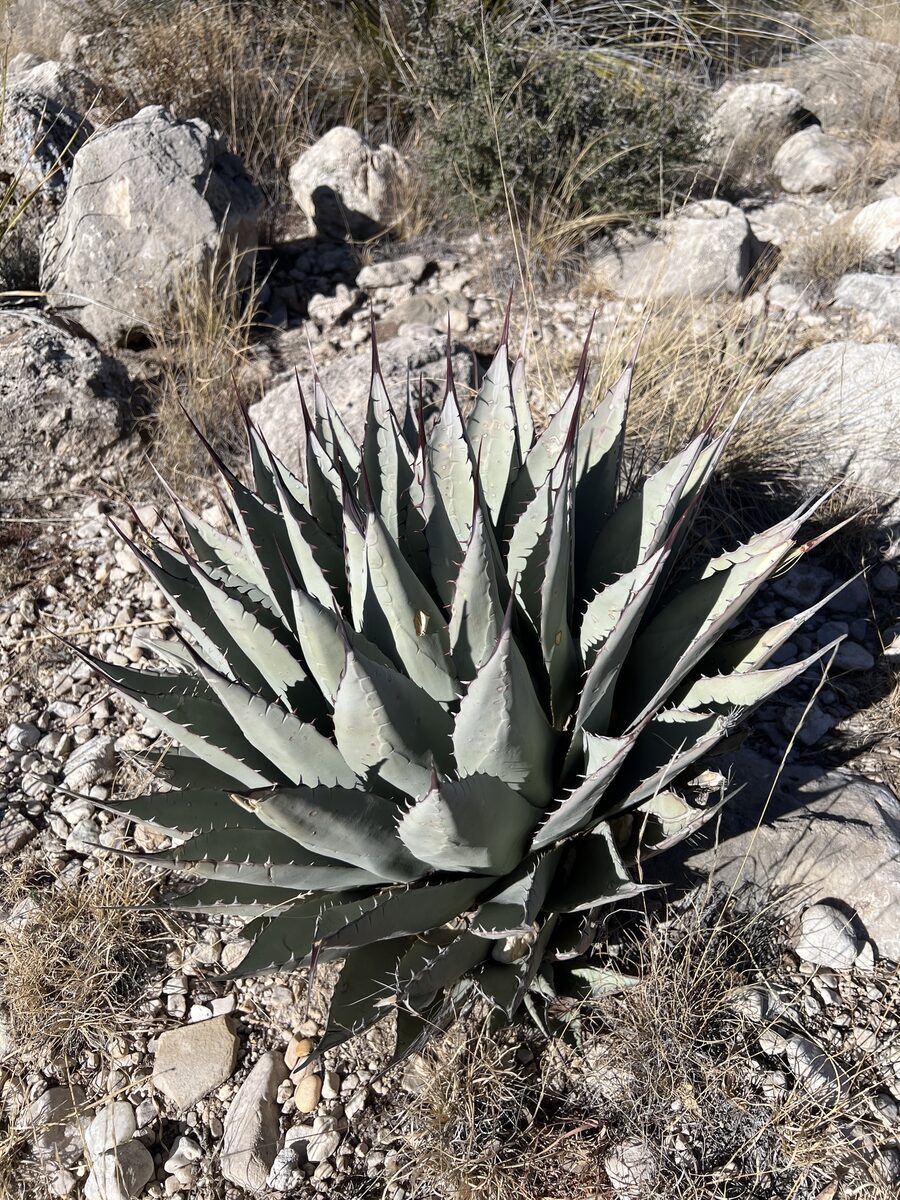
Yucca schidigera
Roezl ex Ortega
Mojave yucca
iNaturalist· cc-by
(c) Jay Iwasaki, some rights reserved (CC BY)
iNaturalist· cc-by-nc
(c) lkjohnson1, some rights reserved (CC BY-NC)
Summary
Source: WikipediaYucca schidigera, also known as the Mojave yucca or Spanish dagger, is a perennial plant in the asparagus family Asparagaceae, native to the southwestern United States and northwestern Mexico. It is most common in the Mojave Desert, but also occurs extensively in the Sonoran Desert and west to the Pacific coast of southern California and Baja California.
Description
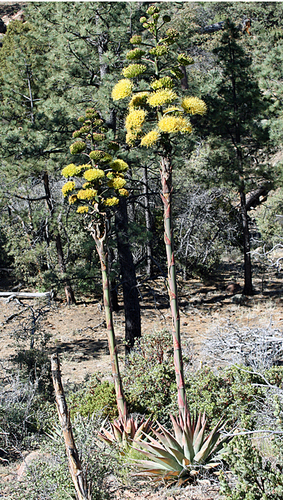
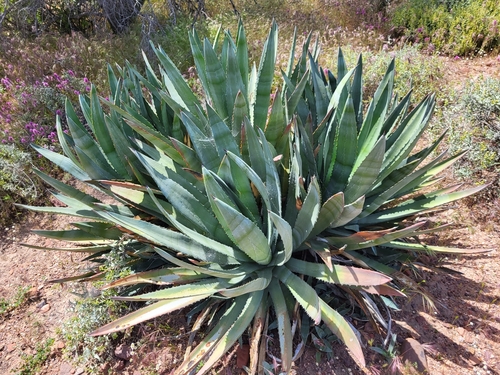
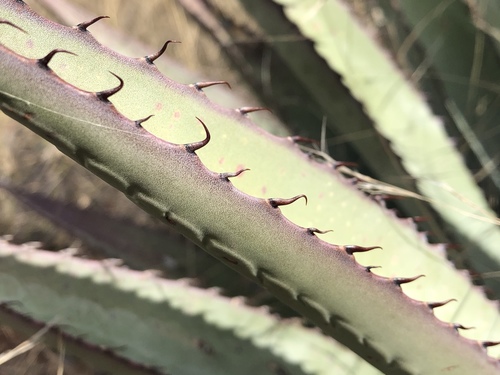
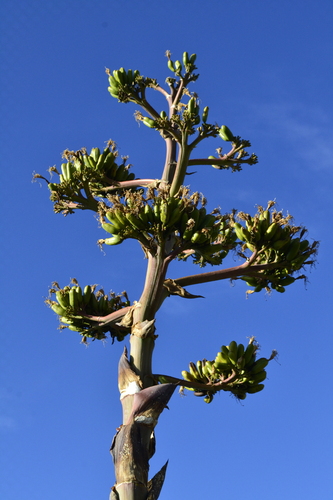
A small tree. It grows 4.5 m high and spreads 2.4 m wide. It has a thick often branched trunk. The leaves are smooth and have thick edges which carry fine threads. The flower spike is 1.2 m high. The flowers are waxy cream.
Edible Uses
Young flowering stems are chopped and cooked like asparagus or baked like a sweet potato. The fruit can be eaten raw or cooked; it is also baked, dried and ground into a powder for use in soups or made into a drink, and can be used to make jellies. Flowers are delicious raw, can be dried and crushed as a flavouring, and can also be used in jellies.
Traditional Uses
The young stems are chopped and cooked and eaten. Fruit and flowers are eaten raw or in jellies.
This uses section is brief — help expand it
Medicinal Uses
None known.
Known Hazards
The roots contain saponins. Whilst saponins are quite toxic to people, they are poorly absorbed by the body and so tend to pass straight through. They are also destroyed by prolonged heat, such as slow baking in an oven. Saponins are found in many common foods such as beans. Saponins are much more toxic to some creatures, such as fish, and hunting tribes have traditionally put large quantities of them in streams, lakes etc in order to stupefy or kill the fish.
Distribution
It is a warm temperate to subtropical plant. It suits hardiness zones 8-10.
Where It Grows
Australia, Mexico, North America, USA,
Cultivation
Thrives in any soil but prefers a sandy loam and full exposure to the south. Plants are hardier when grown on poor sandy soils. Established plants are very drought tolerant. In the plants native environment, its flowers can only be pollinated by a certain species of moth. This moth cannot live in Britain and, if fruit and seed is required, hand pollination is necessary. This can be quite easily and successfully done using something like a small paint brush. Individual crowns are monocarpic, dying after flowering. However, the crown will usually produce a number of sideshoots before it dies and these will grow on to flower in later years. Plants in this genus are notably resistant to honey fungus. Members of this genus seem to be immune to the predations of rabbits.
Propagation
Sow seed in spring in a greenhouse; pre-soaking for 24 hours in warm water may reduce germination time. Seed typically germinates within 1–12 months at 20°C. Prick seedlings into individual pots and grow on under glass for at least their first two winters. Plant out in early summer with winter protection — a pane of glass usually suffices — for at least the first outdoor winter. In Britain, seed is only set with hand pollination. For root cuttings, lift in April/May, remove small buds from the base of stem and rhizomes, dip in dry wood ash to prevent bleeding, and pot in sandy soil in a greenhouse until established.
Other Uses
The leaves and their fibre have been used to make ropes, baskets and mats, and the strong fibres have been made into shoes and sandals. The leaves have also been used as brushes for body painting and for decorating pottery. The roots are rich in saponins and can be used as a soap substitute.
Notes
There are about 40 Yucca species. Also put in the family Agavaceae.
Synonyms
Also Known As
Yucca de monjave
References (11)
- Beckstrom-Sternberg, Stephen M., and James A. Duke. "The Foodplant Database." http://probe.nalusda.gov:8300/cgi-bin/browse/foodplantdb.(ACEDB version 4.0 - data version July 1994) (As Yucca mohavensis)
- Cundall, P., (ed.), 2004, Gardening Australia: flora: the gardener's bible. ABC Books. p 1493
- Facciola, S., 1998, Cornucopia 2: a Source Book of Edible Plants. Kampong Publications, p 4
- FAO, 2012, Forest Genetic Resources Situation in Mexico. Final Report of Project TCP/ 3301 p 289
- Gartenflora 20:110. 1871
Show all 11 references Hide references
- Grandtner, M. M., 2008, World Dictionary of Trees. Wood and Forest Science Department. Laval University, Quebec, Qc Canada. (Internet database http://www.wdt.qc.ca)
- Kermath, B. M., et al, 2014, Food Plants in the Americas: A survey of the domesticated, cultivated and wild plants used for Human food in North, Central and South America and the Caribbean. On line draft. p 935
- Moerman, D. F., 2010, Native American Ethnobotany. Timber Press. p 607
- Plants for a Future database, The Field, Penpol, Lostwithiel, Cornwall, PL22 0NG, UK. http://www.scs.leeds.ac.uk/pfaf/
- Segura, S. et al, 2018, The edible fruit species in Mexico. Genet Resour Crop Evol (2018) 65:1767–1793
- World Checklist of Useful Plant Species 2020. Royal Botanic Gardens, Kew