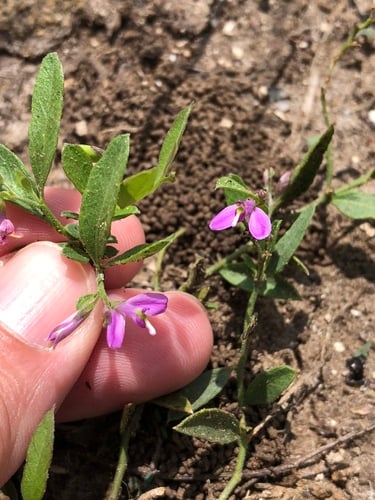
Xanthophyllum obscurum
A. W. Bennett
Kayu batu
wikimedia· cc-by
Forest & Kim Starr (via Wikimedia Commons)
gbif· cc0
President and Fellows of Harvard College
gbif· cc0
President and Fellows of Harvard College
gbif· cc0
President and Fellows of Harvard College
Summary
Source: WikipediaXanthophyllum obscurum is a tree in the family Polygalaceae. The specific epithet obscurum is from the Latin meaning 'dark', referring to the dark colour of the dried flowers and fruits.
Description
A large tree. It can grow 47 m tall. The trunk is 70 cm across. The leaves are alternate and simple. The flowers are 26 mm across. The fruit are large and round. They can be 6-14 cm across. It has a thick casing. There are 8-16 seeds. The pulp is sweet.
Edible Uses
The sweet, white pulp around the seeds is edible. The fruit is a dull pinkish-brown globose berry up to 14cm in diameter.
Traditional Uses
The fruit have a sweet white pulp which is eaten.
This uses section is brief — help expand it
Distribution
A tropical plant. It grows in thick rainforests. It grows up to 1,000 m above sea level. It grows on hillsides with sandy or clay soils.
Where It Grows
Asia, Brunei, Indochina, Indonesia*, Malaysia, SE Asia, Singapore, Thailand,
Cultivation
Grows in the wild on a range of soils from sandy to clayey.
Other Uses
The timber is hard but probably not durable. It is used for making knife sheaths.
Notes
There are about 100 Xanthophyllum species. Also put in the Xanthophyllaceae family.
Synonyms
Also Known As
Boh kaeng, Buah kapas, Buah sirarah, Limah berok, Mengkapas
References (6)
- Blench, R., 2004, Fruits and Arboriculture in the Indo-Pacific Region. Indo-Pacific Prehistory Association Bulletin 24. (Taipei Papers Volume 2) p 41
- Burkill, I.H., 1966, A Dictionary of the Economic Products of the Malay Peninsula. Ministry of Agriculture and Cooperatives, Kuala Lumpur, Malaysia. Vol 2 (I-Z) p 2311
- Milow, P., et al, 2013, Malaysian species of plants with edible fruits or seeds and their evaluation. International Journal of Fruit Science. 14:1, 1-27
- PROSEA No. 2
- Slik, F., www.asianplant.net
Show all 6 references Hide references
- World Checklist of Useful Plant Species 2020. Royal Botanic Gardens, Kew