Wurmbea dioica
(R. Br.) F. Muell.
Early Nancy, Blackman's potatoes, Lily
iNaturalist· cc-by-nc
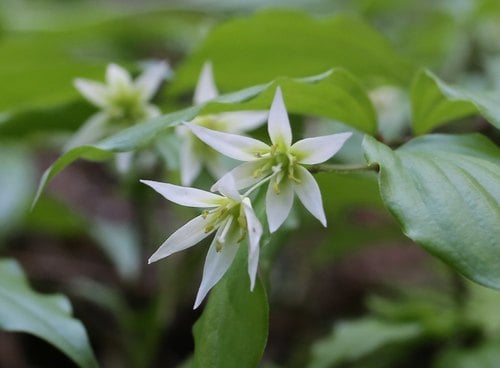
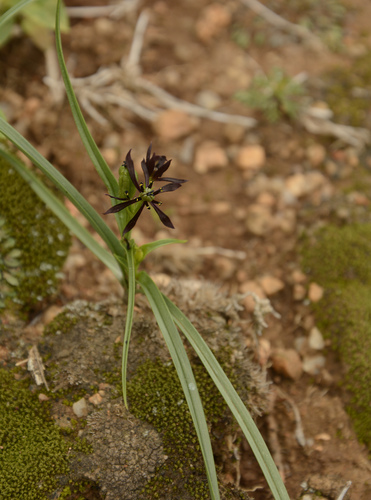
(c) Ian D B Moodie, some rights reserved (CC BY-NC), uploaded by Ian D B Moodie
iNaturalist· cc-by-nc
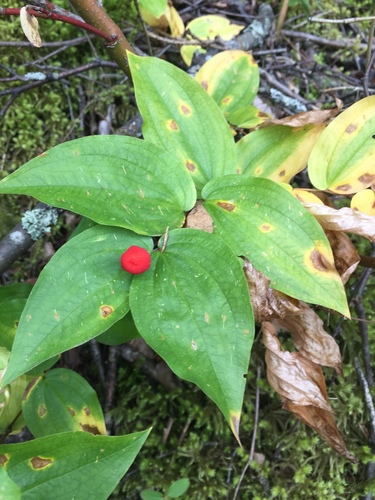
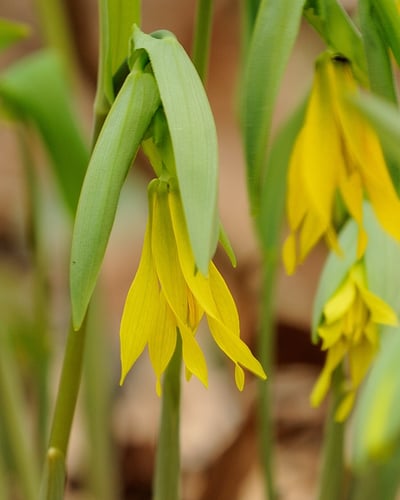
(c) distinguished_orca, some rights reserved (CC BY-NC)
iNaturalist· cc-by-nc
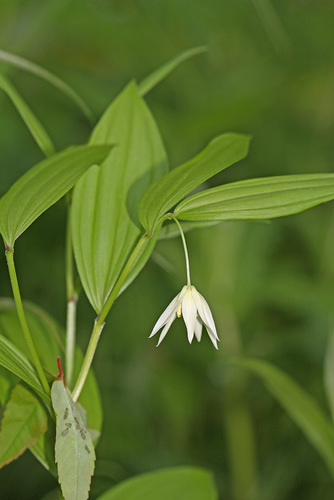
(c) distinguished_orca, some rights reserved (CC BY-NC)
Summary
Source: WikipediaWurmbea dioica, commonly known as early Nancy, is a species of plant in the family Colchicaceae and is endemic to Australia. It is a herb with three linear to thread-like leaves and usually two to seven white flowers with a purple or greenish nectary band.
Description
A dainty white lily. It is a small herb with a bulb. It grows 4-30 cm high. There are 3 leaves. They are bright green and grass like. They clasp the stem. The leaves are 15 cm long and 1-3 mm wide. The tubers are 1 cm long and 5 mm wide. They are brown with flaky black skin. They are buried 3-5 cm below the ground. The flowers have a scent. They are start like and have 6 segments. They are white with a purple band. The flowers occur in small clusters at the ends of shoots. Male and female flowers are on separate plants. The male flowers have 6 stamens with purple anthers. The female flowers have a dark purple swollen ovary. There can be 2-6 flowers per plant. They are on a single stem 10 cm high. The fruit is a 3 celled brown capsule.
Edible Uses
The bulbs and tubers are roasted and eaten.
Traditional Uses
The bulb is roasted and eaten.
This uses section is brief — help expand it
Distribution
It is a temperate plant. It grows in damp grassland and forest. It needs well drained soil in part shade.
Where It Grows
Australia*, Tasmania*,
Cultivation
It is best treated as an annual plant. Plants can be grown from seed. Seeds are collected from drying capsules. The seed need to be treated. The seeds need to be just covered and kept moist at 20-25°C and they will grow in 15-60 days. Seedlings can be planted out in 3-6 months. Plants can also be grown by division.
Synonyms
Also Known As
Harbinger of Spring
References (26)
- Blomberry, A.M., 1979, Australian Native Plants. Angus and Robertson p 126 (As Anguillaria dioica)
- Bodkin, F., 1991, Encyclopedia Botanica. Cornstalk publishing, p 85 (As Anguillaria dioica)
- Cameron, M., (Ed.) 1981, A Guide to Flowers & Plants of Tasmania. Reed p 90
- Cherikoff V. & Isaacs, J., The Bush Food Handbook. How to gather, grow, process and cook Australian Wild Foods. Ti Tree Press, Australia p 191, 197, p 194 (Also as Anguillaria dioica)
- Caton, J.M. & Hardwick, R. J., 2016, Field Guide to Useful Native Plants from Temperate Australia. Harbour Publishing House. p 156
Show all 26 references Hide references
- Cribb, A.B. & J.W., 1976, Wild Food in Australia, Fontana. p 146 (As Anguillaria dioica)
- Cronin, L., 1989, The Concise Australian Flora. Reed. p 101 (As Anguillaria dioica)
- Curtis, W.M., & Morris, D.I., 1994, The Student's Flora of Tasmania. Part 4B St David's Park Publishing, Tasmania, p 396
- Dashorst, G.R.M., and Jessop, J.P., 1998, Plants of the Adelaide Plains & Hills. Botanic Gardens of Adelaide and State Herbarium. p 158
- De Angelis, D., 2005, Aboriginal Plant Use of the Greater Melbourne Area. La Trobe University Environment Collective
- Elliot, W.R., & Jones, D.L., 1982, Encyclopedia of Australian Plants suitable for cultivation. Vol 2. Lothian. p 198 (As Anguillaria dioica)
- Gilfedder, L et al, 2003, The Nature of the Midlands. Midlands Bushweb. PO Box 156 Longford, Tasmania. p 125
- Gott, B & Conran, J., 1991, Victorian Koorie Plants. PO Box 666 Hamilton, Victoria 3300, Australia. p 17
- Hardwick, R.J., 2000, Nature's Larder. A Field Guide to the Native Food Plants of the NSW South Coast. Homosapien Books. p 53
- Hastings Advance Community College, 2017, Uses for Native Plants of the Mornington Peninsula. 86pp. p 82
- Hunter, J. T. & Sheringham, P., 2006, Vegetation and Floristics of Melville Range Nature Reserve. A Report to the New South Wales Parks and Wildlife Service. p 181
- Lazarides, M. & Hince, B., 1993, Handbook of Economic Plants of Australia, CSIRO. p 249. p 20 (Also as Anguillaria dioica)
- Lim, T. K., 2015, Edible Medicinal and Non Medicinal Plants. Volume 9, Modified Stems, Roots, Bulbs. Springer p 86
- Low, T., 1991, Wild Food Plants of Australia. Australian Nature FieldGuide, Angus & Robertson. p 101
- Low, T., 1992, Bush Tucker. Australia’s Wild Food Harvest. Angus & Robertson. p 113, 114
- Mallee Wildflower Committee, Flowers of the Mallee. p 33
- Morley, B.D., & Toelken, H.R., (Eds), 1983, Flowering Plants in Australia. Rigby. p 328
- Paczkowska, G. & Chapman, A.R., 2000, The Western Australian Flora. A Descriptive Calatogue. Western Australian Herbarium. p 39
- Prodr. 273. 1810 (As Anguillaria dioica)
- Tasmanian Herbarium Vascular Plants list p 70
- Whiting, J. et al, 2004, Tasmania's Natural Flora. Tasmania's Natural Flora Editorial Committee PO Box 194, Ulverstone, Tasmania, Australia 7315 p 360