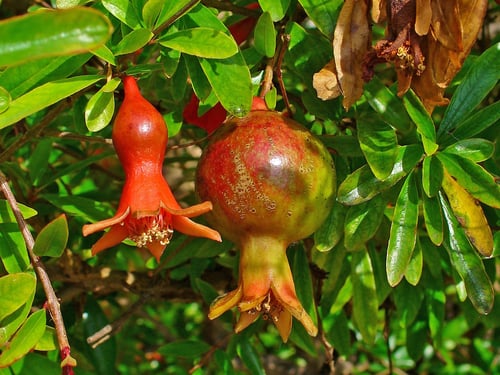
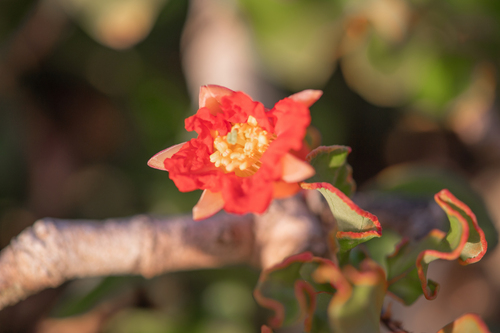
Woodfordia fruticosa
(L.) Kurz
Fire-flame bush
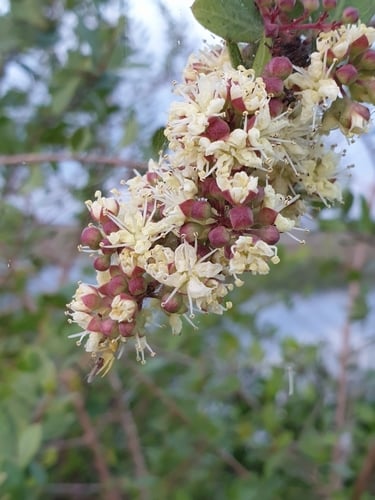
iNaturalist· cc-by-nc
(c) Jayant M Deshpande, some rights reserved (CC BY-NC), uploaded by Jayant M Deshpande
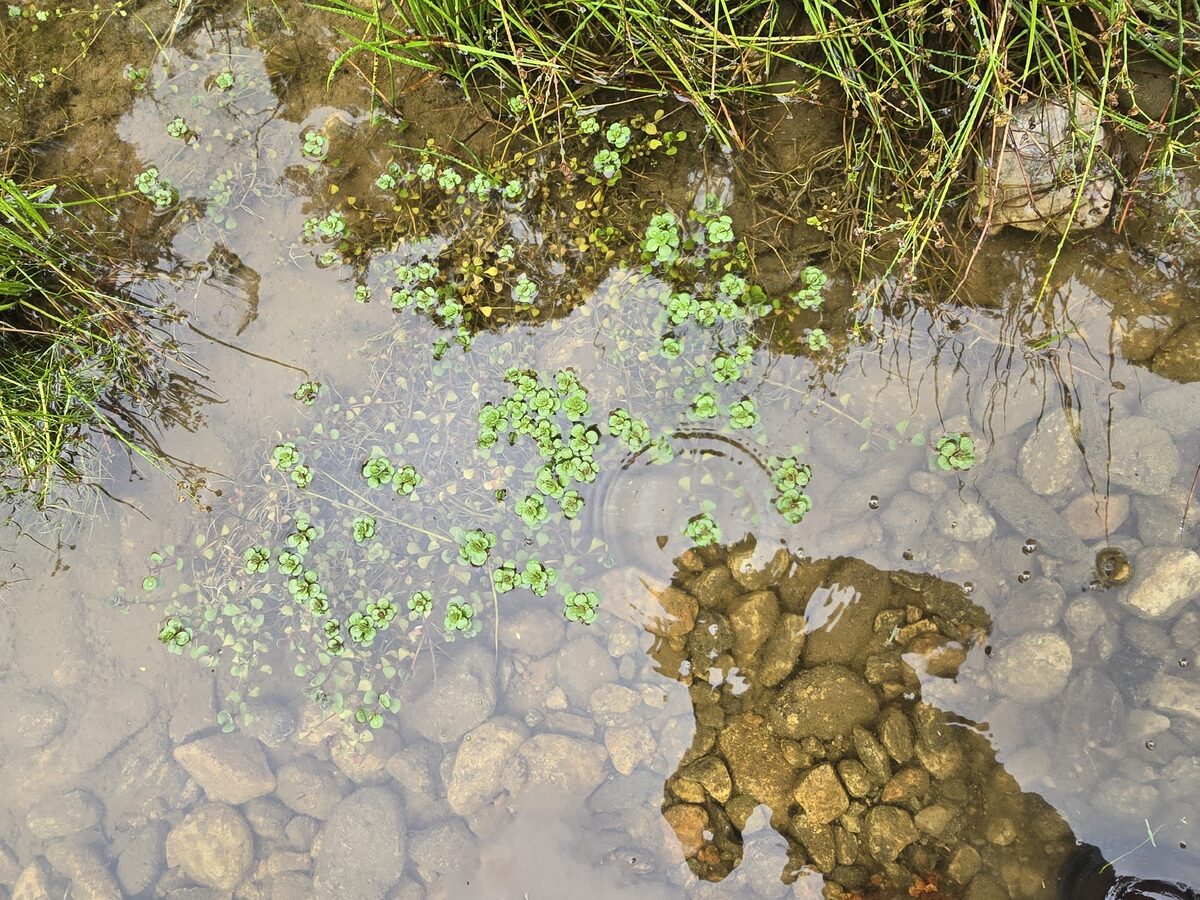
iNaturalist· cc-by-nc-sa
(c) c michael hogan, some rights reserved (CC BY-NC-SA), uploaded by c michael hogan
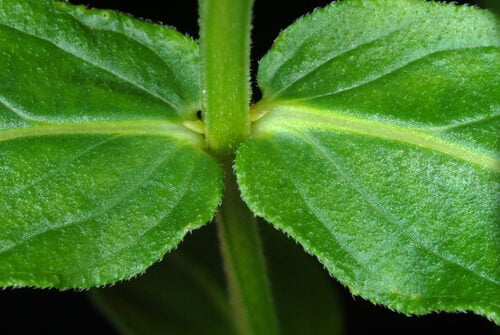
iNaturalist· cc-by-nc-nd
(c) Chief RedEarth, some rights reserved (CC BY-NC-ND), uploaded by Chief RedEarth
Summary
Source: WikipediaWoodfordia fruticosa is a species of plant in the family Lythraceae. It is known to the Gujarati people as dhavdi.
Description
A shrub. It has many branches. It can grow up to 5-7 m tall. It has many branches. The bark is reddish-brown and peels off in strips. The new shoots and leaves have black dots and circles of glands. The leaves are opposite or in rings of three and are simple. They have a white hairy covering. There are 1-17 flowers in a group on short shoots. These are in the axils of leaves. The flowers are large. They are red-orange. The fruit is a dry irregular capsule. There are many smooth, small brown seeds.
Edible Uses
The flowers are eaten as food and used in preparing a cooling drink, though it is noted this report was somewhat unclear and may have referred to the leaves rather than the flowers. A gum is also obtained from the plant.
Traditional Uses
The flowers are sucked for their nectar. They are also cooked as a vegetable. The fruit are eaten raw when ripe. The young shoots are eaten.
This uses section is brief — help expand it
Medicinal Uses
The flowers are astringent and used in the treatment of dysentery, traditionally beaten with honey into a confection. They are also considered useful in treating menorrhagia and are applied externally as an astringent.
Distribution
A tropical plant. It grows in Garhwal Himalayas. It grows in less humid and dry regions. It grows from sea level to 800 m altitude in Madagascar. It grows up to 1,500 m in the Himalayas. It is often along streams and rivers. It grows best in a sandy loam. In XTBG Yunnan.
Where It Grows
Africa, Asia, Bhutan, China, East Africa, Himalayas, India, Indochina, Indonesia, Laos, Madagascar, Malaysia, Myanmar, Nepal, Pakistan, SE Asia, Sikkim, Sri Lanka, Thailand,
Cultivation
Plants are usually grown using cuttings. The plant can be pruned back and will regrow well.
Propagation
The seed is very small and the plant self-sows freely in open, well-drained ground, but raising it artificially can be more difficult. The most successful approach is to sow seed in broken bricks, as germination on ordinary seedbeds is very difficult. If using a nursery bed, the soil should be light, very well-drained, and in a fairly sunny position. Scatter seed over the surface and press it lightly into the soil without covering it, then water gently to avoid washing seed away, watering once or twice daily if the surface begins to dry. Softwood and hardwood cuttings are both reported to be easy.
Other Uses
This plant commonly springs up naturally on landslips, abandoned cultivation, and other open ground, where it suppresses grass, binds soil, improves soil quality, and acts as a nurse species for trees including sal, which establish freely under its cover. Because it cannot regenerate by seed in shade, it gradually dies out as the trees above it mature. It is not eaten by cattle and is frost-hardy, often forming extensive pure stands on open grazed ground. A gum obtained from the plant is similar to gum tragacanth. The flowers contain approximately 20% tannins; they are harvested when open and dried for later use. Leaves are more commonly used as a tannin source than flowers, simply due to their greater abundance. A dye obtained from the flowers can be used alone or combined with other dyes, also acting as a mordant in those combinations; the most common combination is with Morinda citrifolia. The wood is used for fuel.
Other Information
The nectar is especially sucked by children.
Notes
There are 2 Woodfordia species. It is used in medicine.
Synonyms
Also Known As
Agnijwala, Dahai, Dawai, Dawi, Dhai-phul, Dhai, Dhaiphal, Dhairee, Dhairo, Dhangera, Dhataki, Dhatuki, Dhau, Dhaula, Dhaura, Dhauri, Dhavdi, Dhavi, Dhawai, Dhawatha, Dhawi, Dhayati, Dhayero, Dhayti, Dhenti, Dowari, Gaddaisinka, Gulbaha, Gul bahar, Gul, Harwari, Icha, Jargi, Jatiko, Lambohenza, Panle, Panswe, Patta-gyi, Phuldawai, Phulsatti, Santha, Serinji, Shiranjitea, Surteli, Tamrapushpi, Tawi, Thai, Thawi, Yet-kyi, Zhubuli
References (26)
- Acharya K. P. and Acharya, R., 2010, Eating from the Wild: Indigenous knowledge on wild edible plants in Parroha VDC of Rupandehi District, Central Nepal. International Journal of Social Forestry. 3(1):28-48
- Agarwal, R. & Chandra, V., 2019, Diversity of wild edible plants in the Mandal-Chopta forest, Uttarakhand. Journal of Medicinal Plants Studies 2019; 7(1): 89-92
- Ambasta, S.P. (Ed.), 2000, The Useful Plants of India. CSIR India. p 690
- Behera K. K., et al, 2008, Wild Edible Plants of Mayurbhanj District, Orissa, India. J. Econ. Taxon. Bot. Vol. 32 (Suppl.) pp 305-314
- Burkill, I.H., 1966, A Dictionary of the Economic Products of the Malay Peninsula. Ministry of Agriculture and Cooperatives, Kuala Lumpur, Malaysia. Vol 2 (I-Z) p 2305
Show all 26 references Hide references
- Dangol, D. R. et al, 2017, Wild Edible Plants in Nepal. Proceedings of 2nd National Workshop on CUAOGR, 2017.
- Dobriyal, M. J. R. & Dobriyal, R., 2014, Non Wood Forest Produce an Option for Ethnic Food and Nutritional Security in India. Int. J. of Usuf. Mngt. 15(1):17-37
- Ghimeray, A. K., Lamsal, K., et al, 2010, Wild edible angiospermic plants of the Illam Hills (Eastern Nepal) and their mode of use by local community. Korean J. Pl. Taxon. 40(1)
- GUPTA,
- J. Asiat. Soc. Bengal, Pt. 2, Nat. Hist. 40(2):56. 1871
- Jadhav, R., et al, 2015, Forest Foods of Northern Western Ghats: Mode of Consumption, Nutrition and Availability. Asian Agri-History Vol. 19, No. 4: 293-317
- Kiran, K. C., et al, 2019, Diversity and Seasonal Availability of Potential Wild Edible Plants from Vidarbha Region of Maharashtra State, India. Int.J.Curr.Microbiol.App.Sci (2019) 8(2): 1434-1446
- Kumar, R. & Saikia, P., 2020, Wild edible plants of Jharkhand and their utilitarian perspectives. Indian Journal of Traditional Knowledge Vol 19 (2), April 2020, pp 237-250
- Liu, Yi-tao, & Long, Chun-Lin, 2002, Studies on Edible Flowers Consumed by Ethnic Groups in Yunnan. Acta Botanica Yunnanica. 24(1):41-56
- Mahadkar, S., Valvi, S. & Rathod, V., 2012, Nutritional assessment of some selected wild edible plants as a good source of mineral. Asian Journal of Plant Science and Research 2(4):468-472
- Masoodi, H. U. R. & Sundriyal, R. C., 2020, Richness of non-timber forest products in Himalayan communities—diversity, distribution, use pattern and conservation status. Journal of Ethnobiology and Ethnomedicine 16:56
- Misra S. & Misra M., 2016, Ethnobotanical and Nutritional Evaluation of Some Edible Fruit Plants of Southern Odisha, India. International Journal of Advances in Agricultural Science and Technology, Vol.3 Issue.1, March- 2016, pg. 1-30
- Misra, S., 2020, Survey of edible plants for human consumption in south Odisha, India. Journal of Emerging Technologies and Innovative Research (JETIR) Vol. 7, Issue 12 p 292
- Pandy, R. K. & Saini, S. K., 2007, Edible plants of tropical forests among tribal communities of Madhya Pradesh. Indian Journal of Traditional Knowledge. 6(1), pp 185-190
- Reddy, B. M., 2012, Wild edible plants of Chandrapur district, Maharashtra, India. Indian Journal of Natural Products and Resources. 3(1) pp 110-117
- Schatz, G.E., 2001, Generic Tree Flora of Madagascar. Royal Botanical Gardens, Kew and Missouri Botanical Garden. p 237
- Sen, R., et al, 1985, Ethnobotanical Uses of Herbaria - 4 J. Econ. Tax. Bot. Vol 6. No.2 pp 331-335 (As Woodfordia floribunda)
- Thapa, L. B., et al, 2014, Wild Edible Plants used by endangered and Indigenous Raji Tribe in Western Nepal. International Journal of Applied Sciences and Biotechnology. Vol 2(3):243-252
- Wild edible plants of Himachal Pradesh
- World Checklist of Useful Plant Species 2020. Royal Botanic Gardens, Kew
- Xu, Z., Tao, G. & Tan, J., 1988, Tropical Wild Flowers and Plants in Xishuangbanna, Agricultural Publishing House. photo 100