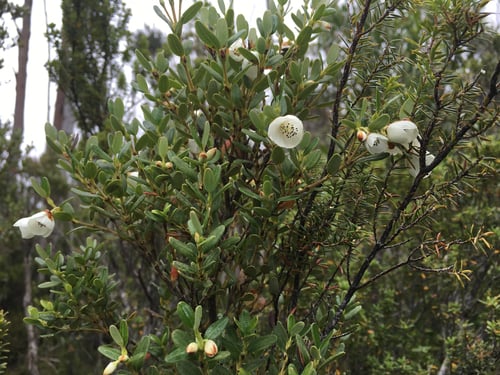
Weinmannia racemosa
Linn.f.
Kamahi
iNaturalist· cc-by-nc
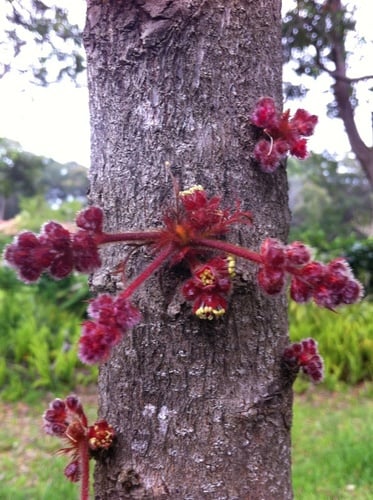
(c) Nigel Forshaw, some rights reserved (CC BY-NC)
iNaturalist· cc-by-nc
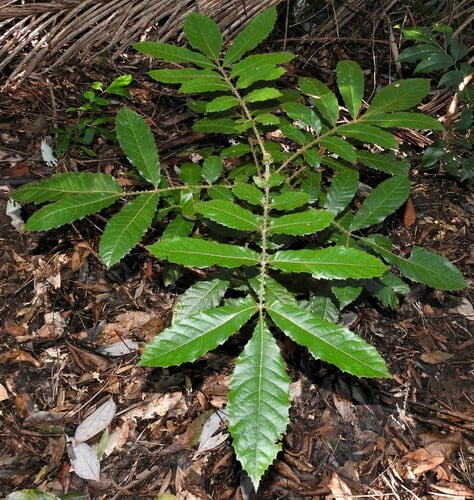
(c) Nigel Forshaw, some rights reserved (CC BY-NC)
iNaturalist· cc-by-nc
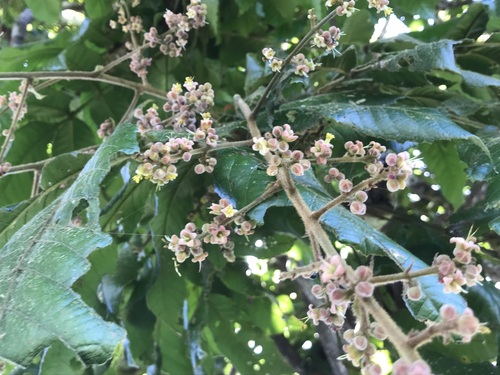
(c) Nigel Forshaw, some rights reserved (CC BY-NC)
Summary
Source: WikipediaEvergreen tree reaching 25 m tall with year-round foliage and hermaphroditic flowers appearing June to July. Grows in light sandy to medium loamy, well-drained soils across mildly acidic to mildly alkaline pH ranges. Tolerates semi-shade to full sun and prefers consistently moist conditions. Hardy to UK zone 9.
Description
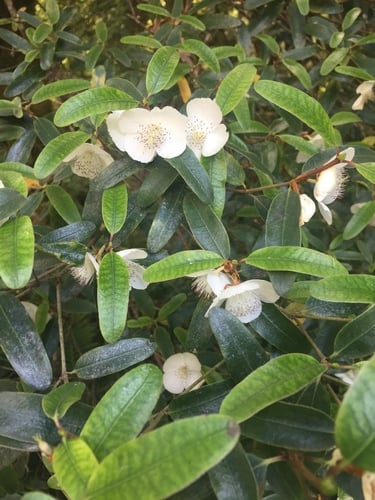
A shrub or small tree. It grows 9 m tall and spreads 2.5-4.5 m wide. It can grow 25 m high and have a trunk 1.2 m across. The leaves are simple and dark green. There are teeth along the edges. The young plants often have 3 part leaves. The flowers are white and like bottle brushes.
Edible Uses
The fruit can be eaten raw and has a sweet, pleasant flavour; it is about 5mm in diameter. Note: according to Crowe, the main authority on New Zealand edible plants (A Field Guide to the Native Edible Plants of New Zealand, 1997 edition, p. 165), the berries are not edible. He suggests the error likely originated with Sturtevant confusing this plant with Tawa (Beilschmiedia tawa), which has a similar Māori name. Crowe does not describe the fruit as poisonous, and it does not appear on any poisonous plant lists.
Traditional Uses
The flowers produce a very light honey. The fruit are eaten.
This uses section is brief — help expand it
Medicinal Uses
None known
Distribution
It is a warm temperate plant. In New Zealand it grows from sea level to 900 m altitude. It suits hardiness zones 9-10.
Where It Grows
Australia, Britain, Europe, New Zealand*, Tasmania,
Cultivation
Prefers a light rich soil. Succeeds in a fertile well-drained circum-neutral loamy soil, with shelter from cold winds. Plants are not very frost-tolerant, though they are probably hardy in the mildest areas of the country. The foliage of this tree when an adult is markedly different from the juvenile foliage, though plants begin to flower whilst still in the juvenile form.
Propagation
Sow seed in spring in a warm greenhouse. Prick seedlings into individual pots when large enough to handle. Overwinter young plants in a greenhouse for at least the first winter, then plant out in late spring or early summer with some protection during the first winter outdoors. Half-ripe cuttings, 5–8cm with a heel, can be taken in July or August and rooted in a frame.
Other Uses
A black dye is obtained from the bark. The bark contains about 13% tannin. The wood is used in cabinet making.
References (8)
- Cundall, P., (ed.), 2004, Gardening Australia: flora: the gardener's bible. ABC Books. p 1484
- Facciola, S., 1998, Cornucopia 2: a Source Book of Edible Plants. Kampong Publications, p 89
- Hedrick, U.P., 1919, (Ed.), Sturtevant's edible plants of the world. p 688
- Lord, E.E., & Willis, J.H., 1999, Shrubs and Trees for Australian gardens. Lothian. p 75
- Matthews, J., 1987, New Zealand Native Plants for your Garden. Pacific Publishers, p 114
Show all 8 references Hide references
- Plants for a Future database, The Field, Penpol, Lostwithiel, Cornwall, PL22 0NG, UK. http://www.scs.leeds.ac.uk/pfaf/
- Salmon, J.T., 1989, The Native Trees of New Zealand. Heinmann Reid p 186
- Stewart, K., 1984, Collins handguide to the Native Trees of New Zealand. Collins. p 142