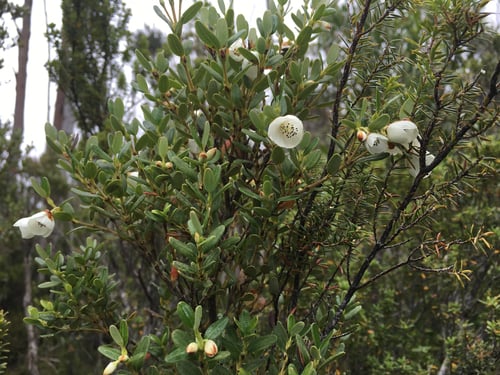
Weinmannia fraxinea
(Don) Smith ex <iq.
Wein tree
iNaturalist· cc-by-nc
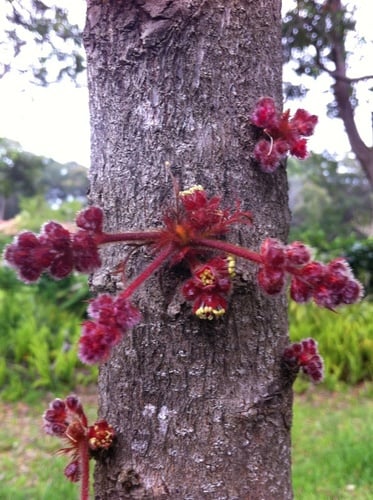
(c) Naufal Urfi Dhiya'ulhaq, some rights reserved (CC BY-NC)
iNaturalist· cc-by-nc
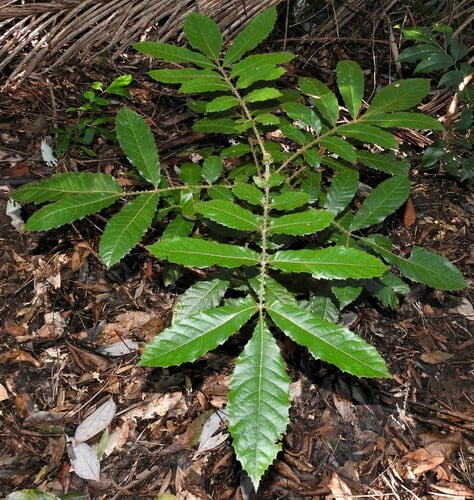
(c) Naufal Urfi Dhiya'ulhaq, some rights reserved (CC BY-NC)
iNaturalist· cc-by-nc
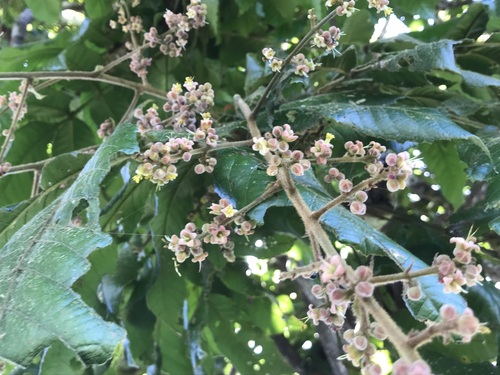
(c) Naufal Urfi Dhiya'ulhaq, some rights reserved (CC BY-NC)
Description
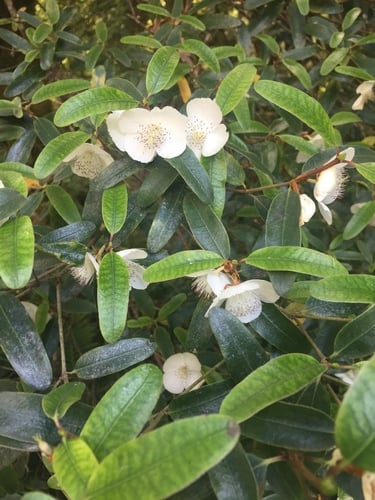
A tree which loses its leaves. It grows 11 m tall. The trunk can be 60-120 cm wide. The leaves are opposite or in rings. The leaves have leaflets along the stalk. The leafy growth at the base of the leaf stalk is kidney shaped and remains on the shoots. It is 2 cm long by 2.5 cm wide. There are 5-7 leaflets which are long and narrow and 7-12 cm long by 2-3 cm wide. They are unequal at the base. There can be rounded or sharp teeth along the edge. The flowers occur along a stalk 12 cm long. They are usually in pairs at the ends of small branches. The flowers are small. Male and female flowers are separate. The fruit is softly hairy. It is an oval capsule. It is 6-7 mm long and contains 6-8 seeds. The seed are 3 mm long.
Edible Uses
The bark is used to flavor and color food red, such as sago.
Traditional Uses
The bark is used to flavour and colour food red eg sago.
This uses section is brief — help expand it
Distribution
A tropical plant. It grows in forest from sea level to 1100 m altitude.
Where It Grows
Asia, Indonesia, Malaysia, Pacific, Papua New Guinea, PNG, Philippines, SE Asia, Solomon Islands, Thailand,
Cultivation
Plants can be grown from seeds.
Other Uses
The pale yellow wood is easy to work; it is used for house construction.
Production
The bark can be dried and stored.
Notes
There are about 150-190 Weinmannia species. There are about 70 Weinmannia species in tropical America.
Synonyms
Also Known As
Aeru, Kulit papeda, Pohon wein, Taeru
References (3)
- PROSEA handbook Volume 13 Spices. p 266
- Sukarya, D. G., (Ed.) 2013, 3,500 Plant Species of the Botanic Gardens of Indonesia. LIPI p 567
- World Checklist of Useful Plant Species 2020. Royal Botanic Gardens, Kew