Warburgia salutaris
(Bertol f.) Chiov.
Fever plant, Pepper root, Pepper bark
iNaturalist· cc-by-nc
(c) Troos van der Merwe, some rights reserved (CC BY-NC), uploaded by Troos van der Merwe
iNaturalist· cc-by-nc
(c) Nick Helme, some rights reserved (CC BY-NC), uploaded by Nick Helme
iNaturalist· cc-by-sa
(c) M Kriek, some rights reserved (CC BY-SA), uploaded by M Kriek
Summary
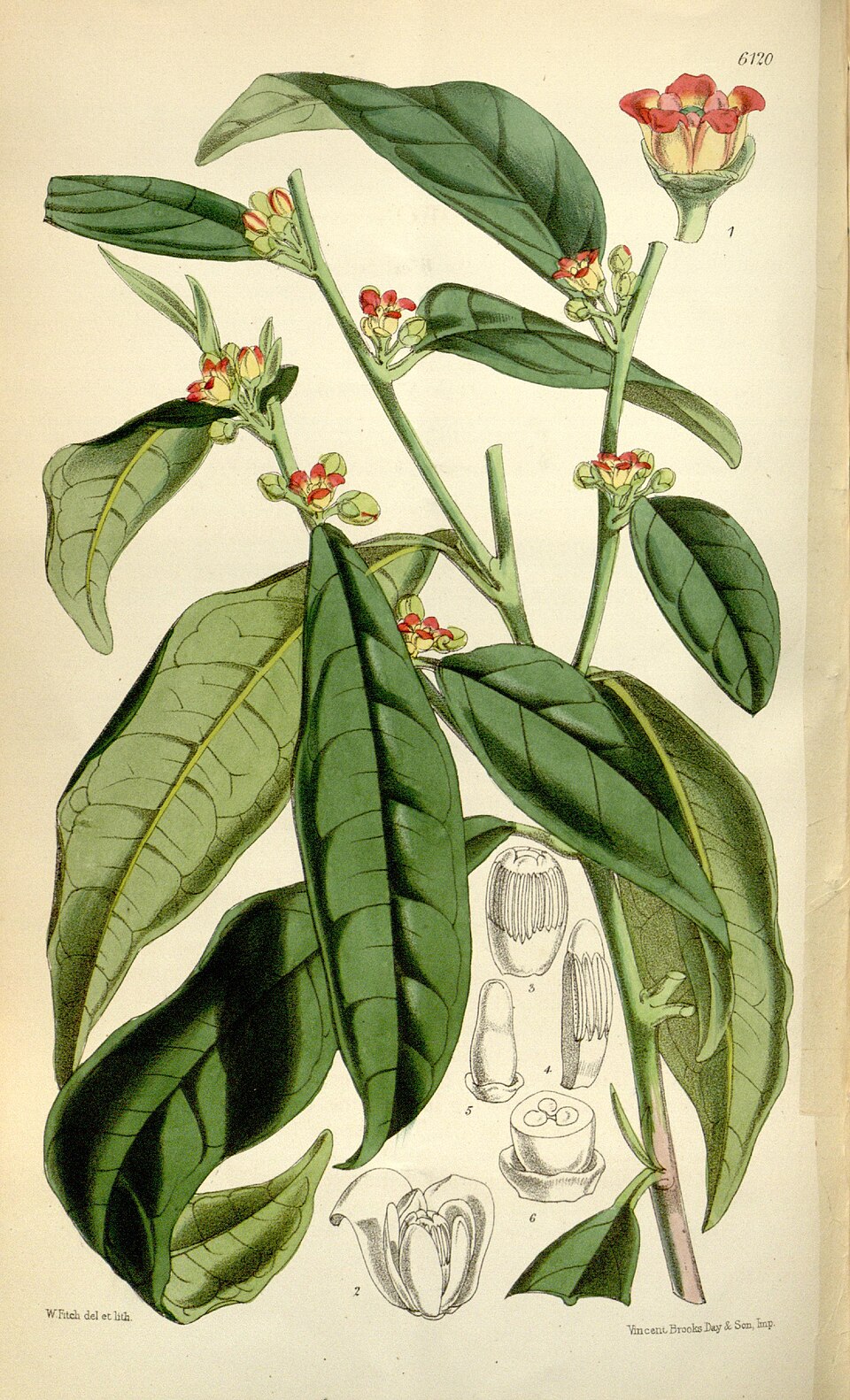
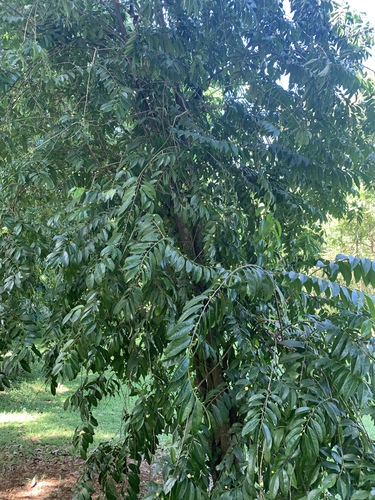
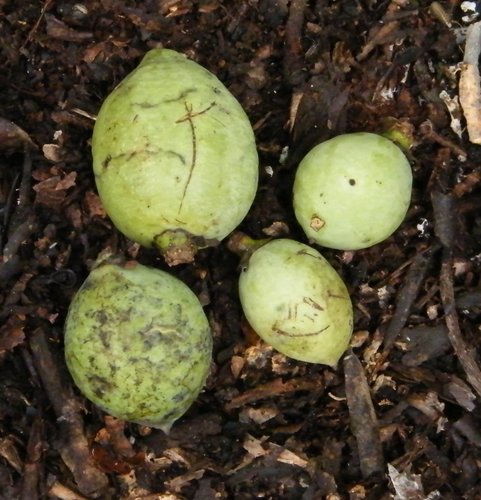
Source: WikipediaWarburgia salutaris (pepper-bark tree, Afrikaans: Peperbasboom, Sotho: Molaka, Venda: Mulanga, Zulu: Isibaha) is a species of tree in the family Canellaceae. It is found in eastern and southern African locations e.g. Botswana, Namibia, Kenya, Tanzania, Zambia, Mozambique, South Africa, Eswatini, Malawi and Zimbabwe. It is threatened by habitat loss. It is a popular medicinal plant and is overharvested in the wild, another reason for its endangerment. The Pepper-bark tree is a protected tree in South Africa. Various projects are investigating methods of propagation under controlled conditions with subsequent planting in the wild. This is an erect tree growing up to about ten metres in maximum height, but known to reach 20 metres at times. It has a thick canopy of aromatic, shiny green leaves. The evergreen leaf blades are lance-shaped, measuring up to 11 cm long by 3 wide. The flowers have ten yellow-green petals. They are each just under a centimeter long and are solitary or borne in small clusters of up to 3. The fruit is a berry, leathery purple or black in color when ripe, measuring up to 4 cm wide. The leaves are used to add peppery flavoring to food and tea. The bitter taste of the tree's bark and leaves is due to the presence of iridoids. The aromatic, oily, yellowish wood is used for firewood. It is attractive and makes a good shade tree.
Description
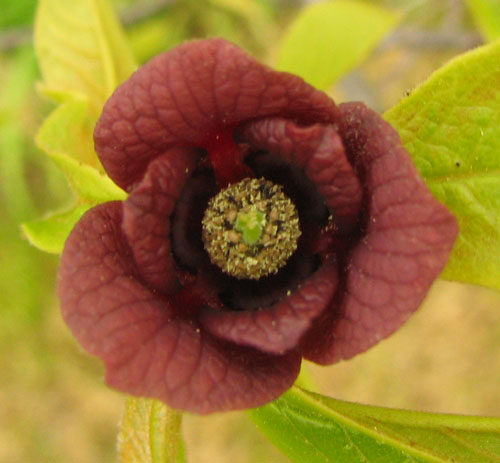
A tree growing 15 to 40 m high. It is higher in tropical areas. The leaves are simple and alternate. The leaves are olive green. They are 13 cm long by 4 cm wide. The leaf stalk is usually short. The leaves have a bitter, burning taste. The flowers are small and green. They contain both sexes. The flowers are in the axils of leaves. The fruit are round berries up to 4 cm across. They are dark green and turn purple.
Edible Uses
The leaves have a bitter, burning, aromatic flavour and are used to season soups and curries, as well as brewed into a tea. The inner bark contains mannitol and is also used.
Traditional Uses
The leaves are sometimes added to curries. They have a peppery taste.
This uses section is brief — help expand it
Medicinal Uses
Pepperbark tree is a widely used herbal remedy in southern Africa. The inner bark treats malaria, colds, chest pains, coughs, diarrhoea, muscle pains, stomach aches, and general body pains. The pepper-like, bitter stems and root bark address a wide range of ailments and are used as an expectorant for the common cold. Taken orally, they are believed to cure spots in the lungs. Both stems and root bark serve as a remedy for malaria. Powdered and mixed with water, they are believed to cure mouth sores. Dried and ground, they are taken as a snuff to clear the sinuses.
Distribution
A tropical plant. It grows in evergreen forest. It is often in rocky and sandy places.
Where It Grows
Africa, Botswana, East Africa, Eswatini, Lesotho, Malawi, Mozambique, Namibia, South Africa, Southern Africa, Swaziland, Tanzania, Zambia, Zimbabwe,
Cultivation
A plant of the tropics, where it is found at elevations from 1,000 - 2,200 metres. It grows best in areas where annual daytime temperatures are within the range 5 - 25°c, but can tolerate 10 - 35°c. The plant cannot tolerate frosts. It prefers a mean annual rainfall in the range 400 - 1,750mm, but tolerates 10 - 35mm. Requires a sunny position. Grows in well-drained soil, with good aeration. The soil should be rich in organic matter in the form of well-rotted compost. Prefers a pH in the range 5 - 7, tolerating 4.5 - 7.5. Established plants are moderately drought tolerant. A fairly slow-growing tree. Trees can be coppiced. The tree is aromatic, with a peppery aroma. This species has a symbiotic relationship with certain soil bacteria, these bacteria form nodules on the roots and fix atmospheric nitrogen. Some of this nitrogen is utilized by the growing plant but some can also be used by other plants growing nearby.
Propagation
Seed has very short viability and should be sown as soon as it is removed from the fruit. Sow in a partially shaded position in a nursery seedbed; a germination rate of around 80% can be expected. The plant can also be propagated from cuttings.
Other Uses
The tree makes an attractive, dense hedge and responds well to pruning. It can be intercropped to provide shade in coffee, banana, and cocoa plantations. As a nitrogen fixer, it is suitable for use as green manure and mulch, and also provides good shade. A resin can be extracted from the bark, which is also a source of tannins. The heartwood is dark yellowish-brown and the sapwood light yellow. The wood is oily, aromatic, and pale, darkening with air exposure. It saws and polishes well but is not durable, and is occasionally used for construction, furniture, and tools. The wood also serves as fuel and for making charcoal.
Notes
The bark is used for a tonic. It is used in medicine. There are 3 species of Warburgia.
Synonyms
Also Known As
Chibaha, Isibaha, Muranga
References (13)
- Marinelli, J. (Ed), 2004, Plant. DK. p 127
- Nouvo Giorn. Bot. Ital. ser. 2, 44:683. 1937
- Palgrave, K.C., 1996, Trees of Southern Africa. Struik Publishers. p 618
- Palmer, E and Pitman, N., 1972, Trees of Southern Africa. Vol. 3. A.A. Balkema, Cape Town p 1523
- Peters, C. R., O'Brien, E. M., and Drummond, R.B., 1992, Edible Wild plants of Sub-saharan Africa. Kew. p 75
Show all 13 references Hide references
- Ruiters-Welcome, A. K., 2019, Food plants of southern Africa. Ph.D. thesis. Univ. of Johannesburg p 41
- Swaziland's Flora Database http://www.sntc.org.sz/flora
- van Wyk, B, van Wyk, P, and van Wyk B., 2000, Photographic guide to Trees of Southern Africa. Briza. p 318
- van Wyk, B-E., 2011, The potential of South African plants in the development of new food and beverage products. South African Journal of Botany 77 (2011) 857–868
- Welcome, A. K. & Van Wyk, B.-E., 2019, An inventory and analysis of the food plants of southern Africa. South African Journal of Botany 122 (2019) 136–179
- White, F., Dowsett-Lemaire, F. and Chapman, J. D., 2001, Evergreen Forest Flora of Malawi. Kew. p 179
- World Checklist of Useful Plant Species 2020. Royal Botanic Gardens, Kew
- www.worldagroforestrycentre.org/treedb/