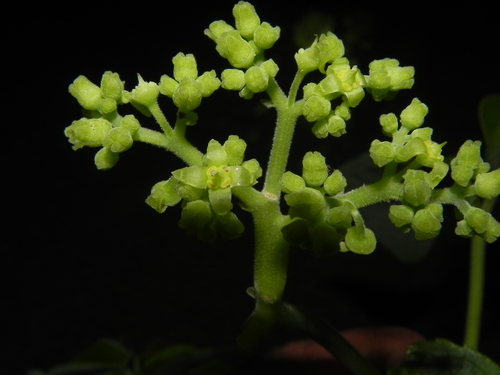
Vitis vulpina
L.
Frost grape, Winter grape
iNaturalist· cc-by-nc
(c) redwolf8, some rights reserved (CC BY-NC)
iNaturalist· cc-by-nc
(c) Joseph D Kurtz, some rights reserved (CC BY-NC), uploaded by Joseph D Kurtz
iNaturalist· cc-by-nc
(c) Tabatha Fiacco, some rights reserved (CC BY-NC)
Summary
Source: WikipediaVitis vulpina (with common names frost grape, winter grape, fox grape, and wild grape) is a North American species of herbaceous perennial vines in the grape family. It is widespread across most of the eastern and central United States as well as the Canadian Province of Ontario. The genus name Vitis comes from the Latin word for "vine" and the species name vulpina comes from the Latin word for "fox-like" or belonging to a fox. It is believed that foxes were attracted to this type of grapevine, and Linnaeus used the term vulpina to differentiate these smaller wild grapes from the other American known grapes. The more common name, frost grape, refers to the fact that this otherwise acidic/tart-tasting grape becomes more desirable and sweet once it is exposed to a frost. Vitis vulpina is a high-climbing woody vine with a thick trunk and red tendrils. The grapes and the vine itself have many uses ranging from herbal remedies to edible delicacies.
Description
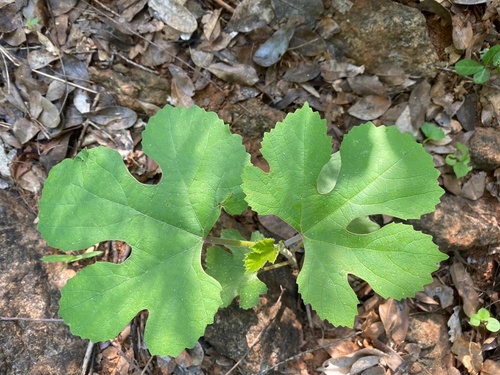
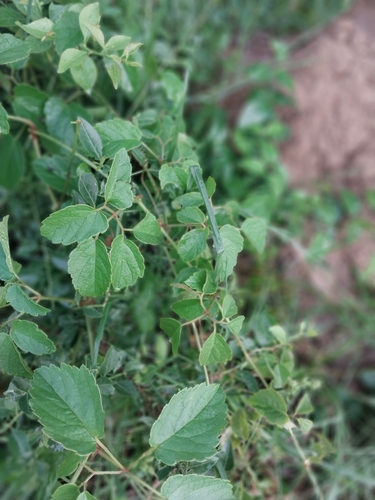
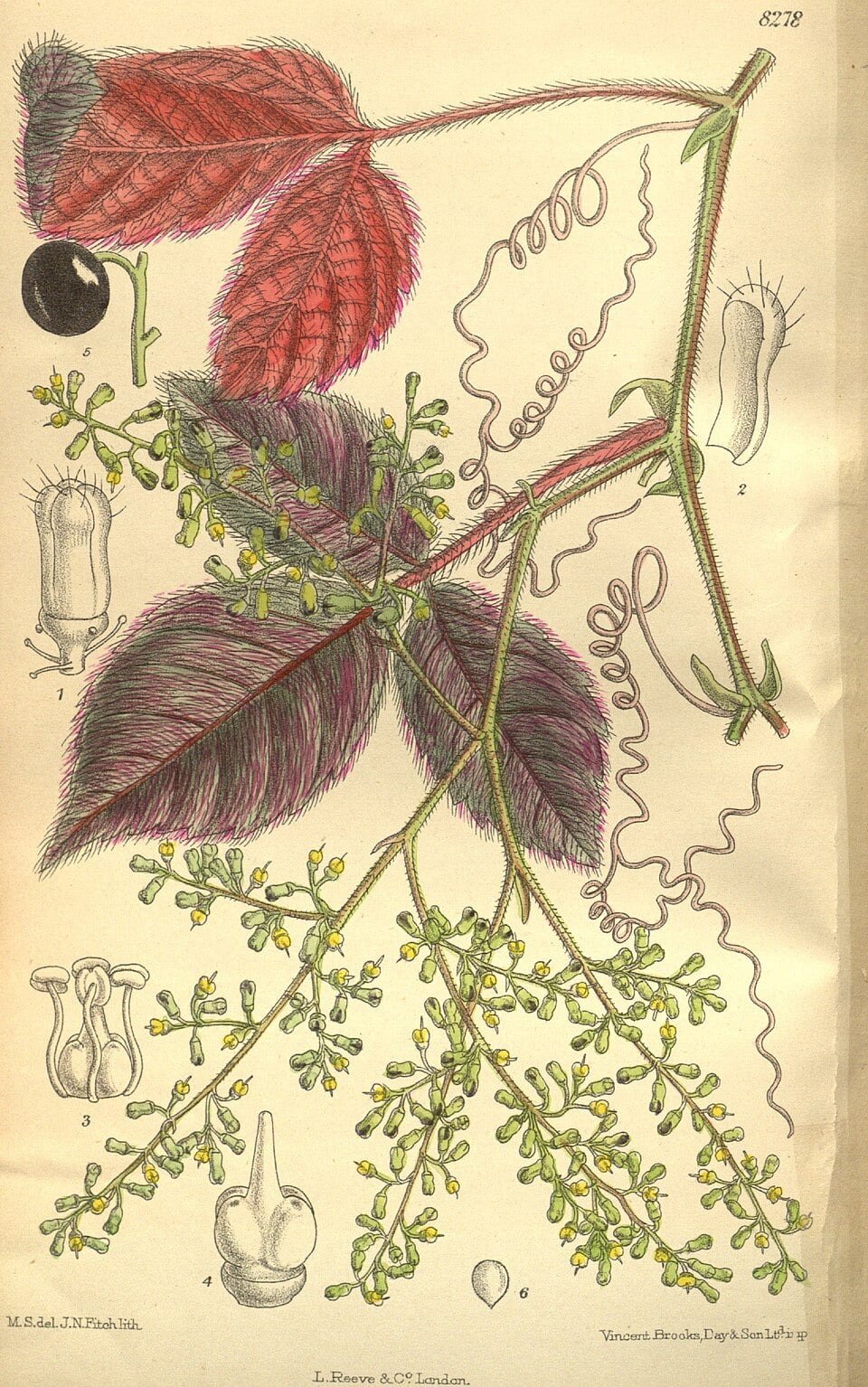
A vine. It can grow 25 m long. The leaves are alternate and heart shaped. There is a tendril after each third leaf. The fruit is round and acidic. It becomes sweet after frost. They are small and purple.
Edible Uses
The fruit, 5–10mm in diameter and carried in small bunches, can be eaten raw or dried for winter use. It is very acid when it first ripens but becomes sweet and palatable after exposure to frost. Young leaves are wrapped around other foods and baked, lending a pleasant flavour, and young tendrils can be eaten raw or cooked.
Traditional Uses
The fruit are eaten fresh. They are also used in preserves and for wine. The fruit are dried and stored for later use.
This uses section is brief — help expand it
Medicinal Uses
The leaves are hepatic and have been used in the treatment of the liver. Wilted leaves have been applied as a poultice to the breasts to draw away soreness following childbirth. An infusion of the bark has been used to treat urinary complaints. An infusion of the roots has been taken for rheumatism and diabetes.
Distribution
It is a temperate plant.
Where It Grows
Canada, North America, USA,
Cultivation
Prefers a deep rich moist well-drained moderately fertile loam. Grows best in a calcareous soil. Succeeds in sun or partial shade though a warm sunny position is required for the fruit to ripen. The young growth in spring can be damaged by late frosts. There has been much confusion in the past between this species, V. cordifolia and V. riparia. Some treatments of the genus only use V. cordifolia and V. riparia, relegating this species to a synonym, but recognizes all three species and this is the treatment followed here. Plants climb by means of tendrils. The flowers are sweetly scented. Any pruning should be carried out in winter when the plants are dormant otherwise they bleed profusely. Plants in this genus are notably susceptible to honey fungus.
Propagation
Seed is best sown in a cold frame as soon as it is ripe. Six weeks of cold stratification improves germination, so stored seed should also be sown in a cold frame as soon as it is obtained. Germination usually occurs in the first spring, but may take another 12 months. Prick out seedlings into individual pots once large enough to handle, grow on in a cold frame through their first winter, then plant out in early summer. Cuttings of mature wood from the current season's growth can be taken in December or January and rooted in a frame. These can be 15–30cm long, or short single-bud sections around 5cm long. For the shorter sections, remove a thin strip of bark about 3cm long from the lower half of one side to encourage callusing and root formation — these smaller cuttings need a more sheltered environment than the longer ones. Layering is also an option.
Other Uses
A yellow dye is obtained from the fresh or dried leaves. The sap can be rubbed into the scalp as a tonic for the hair.
Other Information
It is occasionally cultivated.
Notes
There are 60 to 70 species of Vitis.
Dangerous Lookalikes
This plant can be confused with the following toxic species. Always verify identification carefully before consuming any wild plant.
Canadian Moonseed
Menispermum canadense
Cbaile19
Frost grape
Vitis vulpina
(c) redwolf8, some rights reserved (CC BY-NC)
Canadian Moonseed: No tendrils, single crescent/moon-shaped seed, leaf stem attaches to underside of leaf.
Frost grape: Vine with tendrils, round seeds, leaf stem at edge of leaf, bark that peels.
Synonyms
Also Known As
Fox grape
References (12)
- Beckstrom-Sternberg, Stephen M., and James A. Duke. "The Foodplant Database." http://probe.nalusda.gov:8300/cgi-bin/browse/foodplantdb.(ACEDB version 4.0 - data version July 1994)
- Duke, J.A., 1992, Handbook of Edible Weeds. CRC Press. p 212
- Elias, T.S. & Dykeman P.A., 1990, Edible Wild Plants. A North American Field guide. Sterling, New York p 214
- Flowerdew, B., 2000, Complete Fruit Book. Kyle Cathie Ltd., London. p 92
- Jordan, J., et al, 2006, Vascular Plants Utilized by the Plains Apache in Southwestern Oklahoma, Publications of the Oklahoma Biological Survey. 2nd Series. Volume 7: 24-33, 2006
Show all 12 references Hide references
- Kermath, B. M., et al, 2014, Food Plants in the Americas: A survey of the domesticated, cultivated and wild plants used for Human food in North, Central and South America and the Caribbean. On line draft. p 923
- Moerman, D. F., 2010, Native American Ethnobotany. Timber Press. p 599
- Plants for a Future database, The Field, Penpol, Lostwithiel, Cornwall, PL22 0NG, UK. http://www.scs.leeds.ac.uk/pfaf/
- Sp. pl. 1:203. 1753
- USDA, ARS, National Genetic Resources Program. Germplasm Resources Information Network - (GRIN). [Online Database] National Germplasm Resources Laboratory, Beltsville, Maryland. Available: www.ars-grin.gov/cgi-bin/npgs/html/econ.pl (10 April 2000)
- Wiersema, J. H. & Leon, B., 2013, World Economic Plants. A Standard Reference CRC Press. 2nd Ed. p 726
- World Checklist of Useful Plant Species 2020. Royal Botanic Gardens, Kew