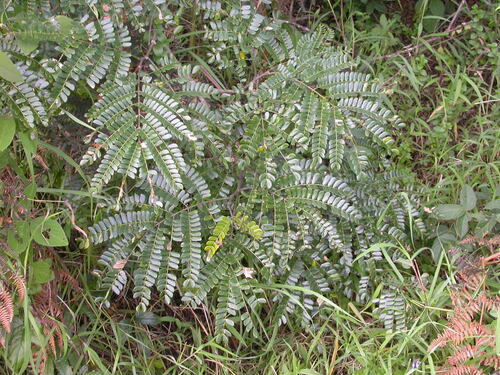
Vigna luteola
(Jacq.) Benth.
Hairypod cowpea, Chinese dolichos, Clay pea
iNaturalist· cc-by-sa
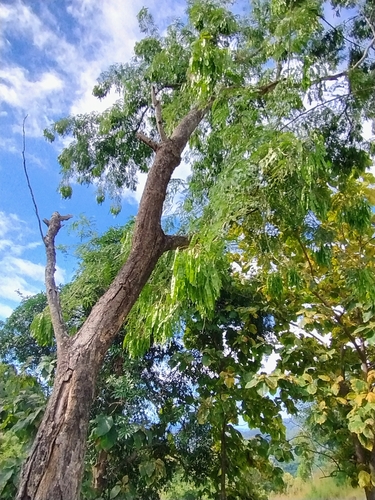
(c) James (Jim) Duggan, some rights reserved (CC BY-SA), uploaded by James (Jim) Duggan
iNaturalist· cc-by-nc
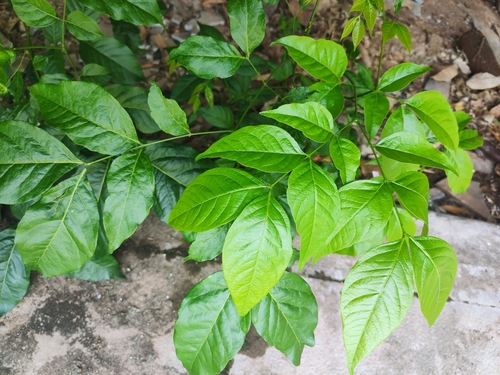
(c) Lori A Owenby, some rights reserved (CC BY-NC), uploaded by Lori A Owenby
iNaturalist· cc-by-nc
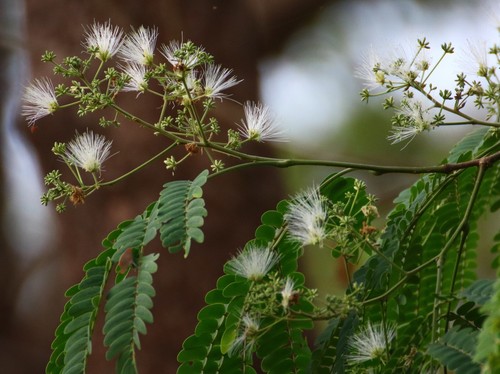
(c) Martin Reith, some rights reserved (CC BY-NC), uploaded by Martin Reith
Summary
Source: WikipediaVigna luteola, commonly known as the hairy cowpea and the Nile bean, is a perennial vine found in many tropical and subtropical areas.
Description
A climbing herb. The stems are slender. They are tough and creeping. It keeps growing from year to year. They can be 6 m long. The leaves are alternate and have 3 leaflets. The leaflets are narrowly oval and 3-10 cm long by 1-5 cm wide. The flowers are yellow and like pea flowers. The fruit are long narrow pods. It is 6-8 cm long. They hang down. The seeds are dark red-brown or can be grey brown speckled with black. They are oblong.
Edible Uses
The roots are eaten raw and have sweet juice, particularly enjoyed by boys. The flowers are cooked in savory dishes, and young seeds are cooked and eaten.
Traditional Uses
The roots are eaten raw. They have sweet juice. The flowers are used in savoury dishes. They are cooked and eaten. The young seeds are cooked and eaten.
Medicinal Uses
The flavonoids quercetin and isorhamnetin are found in the leaves, and are thought to help the plant resist aphids. The seeds resist storage pests due to their high levels of phytic acid, trypsin, and cystatin. The flowers of Vigna luteola are eaten as a boiled vegetable in Ethiopia and Malawi, and the roots are chewed for the sweet juice. In Ethiopia, the leaves and flowers are mixed with Hagenia abyssinica to treat ulcers and syphilis. In Argentina, it is used to control cholesterol levels and is reported to have antimicrobial properties as well. It is also used to treat "ghost sickness", a supernatural ailment, in Polynesia. Vigna luteola is most often considered a weed for crops due to its abundance. However, the plant is palatable for livestock and grows well in friable and slightly saline soils, meaning it is used as a pasture plant and as a ground cover in many countries, such as Ghana, Zambia, and Australia. However, its short lifespan and vulnerability to insects and frost can make it ineffective.
Distribution
A tropical plant. It grows from sea level to 2,200 m altitude. It needs a rainfall of 1,250 mm or more. It grows in water or in permanently waterlogged sites. It can be along the edges of mangroves. It can grow in arid places. In Taiwan it grows below 100 m above sea level.
Where It Grows
Africa*, Angola, Argentina, Asia, Australia, Benin, Botswana, Brazil, Burkina Faso, Burundi, Cameroon, Central Africa, Chad, China, Congo, Côte d'Ivoire, Cuba, Dominican Republic, East Africa, Egypt, Ethiopia, Ghana, Guiana, Guianas, Guinea, Guinée, Guinea-Bissau, Guyana, Haiti*, India, Indochina, Iran, Ivory Coast, Jamaica, Kenya, Laos, Liberia, Malawi, Mauritius, Middle East, Mozambique, Myanmar, Niger, North Africa, North America, Papua New Guinea, PNG, Puerto Rico, Reunion, Rwanda, Sao Tome and Principe, SE Asia, Senegal, Sierra Leone, Socotra, South Africa, South America*, Southern Africa, Sudan, Suriname, Taiwan, Tanzania, Togo, Uganda, USA, Vanuatu, Venezuela, Vietnam, West Africa, West Indies*, Zambia, Zimbabwe,
Cultivation
Vigna luteola is found over a diverse range of temperature environments, succeeding as an annual in the temperate zone and growing as a perennial in the tropics from sea level to over 2,000 metres. The average annual temperature in these areas ranges from as low as 13°c up to about 26°c. The optimum temperature for growth is in the range of 20 - 30°c. The growing plant is very susceptible to frost. While it can make a useful contribution in areas with average annual rainfalls as low as 800mm, ideally the rainfall should be 1,250mm, and up to at least 4,000 mm. In lower rainfall environments, soils should have good moisture storage characteristics. Adapted to a wide range of soil types, from light loams to heavy textured clays, and from very acid to strongly alkaline soils. It is adapted to poorly drained and moderately saline soils. The plant has little drought tolerance and does not perform well under dry conditions. It prefers good soil moisture conditions, and is tolerant of waterlogging and short-term flooding. The plant is considered a weed of rice crops in South America, and in South Africa it figures on the national weed list. While it is recorded as causing some problems in rice crops, there are no records of this species becoming a major weed. The plant is day-neutral and flowers throughout the year. Seed harvest is difficult owing to the plant's indeterminate flowering habit. Pods are hidden by new growth before they can be picked, and so hand harvesting has been the only method employed to date. The pods also shatter. This species has a symbiotic relationship with certain soil bacteria; these bacteria form nodules on the roots and fix atmospheric nitrogen. Some of this nitrogen is utilized by the growing plant but some can also be used by other plants growing nearby.
Propagation
Seed - it has a hard seedcoat and may benefit from scarification before sowing in order to speed up and improve germination. This can usually be done by pouring a small amount of nearly boiling water on the seeds (being careful not to cook them!) and then soaking them for 12 - 24 hours in warm water. By this time they should have imbibed moisture and swollen - if they have not, then carefully make a nick in the seedcoat (being careful not to damage the embryo) and soak for a further 12 hours before sowing.
Other Uses
The plant is sometimes used as a green manure and ground cover crop. It is one of the best legumes for wet conditions, and one of the best pioneer plants in such situations. It forms a good ground cover in shaded situations, but its twining habit may present problems with young trees.
Production
In Malawi the roots are eaten in February and March.
Other Information
The roots are especially eaten by boys.
Notes
There are about 150 Vigna species. They are mostly in the tropics.
Synonyms
Also Known As
Batatarana, Chow lu, Dalrymple vigna, Dau vang, Feijao-caupi-do-mato, Feijao-da-praia, Koondii, Kuanga, Mikho, Mukho, Porotillo, Tow-cok
References (25)
- Asfaw, Z. and Tadesse, M., 2001, Prospects for Sustainable Use and Development of Wild Food Plants in Ethiopia. Economic Botany, Vol. 55, No. 1, pp. 47-62
- Bosch, C.H., 2004. Vigna luteola (Jacq.) Benth. [Internet] Record from Protabase. Grubben, G.J.H. & Denton, O.A. (Editors). PROTA (Plant Resources of Tropical Africa), Wageningen, Netherlands. < http://database.prota.org/search.htm>. Accessed 23 October 2009
- Bradacs, G., 2008, Ethnobotanical Survey and Biological Screening of Medicinal Plants from Vanuatu. PhD thesis Frankurt University. p 101
- Dakora, F. D., 2013, Biogeographic Distribution, Nodulation and Nutritional Attributes of Underutilized Indigenous Agrican Legumes. Acta Horticulturae Number 979 Vol. 1. p 53 (As Vigna fischeri)
- Fox, F. W. & Young, M. E. N., 1982, Food from the Veld. Delta Books. p 223 (As Vigna fischeri)
Show all 25 references Hide references
- Fox, F. W. & Young, M. E. N., 1982, Food from the Veld. Delta Books. p 219
- Grubben, G. J. H. and Denton, O. A. (eds), 2004, Plant Resources of Tropical Africa 2. Vegetables. PROTA, Wageningen, Netherlands. p 549
- Hedrick, U.P., 1919, (Ed.), Sturtevant's edible plants of the world. p 679 (As Vigna glabra)
- Jardin, C., 1970, List of Foods Used In Africa, FAO Nutrition Information Document Series No 2.p 109
- Kermath, B. M., et al, 2014, Food Plants in the Americas: A survey of the domesticated, cultivated and wild plants used for Human food in North, Central and South America and the Caribbean. On line draft. p 911 (As Vigna repens)
- Kinupp, V. F., 2007, Plantas alimenticias nao-convencionais da regiao metropolitana de Porto Alegre, RS, Brazil p 78
- Lim, T. K., 2015, Edible Medicinal and Non Medicinal Plants. Volume 9, Modified Stems, Roots, Bulbs. Springer p 85
- Moerman, D. F., 2010, Native American Ethnobotany. Timber Press. p 596
- Mutie, F. M., et al, 2023, Important Medicinal and Food Taxa (Orders and Families) in Kenya, Based on Three Quantitative Approaches. Plants 2023, 12, 1145
- Peters, C. R., O'Brien, E. M., and Drummond, R.B., 1992, Edible Wild plants of Sub-saharan Africa. Kew. p 139
- Pickering, H., & Roe, E., 2009, Wild Flowers of the Victoria Falls Area. Helen Pickering, London. p 76
- Plants of Haiti Smithsonian Institute http://botany.si.edu/antilles/West Indies
- Royal Botanic Gardens, Kew (1999). Survey of Economic Plants for Arid and Semi-Arid Lands (SEPASAL) database. Published on the Internet; http://www.rbgkew.org.uk/ceb/sepasal/internet [Accessed 1st May 2011]
- Royal Botanic Gardens, Kew (1999). Survey of Economic Plants for Arid and Semi-Arid Lands (SEPASAL) database. Published on the Internet; http://www.rbgkew.org.uk/ceb/sepasal/internet [Accessed 1st May 2011] (As Vigna fischeri)
- Ruiters-Welcome, A. K., 2019, Food plants of southern Africa. Ph.D. thesis. Univ. of Johannesburg p 63
- Sprent, J. I., et al, 2009, African legumes: a vital but under-utilized resource. Journal of Experimental Botany.
- van Wyk, Ben-Erik, 2019, The diversity and multiple uses of southern African legumes. Australian Systematic Botany, 2019, 32, 519–546
- Welcome, A. K. & Van Wyk, B.-E., 2019, An inventory and analysis of the food plants of southern Africa. South African Journal of Botany 122 (2019) 136–179
- Williamson, J., 2005, Useful Plants of Malawi. 3rd. Edition. Mdadzi Book Trust. p 259
- World Checklist of Useful Plant Species 2020. Royal Botanic Gardens, Kew