Robinia neomexicana
A. Gray
New Mexico Locust
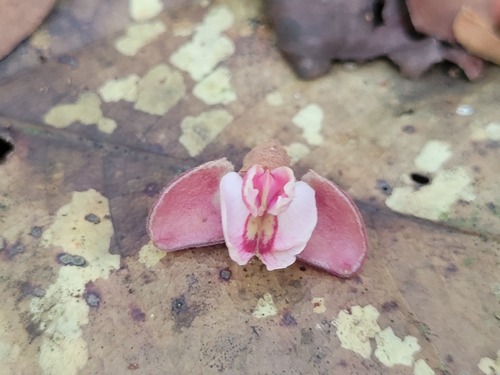
iNaturalist· cc-by
(c) Matt Lavin, some rights reserved (CC BY)
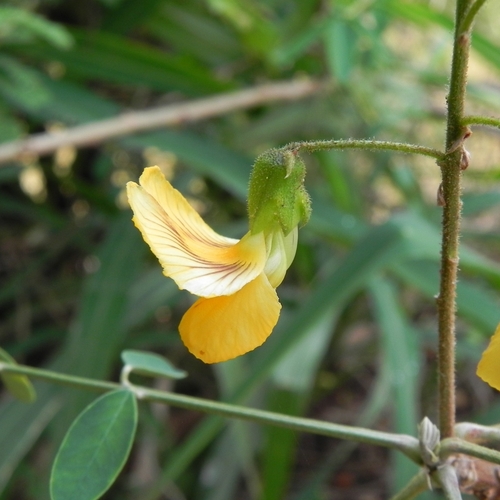
iNaturalist· cc-by
(c) Matt Lavin, some rights reserved (CC BY)
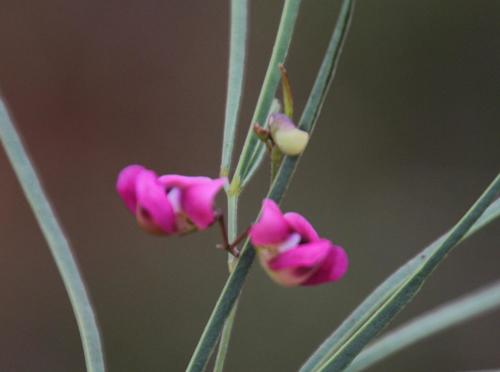
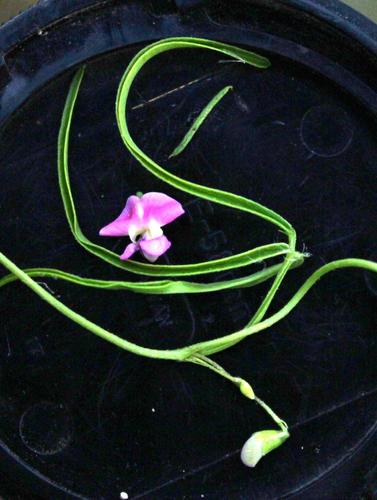
iNaturalist· cc-by-nc
(c) kanayo, some rights reserved (CC BY-NC)
Summary
Source: WikipediaRobinia neomexicana, the New Mexican, New Mexico, Southwest, desert, pink, or rose locust, is a shrub or small tree in the subfamily Faboideae of the family Fabaceae.
Description
A shrub or small tree. It grows 5-10 m tall. It has thorns. They are longer than with black locust. The leaves are 10-15 cm long. There are 7-15 leaflets along the stalk. The leaves have a pair of sharp thorns at their base. The flowers are in clusters and are rose pink. They are in groups 5-10 cm long near the ends of the branches. The fruit are bean like pods. They are brown and have bristles on them.
Edible Uses
The flowers can be eaten raw or cooked and used as a flavouring in cooked dishes. They can also be boiled, then dried and stored for later use. Seedpods are gathered in the fall and eaten fresh, raw or cooked, or cooked and then dried for storage. The seeds are edible when cooked.
Traditional Uses
The flowers are eaten raw. They are also boiled and dried and stored for later use. The pods are eaten raw. The pods are also cooked and stored. Caution:
Medicinal Uses
The plant is antirheumatic and acts as an emetic, used to clear the stomach.
Known Hazards
The bark, root and seed are said to be poisonous.
Distribution
It is a temperate plant. In California it grows between 1,500-2,600 m above sea level. Hobart Botanical Gardens.
Where It Grows
Australia, Mexico, North America, USA, Tasmania,
Cultivation
Succeeds in a hot dry position. Succeeds in any soil, preferring one that is not too rich. Requires a well-drained soil, succeeding on dry barren sites. Plants are tolerant of drought and atmospheric pollution. The branches are brittle and very liable to wind damage. When plants are grown in rich soils they produce coarse and rank growth which is even more liable to wind damage. Plants can be coppiced. Any pruning should be done in late summer in order to reduce the risk of bleeding. Plants in this genus are notably resistant to honey fungus. This species has a symbiotic relationship with certain soil bacteria, these bacteria form nodules on the roots and fix atmospheric nitrogen. Some of this nitrogen is utilized by the growing plant but some can also be used by other plants growing nearby.
Propagation
Pre-soak seed for 48 hours in warm water, then sow in late winter in a cold frame. A short stratification improves both germination rates and speed. Prick seedlings out into individual pots when large enough to handle and grow on in the greenhouse through their first winter, then plant out into permanent positions the following summer. Seed remains viable for over 10 years. Suckers can also be taken during the dormant season.
Other Uses
Plants do well in dry, barren sites and their suckering habit makes them suitable for stabilizing banks. The wood is tough, elastic, and durable, and is used for fence posts and similar applications. Also valued for carbon farming and as a nitrogen fixer.
Notes
There are about 20 Robinia species.
Synonyms
Also Known As
Desert locust
References (9)
- Beckstrom-Sternberg, Stephen M., and James A. Duke. "The Foodplant Database." http://probe.nalusda.gov:8300/cgi-bin/browse/foodplantdb.(ACEDB version 4.0 - data version July 1994)
- Brickell, C. (Ed.), 1999, The Royal Horticultural Society A-Z Encyclopedia of Garden Plants. Convent Garden Books. p 885
- Facciola, S., 1998, Cornucopia 2: a Source Book of Edible Plants. Kampong Publications, p 110
- https://www.fireflyforest.com/flowers/category/edible-plants/ Edible Plants – Southeastern Arizona Wildflowers and Plants
- Kermath, B. M., et al, 2014, Food Plants in the Americas: A survey of the domesticated, cultivated and wild plants used for Human food in North, Central and South America and the Caribbean. On line draft. p 750
Show all 9 references Hide references
- Loughmiller, C & L., 1985, Texas Wildflowers. A Field Guide. University of Texas, Austin. p 135
- Mem. Amer. Acad. Arts new ser., 5:314. 1855
- Moerman, D. F., 2010, Native American Ethnobotany. Timber Press. p 481
- Plants for a Future database, The Field, Penpol, Lostwithiel, Cornwall, PL22 0NG, UK. http://www.scs.leeds.ac.uk/pfaf/