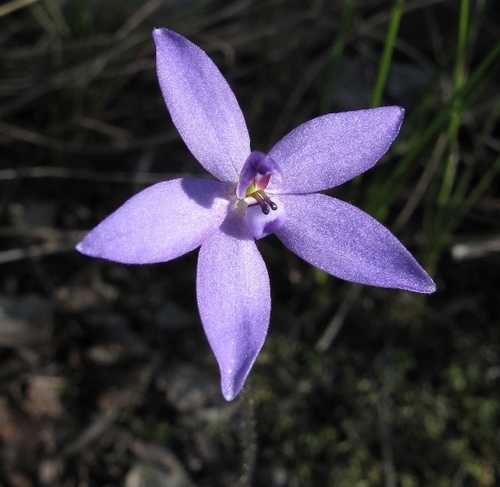
Vanilla planifolia
Andrews
Vanilla
iNaturalist· cc-by-nc
(c) Sébastien SANT, some rights reserved (CC BY-NC), uploaded by Sébastien SANT
iNaturalist· cc-by-nc
(c) jlcaldu, some rights reserved (CC BY-NC)
iNaturalist· cc-by-nc
(c) Ariel Salinas Seq., some rights reserved (CC BY-NC)
Summary
Source: WikipediaVanilla planifolia is a species of vanilla orchid native to Mexico, Central America, Colombia, and Brazil. It is one of the primary sources for vanilla flavouring, due to its high vanillin content. Common names include flat-leaved vanilla and West Indian vanilla (which is also used for the Pompona vanilla, V. pompona), though it is often simply referred to as vanilla. It was first scientifically named in 1808. Vanilla planifolia played a large role in the early rural economy throughout Mexico and by the 20th century had become a widely cultivated crop across the world. With the species' population in decline and its habitats being converted to other purposes, the IUCN has assessed Vanilla planifolia as Endangered.
Description
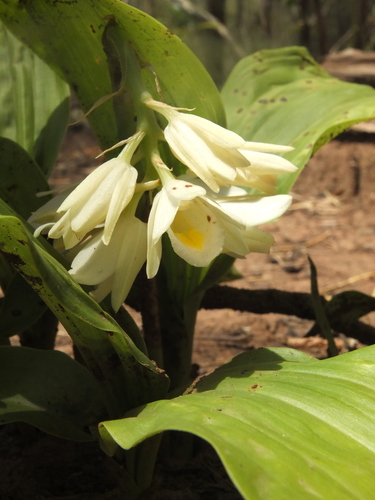
A climbing orchid. The vine is fleshy and climbs by means of roots. It can climb to 10-15 m high. It is 1-2 cm across and flexible but easily broken. There are 5-15 cm between nodes. It is often trained to a lower height to allow easier pollination and harvesting. Aerial roots arise from the stem opposite the leaves. These are white and 2 mm across. They attach to supports. It has long pointed fleshy leaves. They have almost no stalk and can be 8-25 cm long by 2-8 cm wide. The tip of the leaf is pointed and the base is rounded. The flowers are greenish yellow and large and waxy. They occur in groups of up to 30 in the axils of the leaves. The fruit is a long fleshy pod with small black seeds inside.
Edible Uses
The seedpods are used cooked as a flavouring in a wide range of foods including ice creams, confectionery, baked goods, and puddings. The pods contain about 3.5% vanillin. A pod placed in sugar will diffuse its flavour into the sugar, which is then used as a sweet flavouring particularly in cakes and desserts. The fruit itself is a dark-brown, three-angled capsule measuring 15–28cm long and containing many small seeds.
Traditional Uses
The pods are used to flavour foods. The flavour is extracted in alcohol. They are used to flavour chocolate, ice cream, milk shakes, and sweet dishes.
Medicinal Uses
Traditionally, the seedpods are used as an aphrodisiac, carminative, emmenagogue, and stimulant. They are said to reduce or cure fevers, spasms, and caries. Vanilla extracts, especially tinctures as described in pharmacopoeias, are used in pharmaceutical preparations such as syrups, primarily as a flavouring agent.
Known Hazards
Calcium oxalate crystals are present in the plant, which may cause dermatitis in vanilla workers.(Handling plant may cause skin irritation or allergic reaction )
Distribution
A tropical plant. It needs a warm moist climate. The best temperature is between 21-32°C with an average around 27°C. It will grow up to at least 1,000 m altitude. It does best with an evenly distributed rainfall of 2,000-5,000 mm per year. Ideally it should have 2 drier months to allow the flowers to develop. Light shade is necessary. It needs a well drained location and lots of humus and organic matter to grow in. It suits hardiness zones 11-12.
Where It Grows
Africa, Asia, Australia, Bougainville, British Indian Ocean Terr., BIOT, Cameroon, Central Africa, Central America, China, Colombia, Comoros, Cook Islands, Costa Rica, Cuba, East Africa, East Timor, Fiji, Grenada, Guam, Guatemala, Guianas, Guyana, Hawaii, Honduras*, India, Indonesia, Japan, Madagascar, Malaysia, Marquesas, Mexico*, Myanmar, Niue, North America, Pacific, Papua New Guinea, PNG, Puerto Rico, Reunion, Rotuma, Samoa, Sao Tome and Principe, SE Asia, Solomon Islands, South America, Sri Lanka, Suriname, Timor-Leste, Tonga, Tuvalu, Uganda, USA, Vanuatu, West Africa, West Indies,
Cultivation
Plants are grown from cuttings in a layer of rotting plant material and forest debris. It needs a pole to climb and should have light shade. When the vine extends along a branch it is pulled down to promote flowering. The flowers need to be hand pollinated in the early morning. It is most successful on a sunny morning following rain. Using a small match sized stick the pollen is removed by squeezing the flower then putting the pollen onto the sticky stigma. Flowering tends to be seasonal and occur once per year during the drier months. If fertile cross-pollinated seed is required, it is necessary to cross pollinate the plants. (In Mexico small bees in the genus Melapona naturally pollinate vanilla)
Propagation
Seed should be surface-sown, preferably as soon as it is ripe, without allowing the compost to dry out. The seed is extremely simple in structure, consisting of a minute embryo surrounded by a single layer of protective cells with very little food reserve. It depends on a symbiotic relationship with a fungal species whose hyphae invade the seed and enter the embryo's cells, providing nutrition until the plant can draw nutrients from decaying soil material. To establish this relationship, sow seed around an existing plant of the same species or incorporate soil from around established plants. Grow seedlings undisturbed until large enough to move. Cuttings should be 90–120cm long with at least three leaf nodes, set in loose, friable soil without deep burial to avoid rot; new shoots develop after 30–40 days. Longer cuttings of 1.5–2 metres can be taken at any time of year, though the end of the dry season is preferred. These are kept loosely coiled in a dry, shady place for 2–3 weeks before insertion in open compost, with new shoots appearing after 30–40 days.
Other Uses
The seedpod is used in the manufacture of perfumes and soaps.
Production
Fertilised flowers produce pods in 6 weeks. The pods are ready for harvest about 9 months after pollination. This is indicated by the pods turning slightly yellow at the end. The beans are partly dried and allowed to sweat to increase flavour. They are normally sweated for 2-3 weeks then dried. They become dark brown in colour.
Other Information
It is grown commercially in a few lowland areas of Papua New Guinea. It is also commercial cultivated in some other tropical countries.
Notes
There are about 50 Vanilla species.
Synonyms
Also Known As
Hpyaw-ye-thitkwa, Vainella, Vainilla, Vaniglia
References (50)
- Ambasta, S.P. (Ed.), 2000, The Useful Plants of India. CSIR India. p 668
- Andrews, Bot. Repos. 8:pl. 538. 1808 [As Jacks.]
- Bianchini, F., Corbetta, F., and Pistoia, M., 1975, Fruits of the Earth. Cassell. p 210
- Bremness, L., 1994, Herbs. Collins Eyewitness Handbooks. Harper Collins. p 285
- Burkill, H. M., 1985, The useful plants of west tropical Africa, Vol. 1. Kew.
Show all 50 references Hide references
- Burkill, I.H., 1966, A Dictionary of the Economic Products of the Malay Peninsula. Ministry of Agriculture and Cooperatives, Kuala Lumpur, Malaysia. Vol 2 (I-Z) p 2259
- Cobley, L.S. (rev. Steele, W.M.) 2nd Ed., 1976, An Introduction to the Botany of Tropical Crops. Longmans. p 238
- Cundall, P., (ed.), 2004, Gardening Australia: flora: the gardener's bible. ABC Books. p 1456
- Facciola, S., 1998, Cornucopia 2: a Source Book of Edible Plants. Kampong Publications, p 164
- Flowerdew, B., 2000, Complete Fruit Book. Kyle Cathie Ltd., London. p 163
- French, B.R., 1986, Food Plants of Papua New Guinea, A Compendium. Asia Pacific Science Foundation p 390
- French, B.R., 2010, Food Plants of Solomon Islands. A Compendium. Food Plants International Inc. p 391
- Gillaumin, R., 1954, Les Plantes utiles des Nouvelles-Hebrides (fin et complement) In: Journal d'agriculture tropicale et de botanique appliquee Vol. 1, No. 10-12 pp 453-460 (As Vanilla fragrans)
- Hedrick, U.P., 1919, (Ed.), Sturtevant's edible plants of the world. p 672
- Hemphill, I, 2002, Spice Notes. Macmillan. p 402
- Hermandez Bermejo, J.E., and Leon, J. (Eds.), 1994, Neglected Crops. 1492 from a different perspective. FAO Plant Production and Protection Series No 26. FAO, Rome. p 12
- Hibbert, M., 2002, The Aussie Plant Finder 2002, Florilegium. p 305
- Holliman, J., (Ed.), 2002, Orchids. Botanica's Pocket. Random House, Australia. p 583
- http://www.botanic-gardens-ljubljana.com/en/plants
- Hu, Shiu-ying, 2005, Food Plants of China. The Chinese University Press. p 331
- Huxley, A. (Ed.), 1977, The Encyclopedia of the Plant Kingdom. Chartweil Books. p 83
- Kermath, B. M., et al, 2014, Food Plants in the Americas: A survey of the domesticated, cultivated and wild plants used for Human food in North, Central and South America and the Caribbean. On line draft. p 899
- Kiple, K.F. & Ornelas, K.C., (eds), 2000, The Cambridge World History of Food. CUP p 434, 1874
- Kybal, J., 1980, Herbs and Spices, A Hamlyn Colour Guide, Hamlyn Sydney p 202
- Marinelli, J. (Ed), 2004, Plant. DK. p 423
- Menninger, E.A., 1977, Edible Nuts of the World. Horticultural Books. Florida p 85
- Mulherin, J., 1994, Spices and natural flavourings. Tiger Books, London. p 94
- Norrington, L., & Campbell, C., 2001, Tropical Food Gardens. Bloomings Books. p 77
- Parham, B. E. V., 1972, Plants of Samoa. New Zealand Department of Scientific and Industrial Research. Information Series. No. 85 p 140 (As Vanilla fragrans)
- Piedra-Malagón, E. M., et al, 2022, Edible native plants of the Gulf of Mexico Province. Biodiversity Data Journal 10: e80565 p 26
- Purseglove, J.W., 1972, Tropical Crops. Monocotyledons. Longmans p 403
- Roa, J. A. G. & Boada, D. S. G., 2018, Fundación para el Fortalecimiento de la Fruticultura y Plantas Alimenticias no Convencionales en Colombia.
- Segura, S., et al, 2018, The edible fruit species in Mexico. Genet Resour Crop Evol (2018) 65:1767–1793
- Smith, P.M., 1979, Vanilla, in Simmonds, N.W., (ed), Crop Plant Evolution. Longmans. London. p 317
- Solomon, C., 2001, Encyclopedia of Asian Food. New Holland. p 397
- Staples, G.W. and Herbst, D.R., 2005, A tropical Garden Flora. Bishop Museum Press, Honolulu, Hawaii. p 737
- Thaman, R. R, 2016, The flora of Tuvalu. Atoll Research Bulletin No. 611. Smithsonian Institute p 48
- Topp, J. M. W., 1988, An Annotated Check List of the Flora of Diego Garcia, British Ocean Territory. Atoll Research Bulletin No. 313
- Torre, de la, L., et al, 2008, Enciclopedia de las Plantas Útiles del Ecuador. Herbario QCA. Pontificia Universidad Católica del Ecuador. p 481
- Tyagi, R. K., et al, 2004, Conservation of Spices Germplasm in India. Indian J. Plant Genet. Resour. 17(3): 163-174
- van Wyk, B., 2005, Food Plants of the World. An illustrated guide. Timber press. p 378
- Vickery, M.L. and Vickery, B., 1979, Plant Products of Tropical Africa, Macmillan. p 85
- Vivien, J., & Faure, J.J., 1996, Fruitiers Sauvages d'Afrique. Especes du Cameroun. CTA p 251
- Walter, A. & Lebot, V., 2007, Gardens of Oceania. ACIAR Monograph No. 122. CD-ROM minor species p 21
- Wiersema, J. H. & Leon, B., 2013, World Economic Plants. A Standard Reference CRC Press. 2nd Ed. p 712
- Williams, C.N., Chew, W.Y., and Rajaratnam, J.A., 1989, Tree and Field Crops of the Wetter Regions of the Tropics. Longman, p 232
- World Checklist of Useful Plant Species 2020. Royal Botanic Gardens, Kew
- http://cookislands.bishopmuseum.org
- Yuncker, T. G., 1943, The Flora of Niue Island. Bernice P. Bishop Museum Bulletin 178 p 40
- Zuchowski W., 2007, Tropical Plants of Costa Rica. A Zona Tropical Publication, Comstock Publishing. p 435